Amber Wine: What It Is and Where to Drink It in Tbilisi
Georgia's skin-contact white, how the qvevri makes it, and where to get a glass in town

Amber wine is white wine made the way you'd make a red: the juice ferments with its skins, pips and stems, often for months, in a clay qvevri buried in the ground. It comes out gold to copper, dry and a little grippy. This page covers how it's made, which regions and grapes to look for, what to eat with it, and where to drink or buy it in Tbilisi.
Quick summary
- Amber wine, which other countries call orange wine, is white grapes fermented with their skins for 2 to 6 months, so it comes out gold to tea-coloured and tannic.
- Georgia's traditional vessel is the qvevri, a clay jar buried in the ground, and UNESCO listed the qvevri method as intangible heritage in 2013.
- Kakhetian amber sits on all its skins until spring and drinks heavier, while Imeretian amber gets at most a third of the skins for about 2 months.
- It's dry and drinks best cellar-cool, at about 13 to 15 C, not straight from the fridge.
- In Tbilisi a glass runs about 20 GEL and a 4-wine tasting around 30 GEL, and one reviewer paid 30 to 35 GEL for a shop bottle of amber in 2024.
What amber wine is
Most white wine is pressed and its skins thrown away before it ferments. Amber wine keeps them: the grapes go into the vessel with their skins, pips and often stems, and stay there through fermentation and well after, the way a red is made.
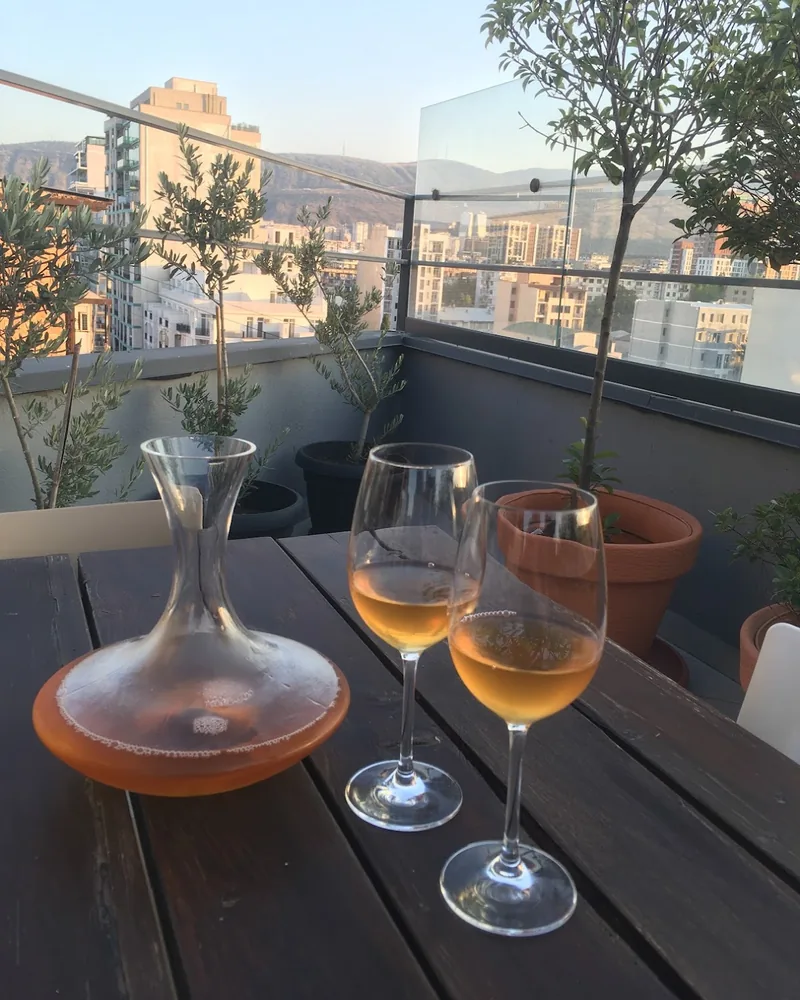
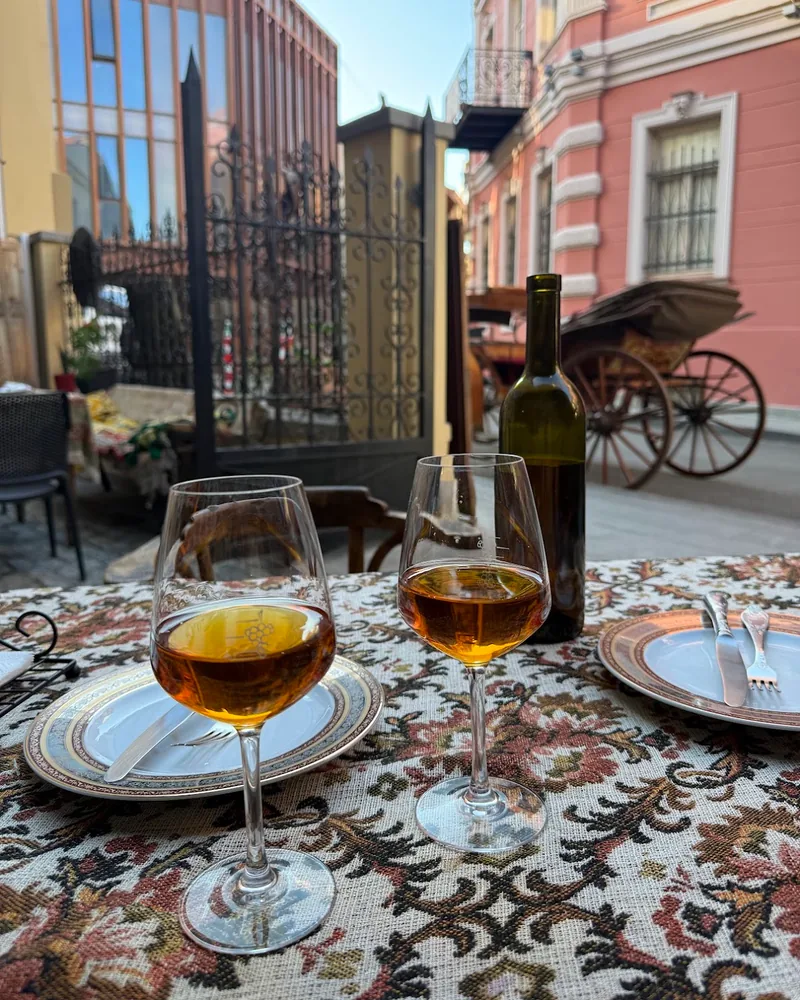
The skins bring colour and tannin, giving what the National Wine Agency calls a dark straw, golden or tea-coloured wine. The Georgian word for that colour, karvisperi, simply means amber-coloured.
Orange wine is the same style, but in Georgia you'll hear amber, one of the things Georgian wine is known for alongside the qvevri. The skins, pips and stems left in the qvevri are called chacha, and the spirit distilled from them took the name.
How qvevri wine is made
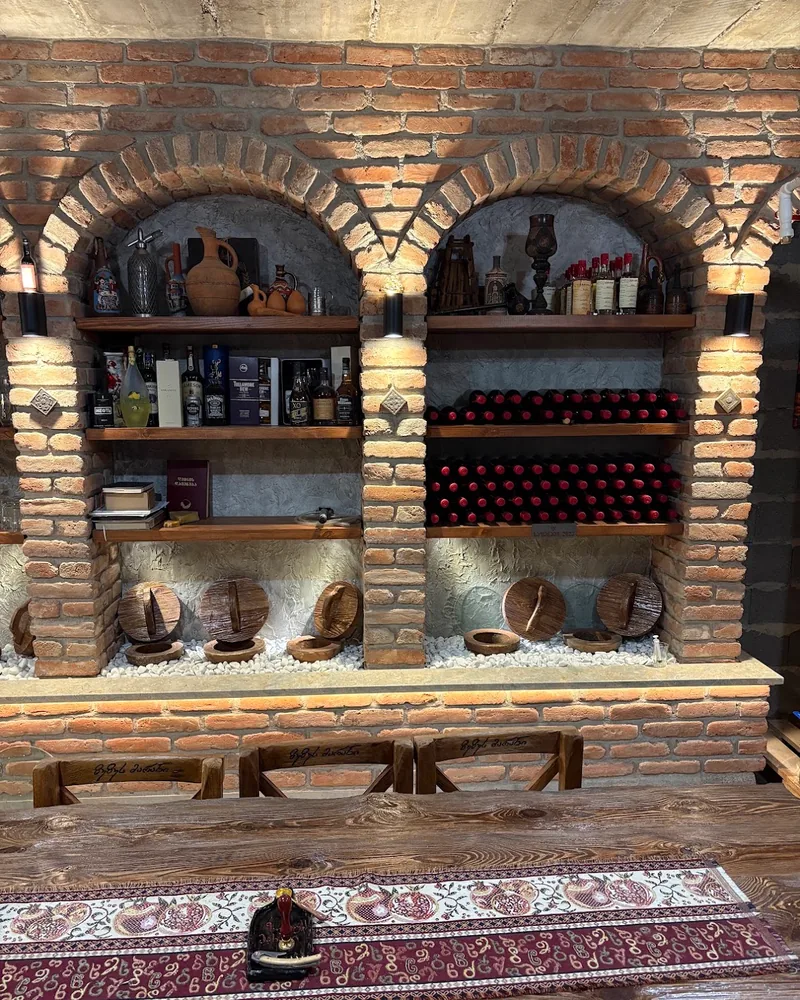
A qvevri is an egg-shaped clay vessel for making, ageing and storing wine, sealed and buried in the ground. UNESCO put the qvevri winemaking method on its intangible heritage list in 2013, and it's the method that is listed, not the wine or the jar.
The roots go deep. Residue in clay jars from 2 Neolithic villages about 50 km south of Tbilisi puts Georgian winemaking at about 6000 to 5800 BC, which is where the 8,000 years you'll keep hearing about comes from.
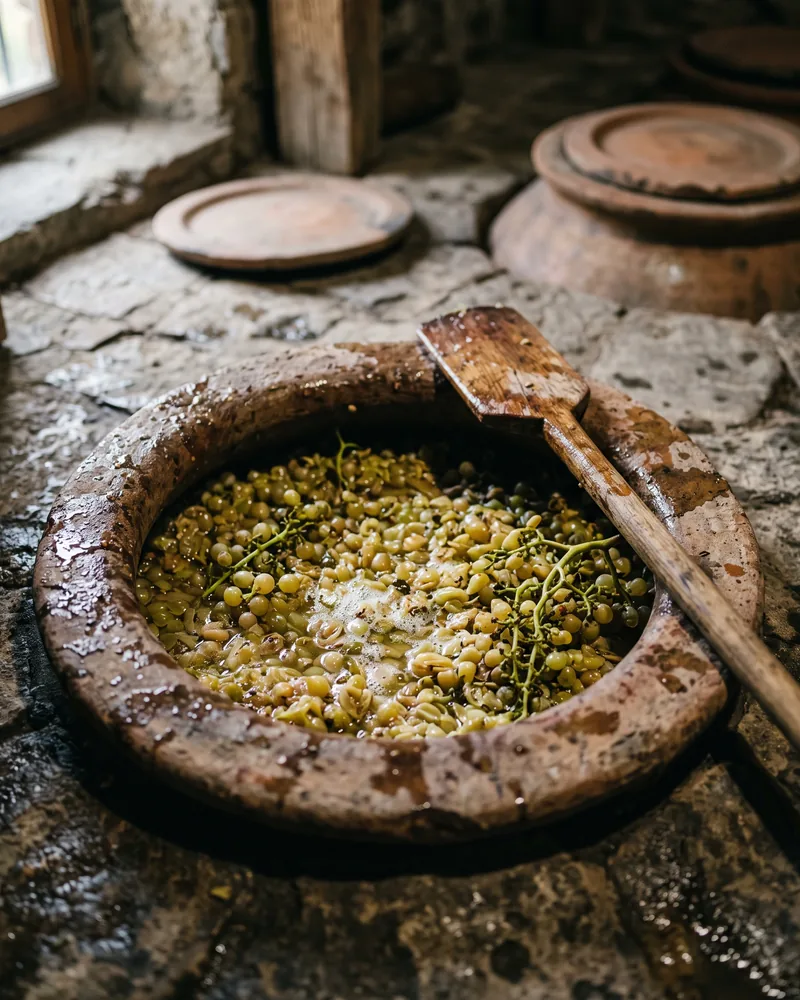
The first rule of qvevri winemaking, as the National Wine Agency puts it, is to leave the wine on its chacha during and after fermentation. In Kakheti it goes like this.
- The grapes are pressed in a satsnakheli, the traditional winepress, and the juice goes into the qvevri with its skins, stalks and pips.
- Underground, the qvevri holds a steady 13 to 15 C while the must ferments, stirred 4 to 5 times a day.
- When fermentation ends the skins sink and the qvevri is closed, then sealed once the malolactic fermentation is done.
- The wine sits on its skins through the winter until the first racking in March.
Amber and qvevri overlap but aren't the same thing: a qvevri red isn't amber, and white grapes can get long skin contact in a steel tank. If the clay matters to you, look for qvevri (or kvevri) on the label.
Kakhetian or Imeretian amber: how heavy your glass will be
Georgia's 2 big qvevri traditions make 2 weights of amber, and the region on the label tells you which you're getting. Kakheti, in the east, ferments with all the skins and leaves the wine on them until spring; Imereti, in the west, adds at most a third of the skins and takes the wine off after about 2 months.
| What differs | Kakhetian amber | Imeretian amber |
|---|---|---|
| Skins in the qvevri | All of them | At most a third |
| Time on the skins | Until spring, first racked in March | About 2 months after fermentation |
| The vessel | Qvevri, buried in the marani (cellar) | Churi, the western name for a qvevri |
| In the glass | Darker, more tannin, more grip | Yellow, rounder, less tannin |
Some appellations write the date into their rules. The Kisi Magraani specification has its amber dry wine fermented in qvevri, left on the chacha until 1 February of the next year and bottled at no less than 12% alcohol.
Which grapes make amber wine
Kisi, Rkatsiteli and Mtsvane are the white grapes you'll see most on amber labels, with Khikhvi and Chinuri behind them. The tasting notes below are the National Wine Agency's for each grape made in a qvevri.
| Grape | Grown in | From a qvevri | Order it when |
|---|---|---|---|
| Rkatsiteli | Kakheti, also Kartli | Honey, dried orange peel, spices and apricot, with moderate tannin and crisp acidity | You want the benchmark |
| Kisi | Kakheti (Akhmeta, Telavi) | Apricot, mango, lime, orange and walnut | You want it rich and aromatic |
| Mtsvane Kakhuri | Kakheti | Darker, with more apricot and stone fruit | You like peach and apricot |
| Khikhvi | Kakheti | Dried fruit and flowers | You want it floral |
| Chinuri | Kartli | Tannic and musky, with dried pear and apricot | You want the most grip |
Kisi is the comeback story: the agency says it was almost extinct by 2000, with 20 ha left in 2004. It's back on Tbilisi wine lists and shop shelves, and one reviewer was steered to a qvevri Kisi at Wine Not?.
Reading an amber label
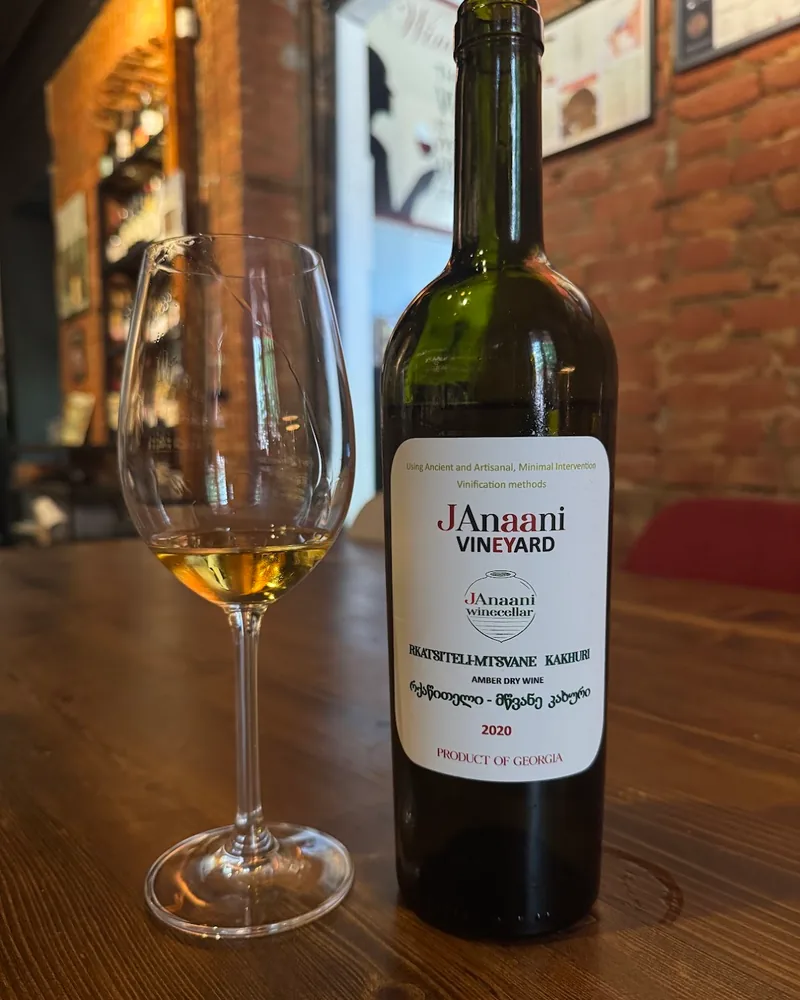
Look for 3 things: the grape (2 joined by a hyphen means a blend), amber and qvevri. Amber is an official category here, printed as amber dry wine, and in the appellation rules dry means no more than 4 g of sugar a litre.
What amber wine tastes like and how to serve it
Think of a white wine with a red's grip. The skins add tannin, so a Kakhetian amber dries your mouth a little the way a young red does, while the fruit runs to apricot, dried orange peel, honey and walnut in the agency's notes.
It isn't sweet. The semi-sweet wines on a Georgian list are mostly reds such as Kindzmarauli and Khvanchkara, plus a white called Tvishi, and amber is made dry.
Serve it cellar-cool, around the 13 to 15 C a buried qvevri holds. Straight from the fridge the fruit goes quiet and the tannin is most of what you taste, so give a chilled bottle 15 minutes on the table.
What to eat with amber wine
The tannin makes amber a food wine, and it handles salt, fat, walnuts and smoke better than most whites. These are the matches that work hardest.
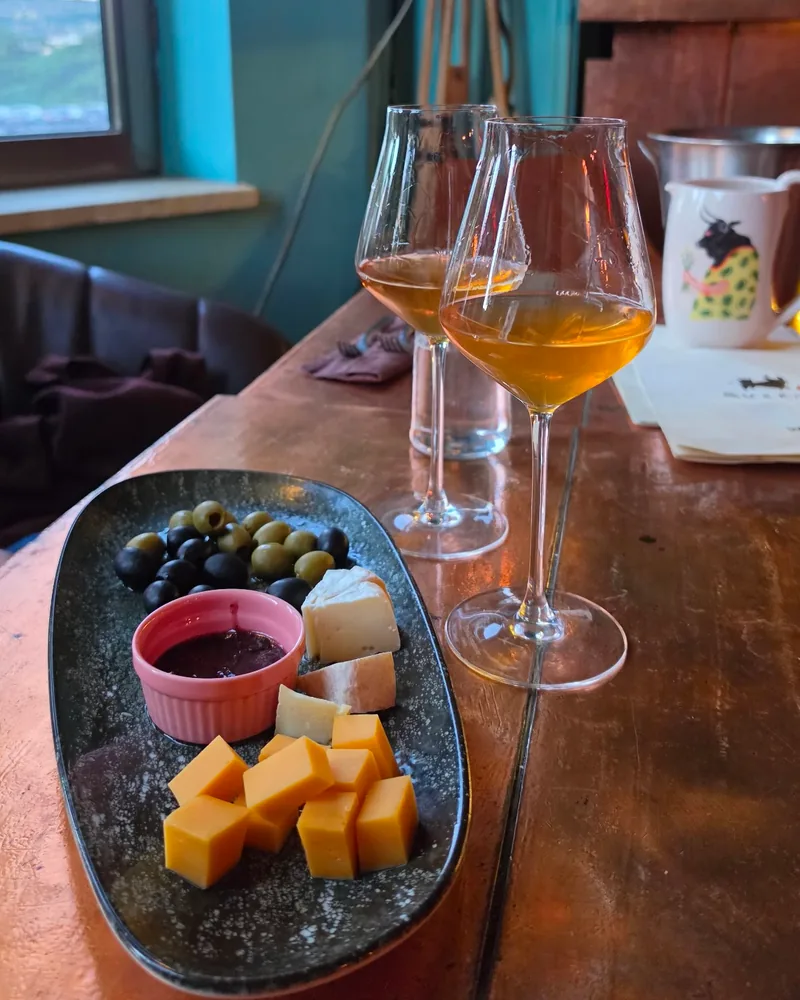
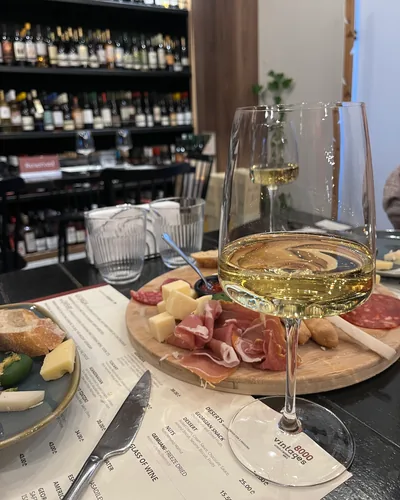
- Salty cheese: the grip cuts through salty Georgian cheese such as sulguni, and a cheese plate is the easiest thing to order alongside a flight.
- Khachapuri: a Kakhetian amber has the weight for the butter and egg in an Adjarian boat, where a light white gets lost.
- Grilled pork: it's strong enough for pork mtsvadi straight off the grill with raw onion, a job most whites can't do.
- Walnut dishes: pkhali and aubergine rolls with walnut paste meet Kisi's walnut note halfway.
Where to drink amber wine in Tbilisi
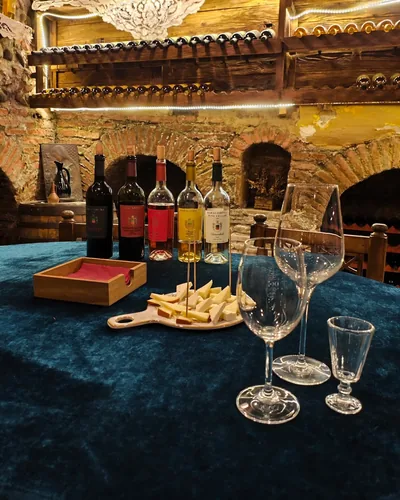
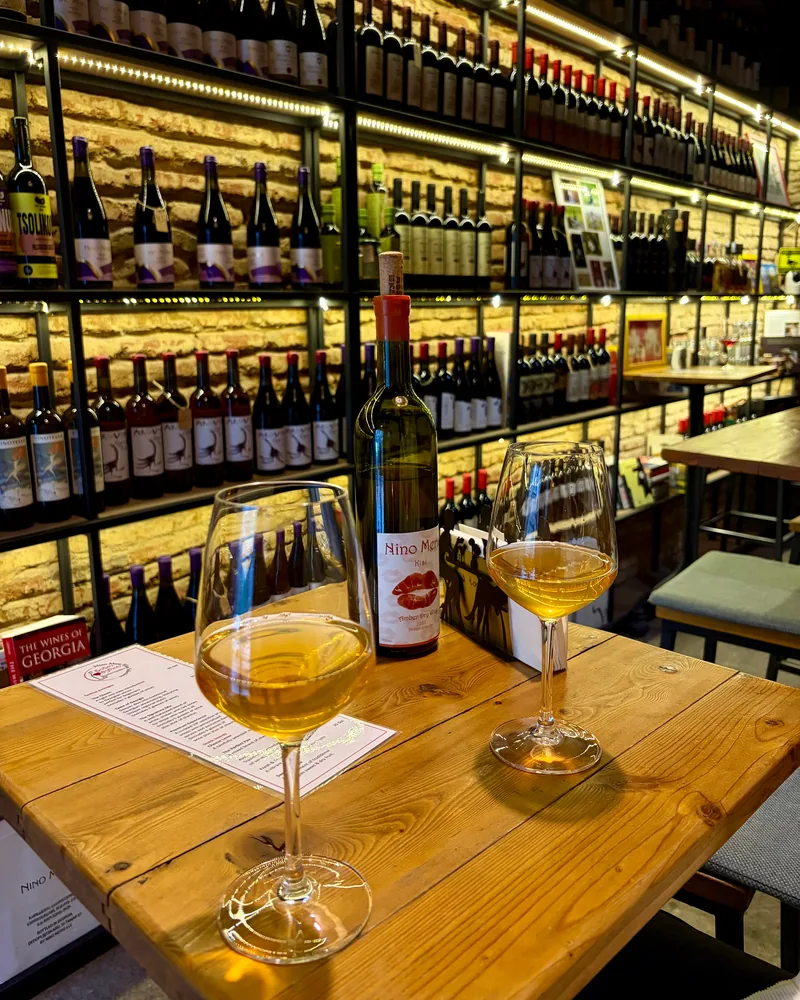
The easiest place to start is a natural wine bar, since low-intervention qvevri wine is what those bars are built around. A glass at a Tbilisi wine bar runs about 20 GEL going by recent reviews, and a 4-wine tasting can cost less than 2 glasses.
- Your first amber: book a guided tasting rather than ordering a single glass. One reviewer who asked what amber wine was over 1 glass was pointed to the tasting package, so ask for the flight and the story comes with it.
- Dinner with a homemade amber: one reviewer had the homemade amber at Beletage Restaurant in its courtyard, among the resident cats, and called it fabulous.
- Amber straight from the qvevri: Bina N37 keeps what its listing says are 43 qvevri on an 8th-floor roof veranda. It's reservation only, 7 to 11 PM, and one reviewer says to book 1 to 2 days ahead.
Where to buy amber wine by the bottle or the litre
Tbilisi's wine shops sell amber by the bottle, 30 to 35 GEL in one 2024 review, and some sell draft wine from the tank, amber included, which is the cheap way to drink it back at your flat. Draft wine ran 10 to 20 GEL a litre in 2023 and 2024 reviews.
Do the bottle maths at a bar that's also a shop. One reviewer paid 20 GEL for a glass of a wine that sells for 30 to 40 GEL a bottle, so if 2 of you want 2 glasses each, the bottle wins.
Frequently asked questions
Is amber wine the same as orange wine?
Yes, amber wine and orange wine are the same style: white grapes fermented with their skins, which turns the wine gold to copper and gives it tannin. Georgians say amber, and it's an official category here, printed on labels as amber dry wine.
Is amber wine sweet?
No, amber wine is dry. The skins add tannin and dried-fruit flavours that can read as rich, but the sugar is fermented out: the Kisi Magraani appellation allows its amber dry wine no more than 4 g a litre. For a sweet Georgian wine, order a semi-sweet red such as Kindzmarauli.
What is qvevri wine?
Qvevri wine is wine fermented and aged in a qvevri, an egg-shaped clay vessel sealed and buried in the ground. The juice goes in with its skins, stalks and pips, and underground the jar holds a steady 13 to 15 C. A white made this way comes out amber; a red is qvevri wine but not amber.
How much does amber wine cost in Tbilisi?
Expect about 20 GEL a glass at a wine bar. One reviewer paid 30 GEL for a 4-wine tasting at Patara Dzagli in 2026, and another paid 30 to 35 GEL a bottle for dry amber at Wine Time in 2024.
Where can I try amber wine in Tbilisi?
Start at a natural wine bar in the old town: Dadi Wine Bar in Sololaki is open until 1 AM, and reviewers single out the homemade amber at Tbileli. For amber straight from the qvevri, Bina N37 keeps its jars on an 8th-floor roof, by reservation only.