Georgian Supra: How the Feast, the Tamada and the Toasts Work
What happens at a Georgian feast, who runs it, what you say, and where to sit at one

A supra is a Georgian feast that runs on toasts: a toastmaster called the tamada leads them in order, everyone drinks on cue, and the food keeps landing for hours. This page tells you what happens at one, what to say when a toast comes your way, how much you really have to drink, and where in Tbilisi you can sit at one without marrying into a Georgian family.
Quick summary
- A supra is a toast-led Georgian feast that can run most of a day, on Georgia's national heritage list since 2017 but not on UNESCO's.
- The tamada gives every toast, the 1st usually to peace, God or the occasion and the last to the tamada, and you drink only on those.
- Answer each toast with gaumarjos ("victory to"), and if the tamada passes you the toast with alaverdi, 2 sentences of thanks will do.
- Big toasts are drunk to the bottom, but you can sip or stick to lemonade if you say so before the 1st toast.
- Without an invitation, book a long table at a family wine cellar, a rooftop home kitchen, a tasting or a cooking class, from about 40 GEL a head to over 100.
What a Georgian supra is
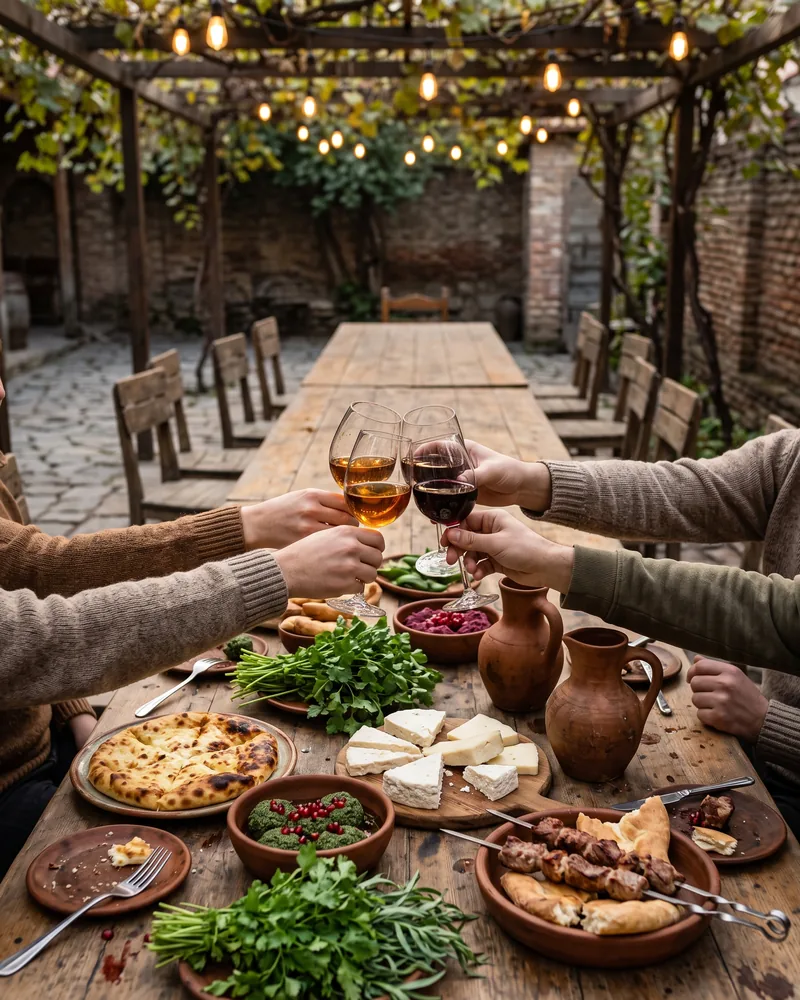
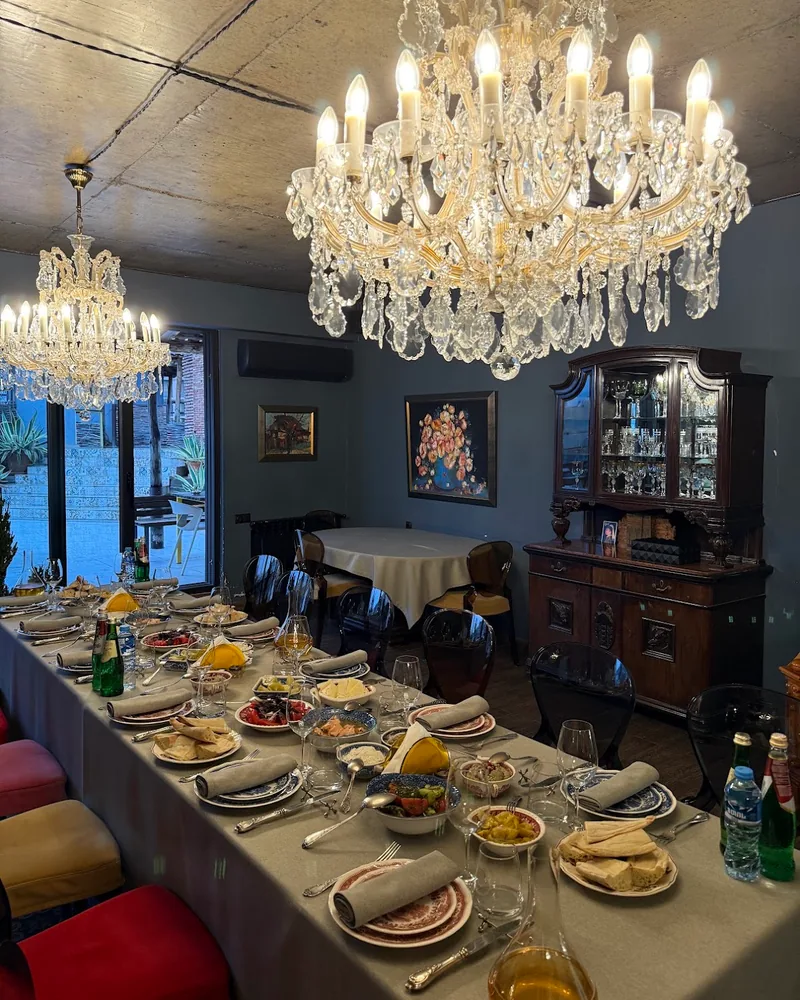
Supra (სუფრა) is the Georgian word for a tablecloth, and for everything that happens on top of one. At its fullest it's a feast of hours, sometimes most of a day, with a toastmaster steering the table through toast after toast while the plates keep coming.
You'll meet one at a wedding, a birthday or a family's welcome for a guest, and a smaller version at any long dinner where someone stands up with a glass. Georgia's culture ministry says the custom belongs to every ethnic group in the country, whatever their religion, and dates its oldest evidence, a small bronze figure, to the 7th century BC.
Georgia made the supra an intangible cultural heritage monument in 2017 and raised it to national significance on 19 February 2020. That's the national list; UNESCO lists the singing that often goes with it, not the supra.
What the tamada does
The tamada is the toastmaster, and at a supra nobody drinks until the tamada has spoken. The host or the table picks one, and Georgia's national tourism site describes the ideal: often a well-educated, respected person, sociable, funny, and able to manage at least a little singing and dancing.
The job is to set the order, give each toast its speech and keep the room in hand. The same site says a good tamada drinks in moderation, which tells you the role is about steering the table, not out-drinking it.
Mid-toast, the tamada may say alaverdi and hand the toast to someone, who builds on it; after that, the tourism site says, anyone may give a toast. The role is old: excavations at Vani, in Imereti, turned up an ancient bronze figure of a man holding a horn.
The order of the toasts
Every family and region runs its own order, so treat this as the usual shape, not a script. The first toast sets the tone, the middle ones move from the country to the family, and the tamada's own toast comes last.
| Order | The toast | What it covers |
|---|---|---|
| 1st | Peace, God or the occasion | Why everyone is here: the wedding, the birthday, the guest |
| 2nd | Georgia | The country |
| 3rd | Parents and ancestors | The people who came before the table |
| 4th | The departed | Those who have died; usually drunk standing, without clinking |
| 5th | Children | The next generation, and any children at the table |
| 6th | Women | Mothers, sisters and the women at the table |
| 7th | Friendship and guests | The friends present, and anyone from far away |
| Last | The tamada | Thanks to the person who ran the night |
The first toast is where regions differ. In Guria it goes to peace, in Kakheti to long life for the icons and shrines, and in Kartli the feast opens with a toast to God; in Mtiuleti, the tourism site adds, the tamada won't let you leave until the angel of your path has blessed you.
Gaumarjos, alaverdi and the other words at the table
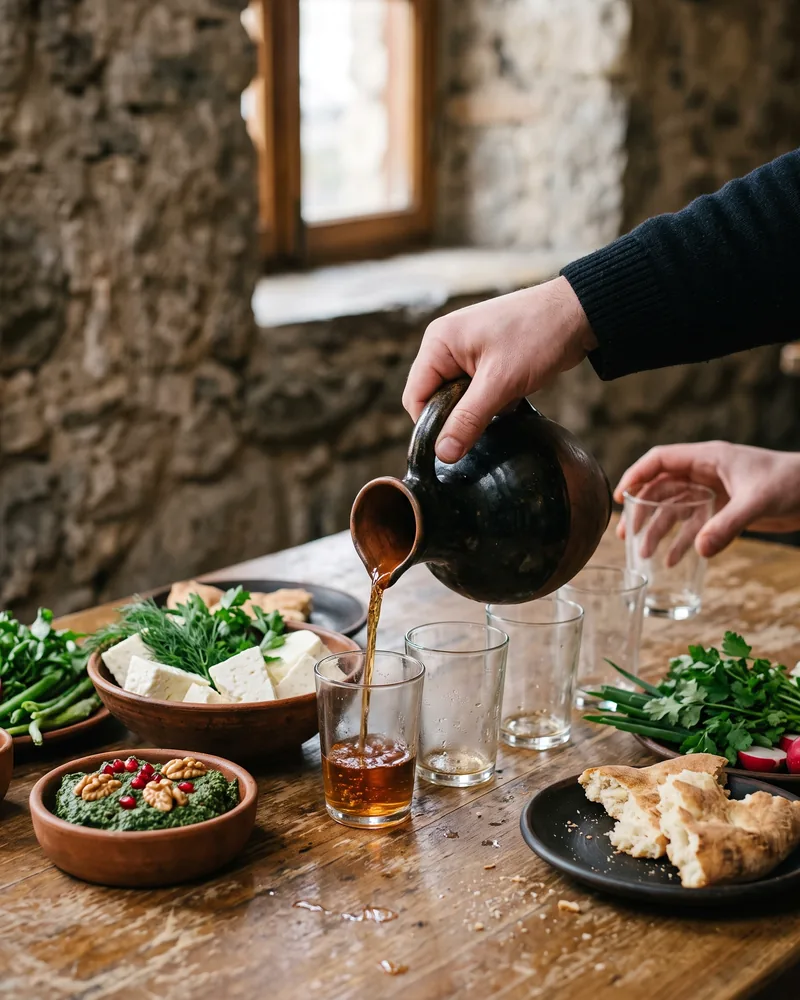
You'll hear the same 5 words all night. Learn gaumarjos, said with your glass raised once the speech has finished, and you've covered most of your lines.
| Word | Georgian | What it means | When you'll hear it |
|---|---|---|---|
| Supra | სუფრა | Tablecloth, and the feast | From the invitation on |
| Tamada | თამადა | The toastmaster | When the table picks who leads |
| Gaumarjos | გაუმარჯოს | Victory to (cheers) | After every toast, from everyone |
| Alaverdi | ალავერდი | Passing the toast on | When the tamada hands a toast to someone |
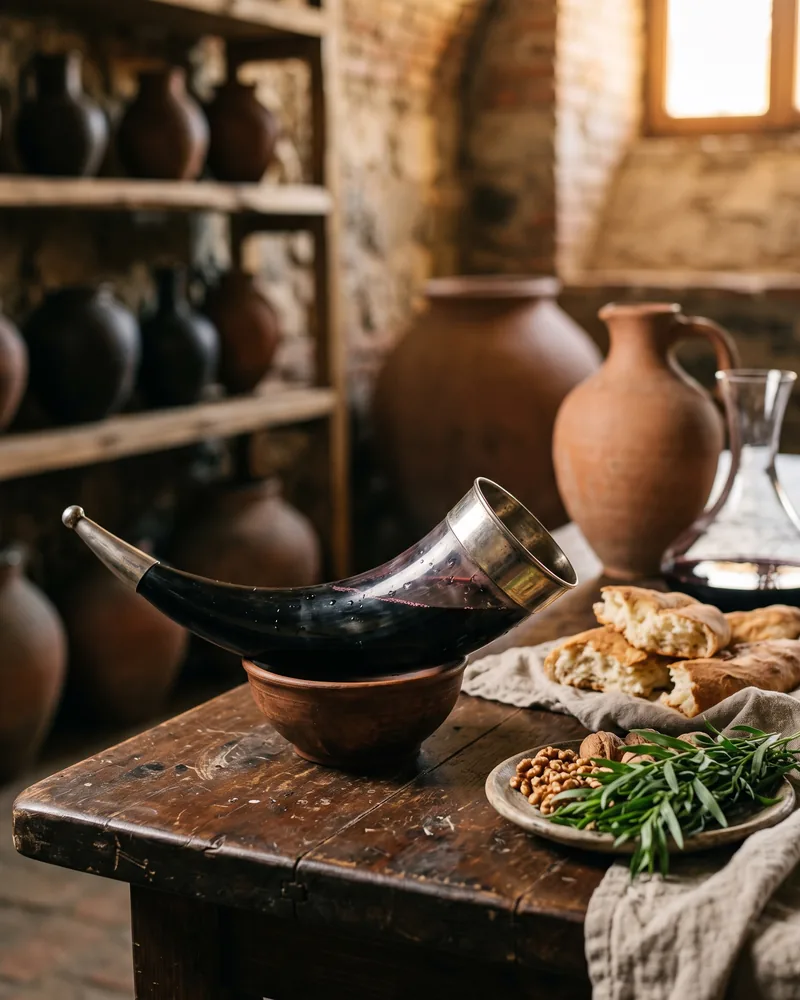
| Kantsi | ყანწი | A drinking horn | When a horn is filled for a toast |
How much you have to drink
Less than you fear, if you plan it. Big toasts are drunk to the bottom, smaller ones can be sipped, and a guest who says at the start that they'll drink lightly usually gets a pass.
The horn is the exception. A kantsi has no base, so once it's filled it only goes down empty; if you don't want a horn's worth of wine in one go, say so before anyone pours.
Wine carries the evening, and later on someone usually brings out the chacha, the grape spirit that has to be at least 40% in the bottle. The toasts get shorter from there, and so should your pours.
If you don't drink
You can still sit at a supra, since the traditional Georgian drinks on the table run to tarragon and pear lemonade as well as wine. Keep one in your glass, raise it on every toast and say gaumarjos with everyone else.
What's on a supra table
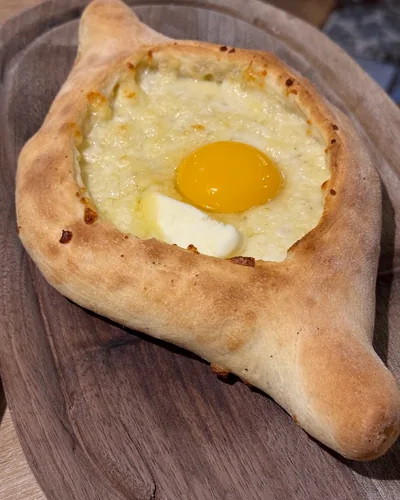
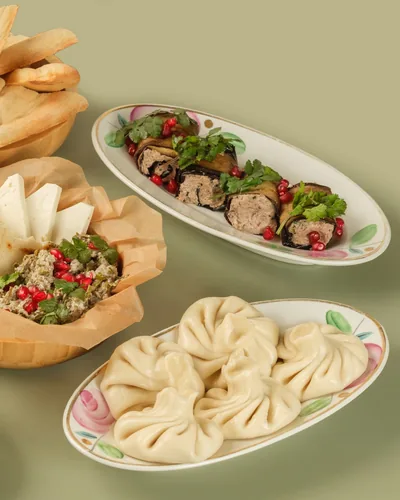
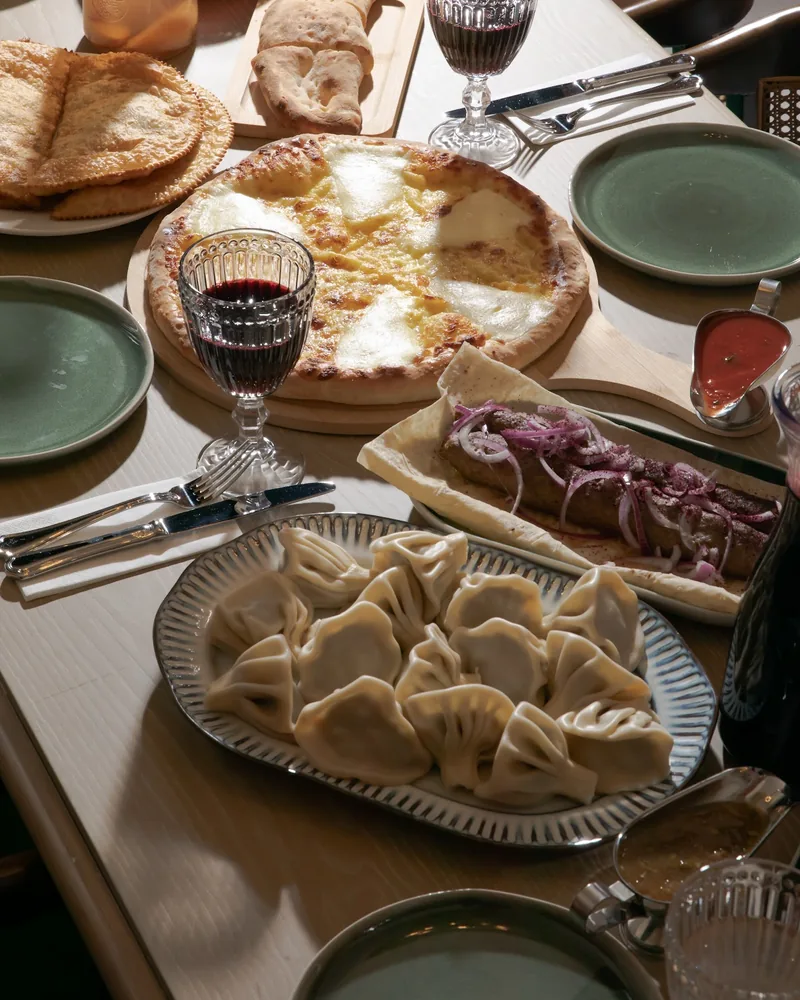
The table fills with Georgian food before anyone is hungry, and it's meant to stay full: the idea is that the tablecloth never shows. Cold dishes usually come first, such as bread, cheese, fresh herbs, pkhali and salads, then hot ones as the evening goes on, from khachapuri to grilled mtsvadi and khinkali.
Khinkali keep their own rules even here: you eat them by hand, sip the broth first and leave the knot on the plate. Nobody expects you to finish everything, and you shouldn't try, because another plate is always on its way.
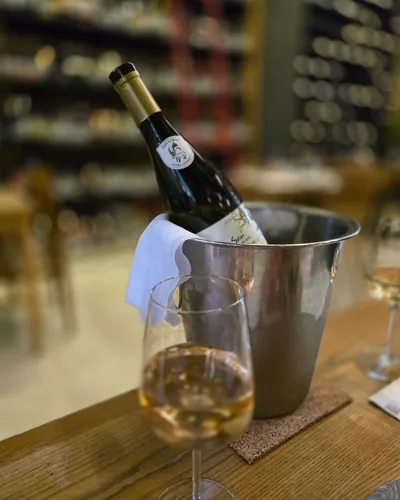
The toasts are drunk in Georgian wine, and at a home supra it's usually the host's own, poured from a jug rather than a bottle. A family cellar may well pour amber wine, white wine left on its skins in clay qvevri until it turns gold.
Songs and dancing
Plenty of supras end up singing, often in parts, with several voices weaving round the same tune. UNESCO lists Georgian polyphonic singing, proclaimed in 2001 and inscribed in 2008, and singles out Chakrulo, a song for ceremonies and festivals, for its metaphors and its yodel.
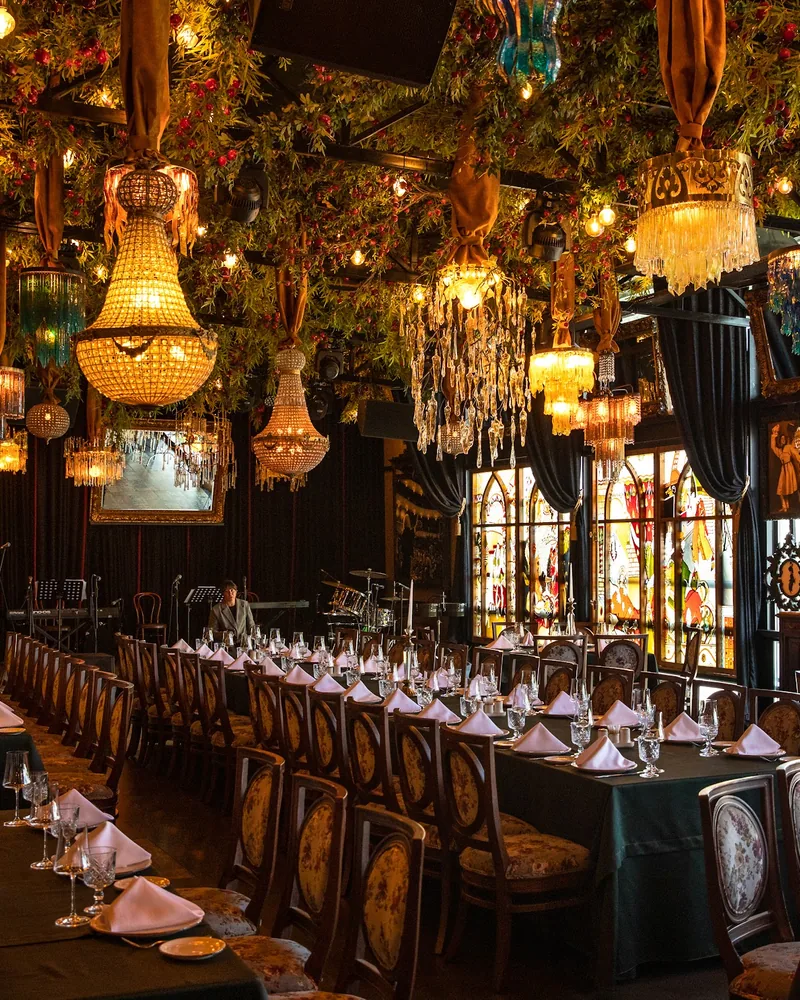
You can't book a family's singing, but some of the big Georgian restaurants put songs and folk dances on a stage, which is the visitor-friendly edition. Go in the evening, since one lunchtime reviewer at Georgian House found no show on, and at Ethnographer the kitchen closes at 10:30 PM.
How to behave as a supra guest
None of this applies to an ordinary dinner out, where restaurant etiquette in Tbilisi is the supra with the formality taken out. At a real supra the rules are few, and most of them are about listening.
- When a toast starts: stop talking, put your fork down and listen; you drink when the speech ends, and leave the wine alone between toasts.
- When you answer: raise your glass, say gaumarjos and drink as much as that toast calls for.
- At the toast to the departed: stand if the table stands, and don't clink.
- If you want to give a toast: wait for an alaverdi or ask the tamada, since the toasts are theirs to hand out.
- If you need to leave early: tell the host or the tamada before you go rather than slipping out.
If you organised the dinner at a restaurant yourself, tipping in Georgia works the way it does at any other meal. If you were invited, the host pays, and reaching for the bill misreads the evening.
Where to join a supra in Tbilisi
A real supra is private, and an invitation from a family, a colleague or a friend's cousin is still the best way in. Without one, a few places on our lists get you close: a long table and a host who runs the toasts.
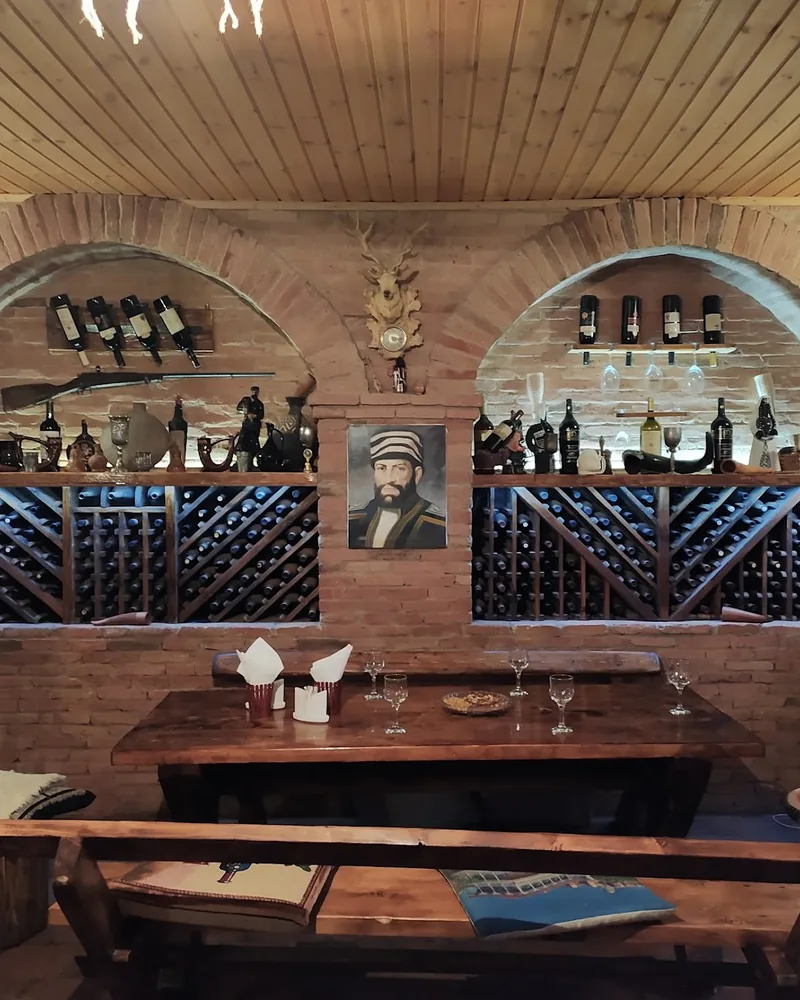
The nearest thing to a family supra you can book is a family wine cellar in the basement of a house, where one reviewer called the host a great tamada. Others describe a long table shared with strangers, unlimited homemade wine and a khinkali lesson from the host's mother, and Google's band is 100+ GEL a head.
In an apartment block, a rooftop home kitchen keeps 43 qvevri on its roof veranda, and one reviewer's line about it is that this is where they celebrate toasts. It's booking only (the same reviewer says book by phone), and Google's band is 100+ GEL here too.
A tasting or a class can end the same way. One reviewer's wine tasting at a bar and shop ended with songs and toasts, and at a cooking class you sit down at the end to eat what you made, with wine and chacha poured.
Then there's the bar version: Graali Bar runs a Tuesday night it calls Supra, from 9 PM, with a free sharing table of snacks and vodka at a special price. It's a riff on the idea, not the real thing.
Running your own supra at a restaurant
With 6 or more friends you can run a small supra at any Georgian restaurant. Pick your tamada before the wine arrives, order in waves rather than all at once, and let the toasts set the pace.
Google's per-person band for most Georgian restaurants on our lists sits at 20 to 60 GEL, a little above the 20 to 40 GEL typical of restaurant prices in Tbilisi overall. For a table of 6, that's somewhere between 120 and 360 GEL before any tip.
Keep one rule from the real thing: nobody drinks between toasts. And whoever ends up as tamada, the last toast of the night goes to them.
Frequently asked questions
What is a Georgian supra?
A supra is a traditional Georgian feast led by a toastmaster, the tamada, who gives toast after toast while the food keeps coming for hours. The word also means tablecloth. Georgia listed the supra as intangible cultural heritage in 2017 and gave it national significance in 2020, and you'll meet one at weddings, birthdays and family welcomes.
What does a tamada do?
The tamada leads the supra: they set the order of the toasts, give each one and decide when the table drinks. The host or the guests pick them, often someone respected and good with words. The tamada can hand a toast to a guest by saying alaverdi, and a good one, Georgia's national tourism site says, drinks in moderation.
What does gaumarjos mean?
Gaumarjos (გაუმარჯოს) means "victory to", and it's the Georgian answer to a toast, the way you'd say cheers. At a supra you say it after each toast with your glass raised, then drink. Alaverdi is the other word worth knowing: it's how the tamada passes the toast to you, and 2 sentences of thanks to the host are enough of a reply.
Do you have to drink at a supra?
No. Big toasts are usually drunk to the bottom, but a guest can sip, or skip wine entirely, as long as they say so at the start. Keep water or lemonade in your glass and raise it on every toast. The one vessel you can't sip from is the drinking horn, which has no base, so turn it down before it's filled.
Is the Georgian supra on the UNESCO list?
No. The supra is on Georgia's national list: it became an intangible cultural heritage monument in 2017 and was raised to national significance on 19 February 2020. What UNESCO does list is Georgian polyphonic singing, proclaimed in 2001 and inscribed in 2008, and that singing turns up at plenty of supras.
Where can a tourist experience a supra in Tbilisi?
Book a long table. A family wine cellar where the host runs the toasts and a rooftop home kitchen with 43 qvevri come closest to the real thing, at Google's 100+ GEL band per person, so book both ahead. For songs and folk dancing with dinner, go to one of the big Georgian restaurants with a show, in the evening.