Vegetarian Georgian Food: What to Order and Where in Tbilisi
The meat-free half of the Georgian table, what's vegan as it arrives, and where to eat it

Georgian cooking knows exactly how to feed you through a week without meat. The Orthodox fasts take meat, dairy and eggs off the table on most Wednesdays and Fridays and for 4 long seasons a year, and the kitchen answered with walnuts, beans, herbs and aubergine. This page covers the dishes to order, which ones are vegan as they arrive, how the fasting menu works and where in Tbilisi to eat each one.
Quick summary
- Georgian food is easy for vegetarians: 12 classic dishes, from pkhali and badrijani to lobio, ajapsandali and potato khinkali, are vegetarian in their usual form.
- Vegans have 5 things to check: butter on potato khinkali, cheese in every khachapuri and on baked mushrooms, egg in adjaruli khachapuri, sour cream on the side and honey in the sweets.
- Lent 2027 runs from 15 March to Easter Sunday on 2 May, and the word samarkhvo (for the fast) marks food made without meat, dairy or eggs.
- The other fasts fall on most Wednesdays and Fridays, from 28 November to Christmas on 7 January, and in the 2 weeks before Mariamoba on 28 August.
- In Tbilisi, any Georgian restaurant with a pkhali plate covers the classics, and 2 fully vegan kitchens on our lists cover the dairy dishes, 1 with vegan khinkali and 1 with vegan khachapuri.
Is Georgian food vegetarian friendly?
Yes, far more than Georgian food's reputation for grilled pork and meat dumplings suggests. Every supra table has a meat-free half (walnut pâtés, fried aubergine, beans in a clay pot, pickles, bread), and a vegetarian can eat well from it without changing a single order.
The reason is the church calendar. On a strict Orthodox fast day meat, dairy and eggs are all off, so Georgian cooks built a second repertoire without them, and Georgia's tourism board sorts it into walnut dishes, herb dishes, mushrooms and pickles, khinkali, soups, beans, cornmeal, khachapuri and desserts.
Vegans have a harder time than vegetarians, because the same kitchen that pounds walnuts without a drop of dairy also melts butter over dumplings and bakes cheese into bread. The rule of thumb: the cold starters are usually safe, the hot breads never are, and the dumplings depend on the filling.
The vegetarian Georgian dishes to order
These are the 12 meat-free dishes you'll meet on Georgian menus in Tbilisi, with the one thing a vegan needs to check for each. Order 2 or 3 cold walnut dishes, a bean pot and something from the bread or dumpling side, and you've ordered the way a Georgian table does.
| Dish | What it is | Vegan as served? |
|---|---|---|
| Pkhali | Walnut pâté with spinach, beet greens, leek, pepper, green beans or carrot | Yes, as a rule |
| Badrijani nigvzit | Fried aubergine rolled round walnut paste, often with pomegranate seeds | Yes, as a rule |
| Georgian salad | Tomato and cucumber, often dressed with walnut paste and herbs | Yes, unless cheese is added |
| Lobio | Kidney beans stewed in a clay pot, served with cornbread and pickles | Usually; it comes many ways, so ask |
| Ajapsandali | Aubergine, peppers, potato and tomato stewed with herbs | Yes, as a rule |
| Mushrooms on a ketsi | Mushrooms baked in a small clay dish | Rarely: usually under sulguni |
| Potato khinkali | Dumplings filled with potato | Only without the melted butter |
| Mushroom khinkali | Dumplings filled with chopped mushrooms | Ask how they're finished |
| Cheese khinkali | Dumplings filled with cheese, served with sour cream | No |
| Khachapuri | Bread baked with cheese; the adjaruli boat adds egg and butter | No |
| Lobiani | Bread baked round a bean filling | Ask: Racha-style can carry ham |
| Mchadi | Flat cornbread, the usual partner for lobio and pkhali | Yes, as a rule |
Pkhali, badrijani and the walnut dishes
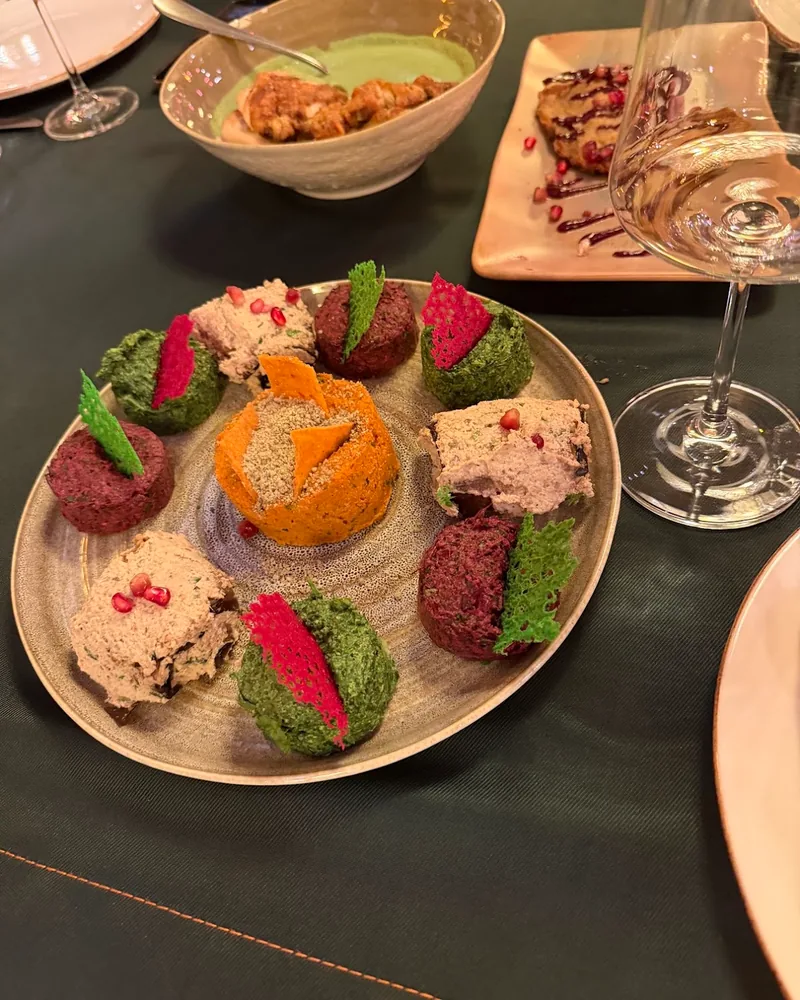
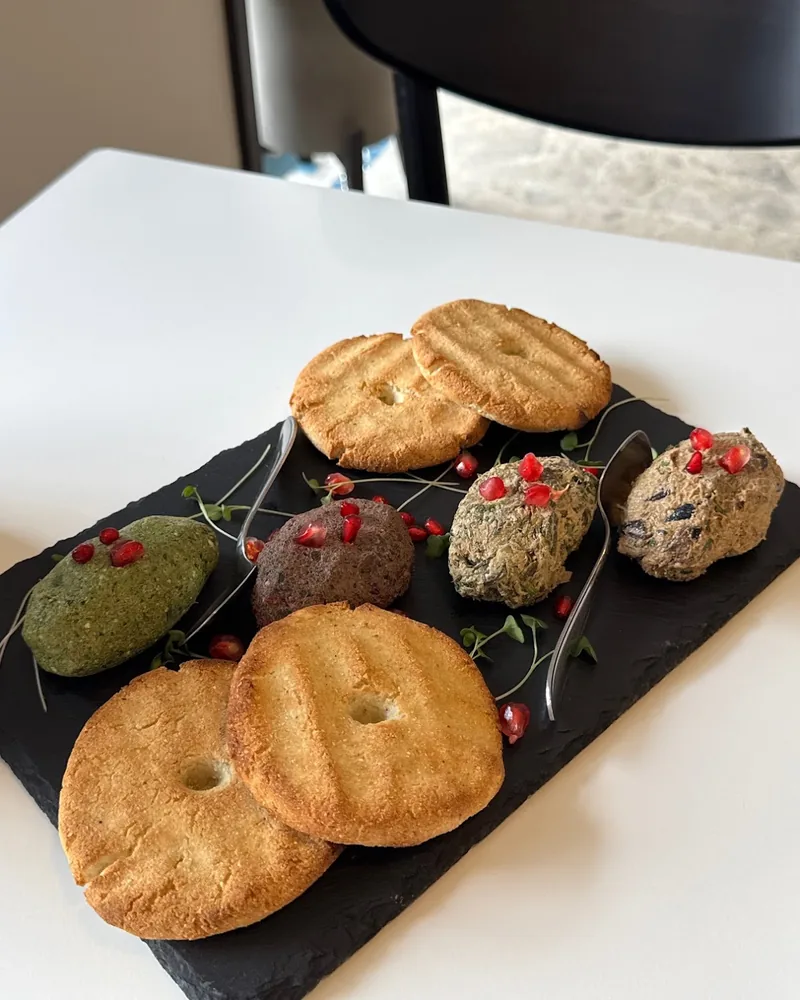
Pkhali is the dish to order first. Georgia's tourism board describes it as a family of walnut-based pâtés made with spinach, beet greens, leeks, red peppers, green beans or carrots, and it usually arrives as a mixed plate of green, red and beige rounds dotted with pomegranate seeds.
Ask for the assorted plate (pkhali assorti on some menus) and eat it with bread or mchadi. At Pasanauri on Kazbegi Avenue, one reviewer's order included assorted pkhali, an aubergine salad and mushroom khinkali, and another singled out the Imeretian khachapuri and the mushrooms with sulguni.
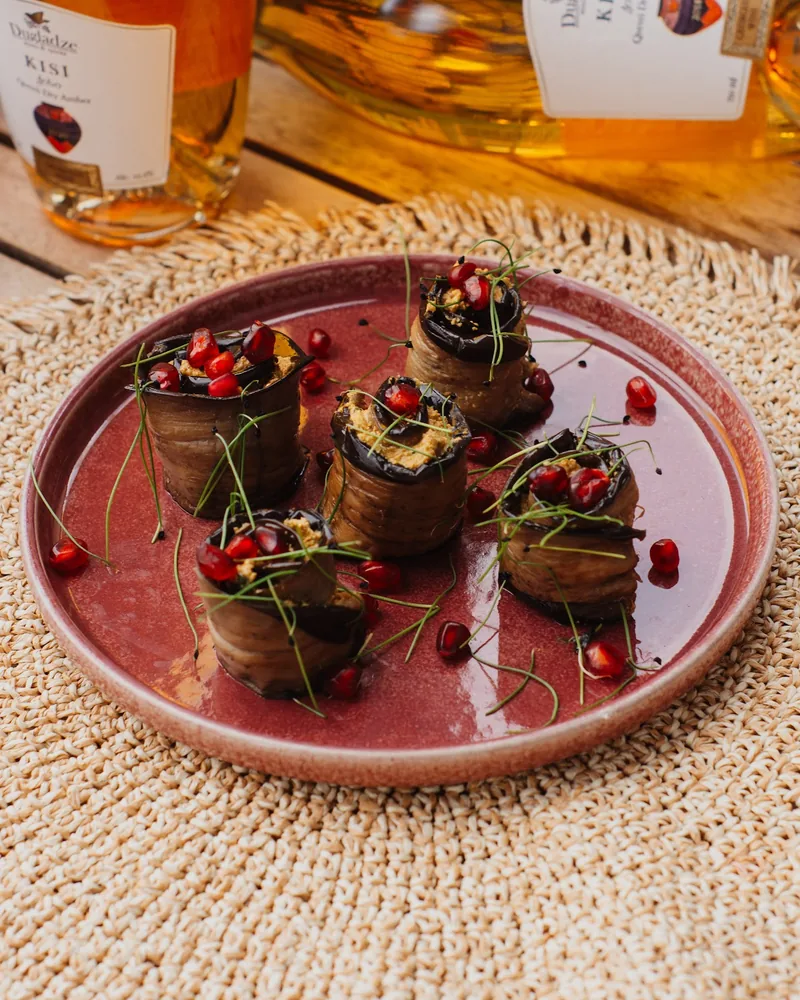
Badrijani nigvzit is the other walnut classic: slices of aubergine fried in oil or baked, spread with walnuts crushed with onion, coriander, salt and vinegar, then rolled up. You'll often see it written as eggplant rolls, and it turns up in reviews all over town: one reviewer at Supra Sololakshi called its rolls the best they'd had so far.
The same walnut paste dresses the Georgian salad of tomato and cucumber, fills roasted peppers and goes into kotrana, boiled white cabbage with walnuts, hazelnuts and pomegranate. That's also why anyone with a nut allergy has to ask about every cold starter on a Georgian menu.
Lobio, ajapsandali, mushrooms and soups
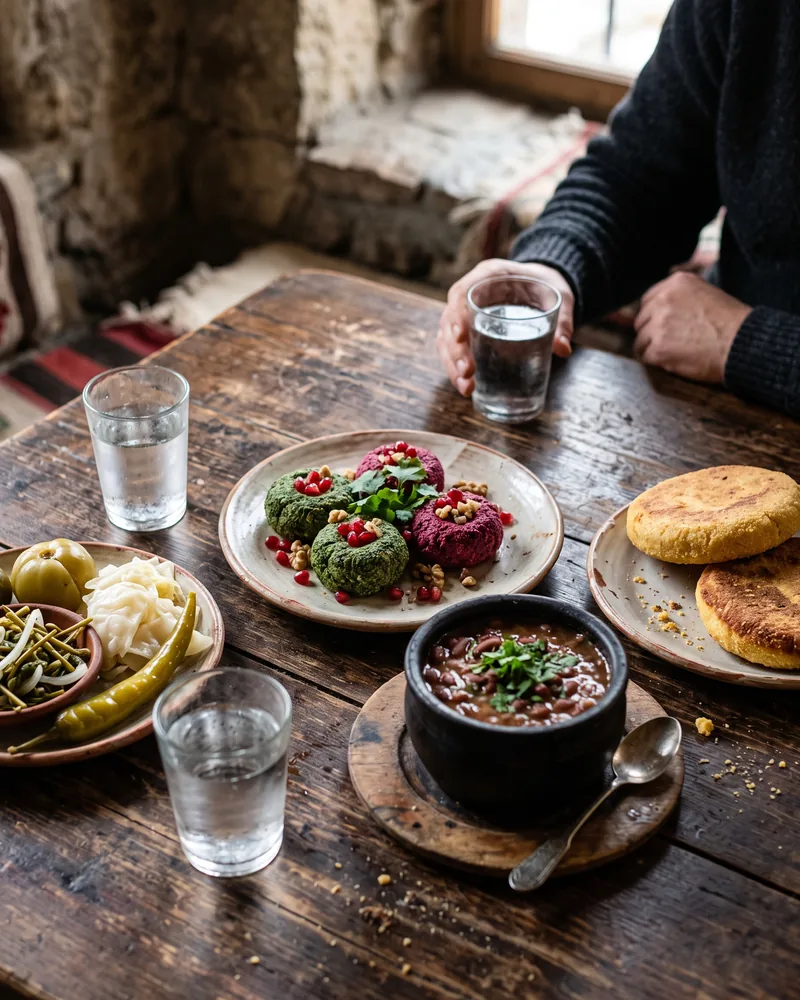
Lobio is kidney beans stewed with herbs and spices and served in the clay pot they cooked in, with mchadi and a plate of pickles alongside. It's the most filling meat-free order on the menu, and at Pirosmani's Dukani, Google's review topics count 14 mentions of it.
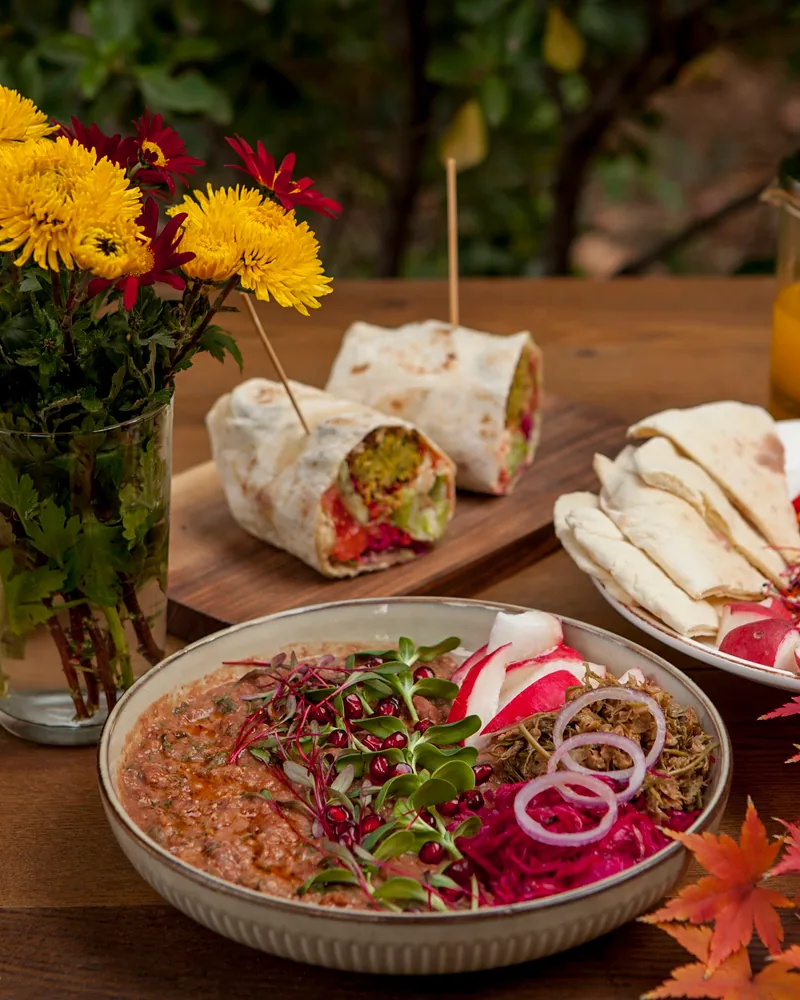
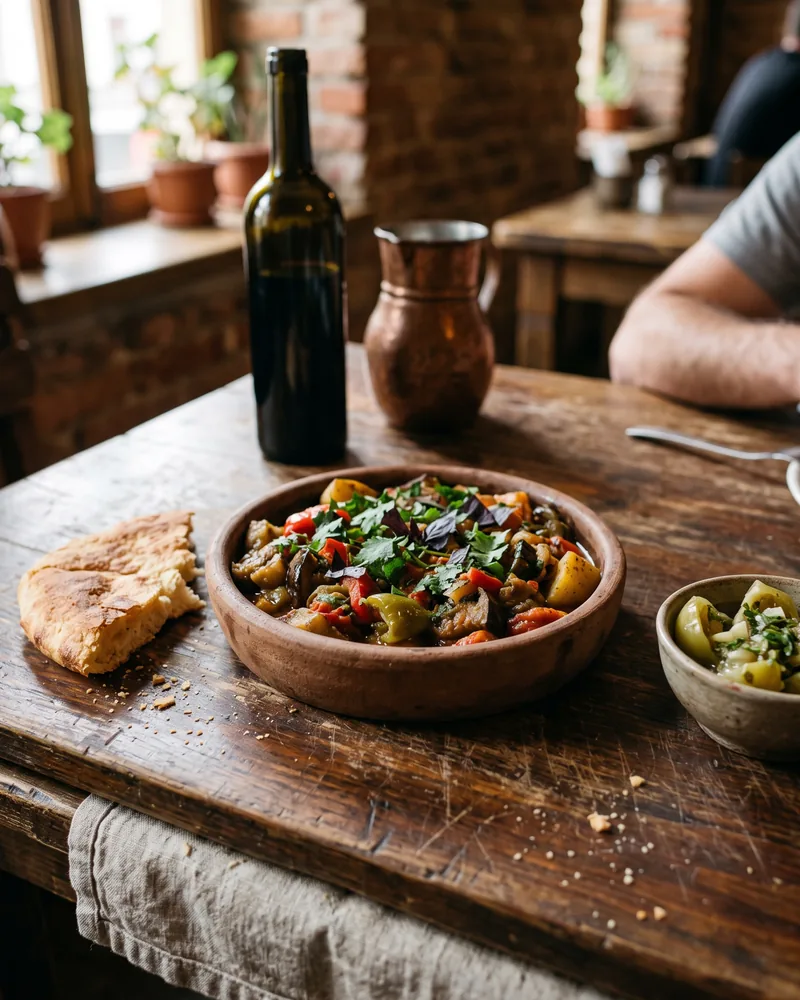
Ajapsandali is Georgia's vegetable stew: aubergine, peppers and potatoes cooked down in tomato with fresh herbs. The tourism board calls it a fasting food and a native Tbilisi dish, and it's one of the few hot Georgian dishes that's vegan by design.
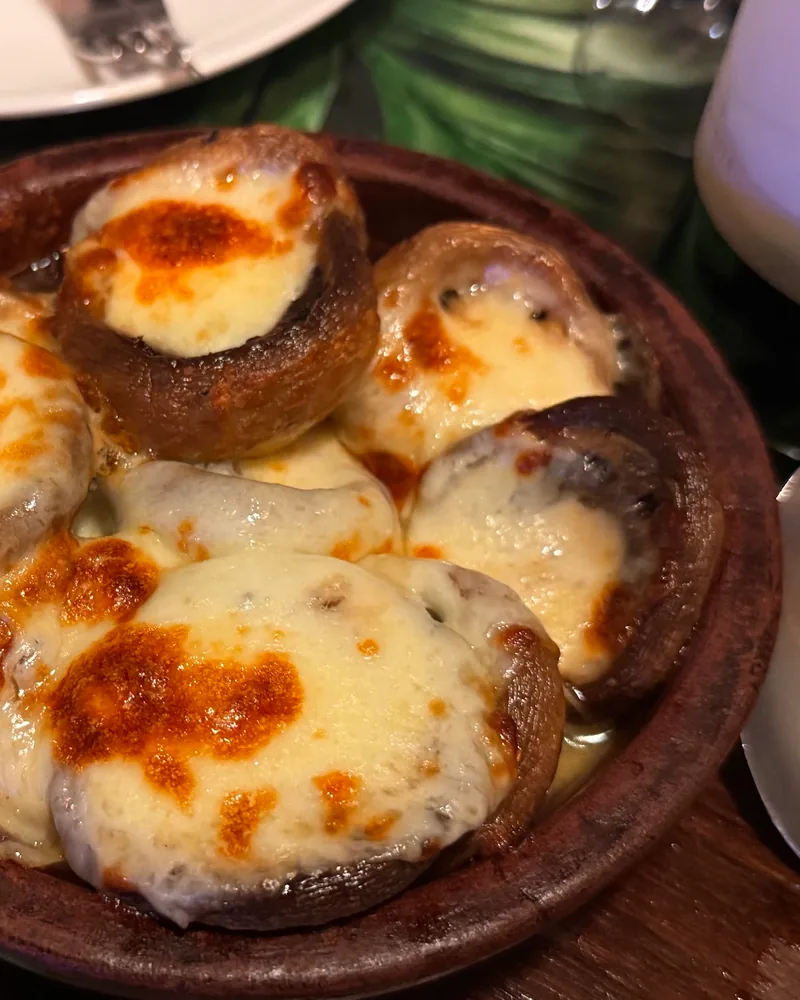
Mushrooms on a ketsi are baked in a small round clay dish, and they usually come out under a layer of melted sulguni. That makes them a vegetarian favourite and a vegan's no, unless the kitchen will leave the cheese off.
For soup, the tourism board's vegetarian list names sorrel, pumpkin, barley, potato, mushroom and asparagus. Pumpkin and mushroom both turn up in Tbilisi reviews: one reviewer at Pub Georgian had both, and another at Pirosmani's Dukani singled out the mushroom soup.
The Pub Georgian mushroom soup was a cream soup, so ask before you order either one as a vegan. And skip kharcho, a beef soup made with walnuts, and chikhirtma, a chicken soup thickened with egg.
Meat-free khinkali and khachapuri
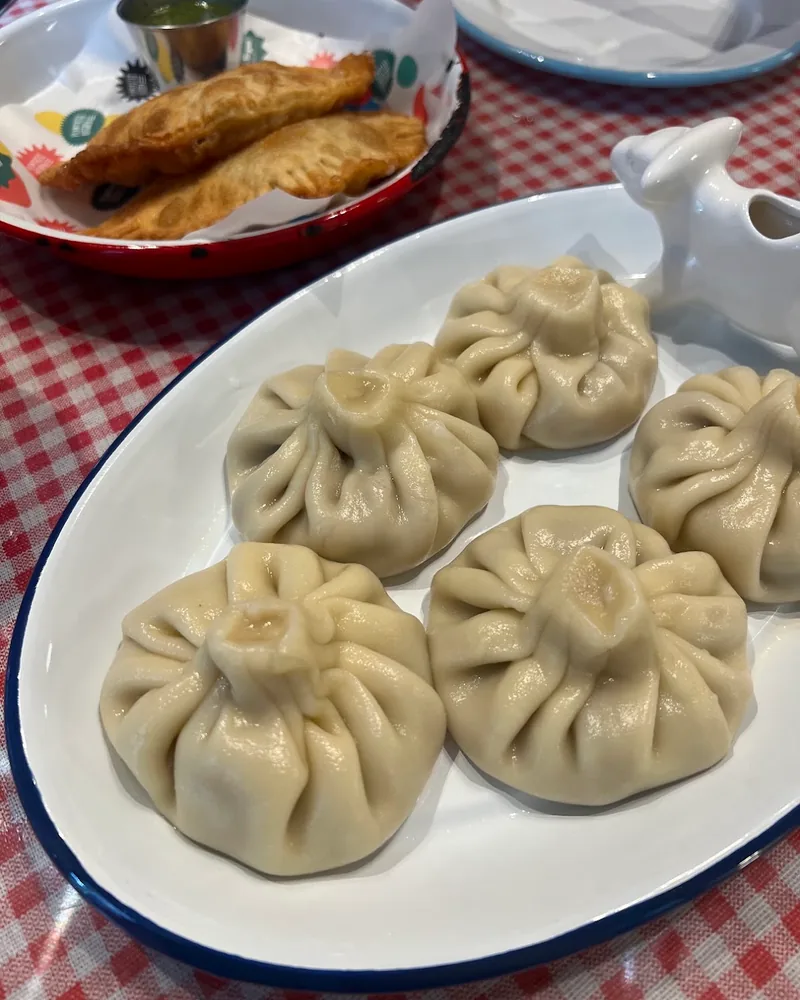
Khinkali aren't only meat. The tourism board lists potato, mushroom and cheese versions, and the city's khinkali houses put them on the menu right next to the beef and pork, so a mixed table can share one order.
Potato khinkali traditionally come with melted clarified butter or garlic water, and cheese khinkali with sour cream, so a vegan orders potato and asks for the garlic water. Khinkali Bar N1's own Instagram calls its potato khinkali a vegan twist on the classic, and you eat them by hand, like any khinkali.
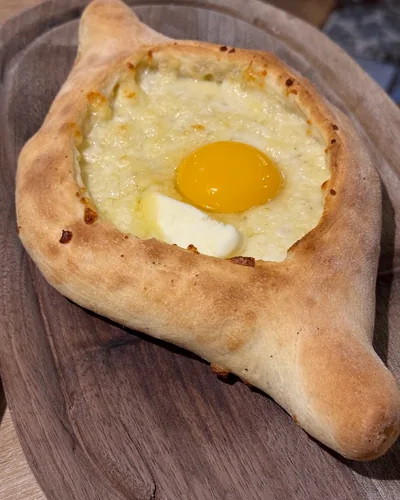
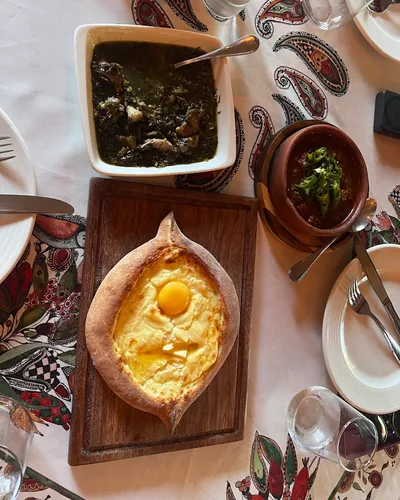
Khachapuri is the default vegetarian comfort order, and it's never vegan: every version is bread and cheese, and the adjaruli boat adds an egg yolk and butter to stir in. The types of khachapuri change the shape and the filling, from the round imeruli to the Gurian crescent with boiled egg inside, but not the dairy.
Lobiani is the bean-filled cousin and usually the vegan's bread, with one catch: Georgia's tourism board singles out the Racha version made with ham. Bakeries sell it by the piece, and at Caravanserai Bakery, a hatch below street level in the Old Town, one reviewer's lobiani was a good portion for breakfast.
Cornbread, cornmeal and pickles
Mchadi is flat cornbread, the partner lobio and pkhali expect, and ghomi is a soft cornmeal porridge that the tourism board says is eaten with cheese and sauces. Elarji, from Samegrelo, is cornmeal cooked with cheese, and one reviewer at Sheen Aura rated its fried elarji alongside the aubergine salad.
Pickles are vegan, and a plate of them (cabbage, green tomatoes, peppers, garlic) comes with lobio and suits everything else. The tourism board calls pickled 'capers', which in Georgia means jonjoli, bladdernut flowers, a must for anyone fasting and a fixture of every religious supra.
Jonjoli is worth hunting down. At Tsiskvili Terrace, Google's review topics count 14 mentions of the lobiani and 2 of lobiani with jonjoli. Order that pairing and you've got the fasting table in a single bite.
Vegetarian or vegan: what to check
A vegetarian's main trap is the walnut sauce that turns out to be over meat: satsivi is chicken or turkey in walnut sauce, and Megrelian kharcho is chicken with walnuts. For vegans the trouble is dairy, eggs and honey, and they turn up in 5 places.
- Butter: melted over potato khinkali and stirred into adjaruli khachapuri. Ask for garlic water with the khinkali instead.
- Cheese: in every khachapuri, on mushrooms baked in a ketsi, cooked into elarji and served with ghomi. Sulguni and imeruli are the Georgian cheeses you'll meet most in these.
- Sour cream and matsoni: sour cream comes with cheese khinkali, and matsoni, the Georgian yoghurt, is a breakfast staple.
- Eggs: the yolk in adjaruli khachapuri, and boiled egg inside the Gurian crescent pie.
- Honey: in gozinaki and korkoti, and fasting rules allow it, so a samarkhvo sweet isn't automatically vegan.
The fix for khachapuri is a fully vegan kitchen. Most of the vegan and vegetarian restaurants in Tbilisi cook international food (falafel, pizza, curry, burgers), but Plantastic Kitchen and Shpana both make Georgian dishes without the dairy.
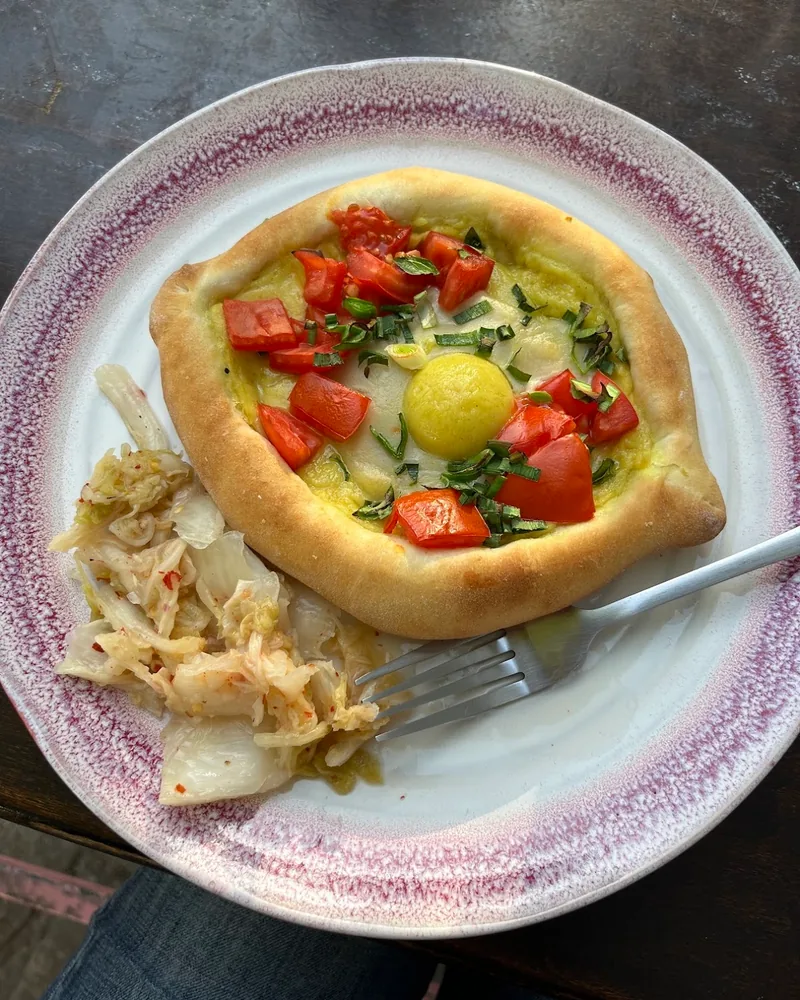
Shpana's reviewers mention its vegan khachapuri 5 times, and one had an adjaruli with (vegan) egg and cheese plus an eggless version with tomatoes and mushrooms. Plantastic Kitchen's own listing promises veganised Georgian dishes, and one reviewer there called the khinkali the best dish.
Samarkhvo: fasting food and the Orthodox calendar
Samarkhvo (სამარხვო) means 'for the fast', and in Georgia it marks food made without meat, dairy or eggs, on a menu or a bakery counter. It's the most useful word a vegan can learn here, because a samarkhvo dish has already been through the check you'd otherwise do yourself.
The rules come from the church. On a strict fast day, the Orthodox fasting rule excludes meat, eggs, dairy, fish, wine and oil, and lighter fast days bring oil and wine back. The Georgian Church keeps the old Julian calendar, which puts its dates 13 days behind the civil ones.
| Fast | When in Georgia | Length |
|---|---|---|
| Nativity fast | 28 November to 6 January, ending at Christmas on 7 January | 40 days |
| Great Lent and Holy Week | 15 March to 1 May 2027, ending at Easter on Sunday 2 May | 7 weeks, the strictest |
| Apostles' fast | Early summer; its start moves with the Easter date | Varies |
| Dormition fast | 14 to 27 August, ending the day before Mariamoba on 28 August | 2 weeks |
| Wednesdays and Fridays | Every week, outside the fast-free weeks after Christmas, Easter and Pentecost | 1 day at a time |
Christmas on 7 January and Mariamoba on 28 August are both public holidays under Georgia's Labour Code, so the 2 fasts that end on them finish with a day off and a feast. You'll still find meat on Tbilisi menus through every fast, since fasting is a personal practice, not a rule for restaurants.
Vegetarian Georgian desserts
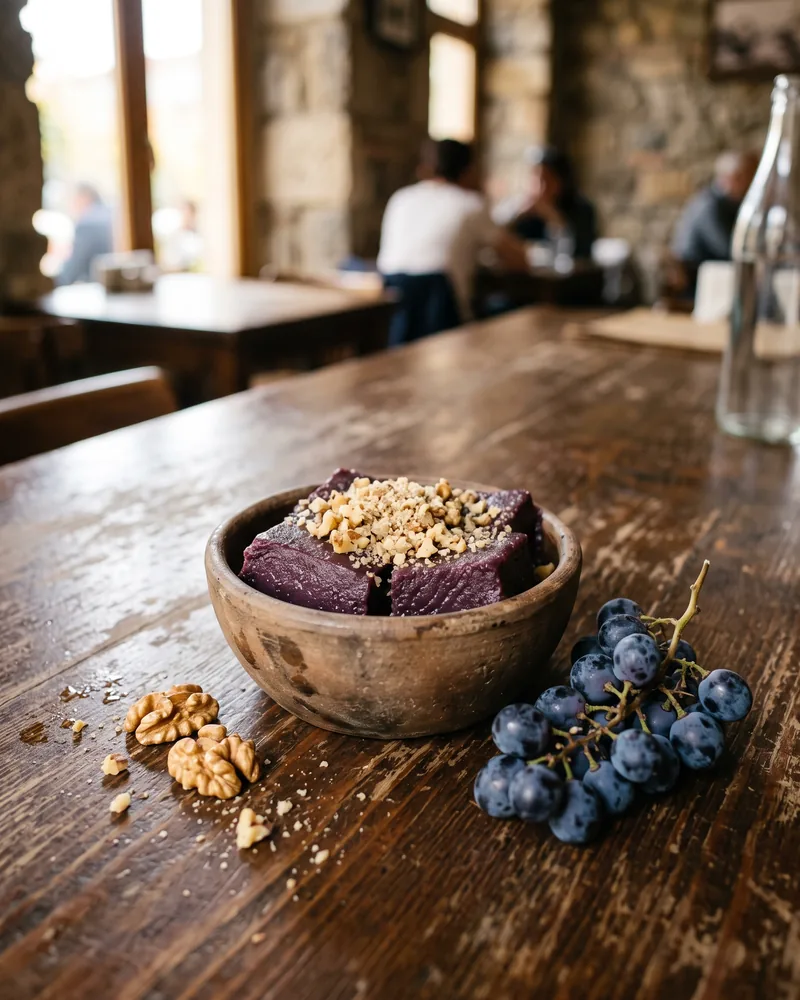
The grape and walnut sweets among the Georgian desserts follow the same fasting logic: grapes, walnuts and flour, and no dairy. Churchkhela is walnuts or hazelnuts threaded on a string and dipped in thickened grape juice, which makes it vegan and easy to carry around all day.
Pelamushi is the same boiled grape juice set with white corn meal into a pudding, and tatara is the version made with dark wheat flour; neither traditionally has added sugar. Gozinaki (walnuts in boiled honey, cut into diamonds) and korkoti (boiled wheat with walnuts, honey and raisins) are dairy-free and fit the fasting rules, but the honey rules them out for strict vegans.
The cake shops are a different story, since the layered cakes and eclairs in their windows are butter and cream. For a vegan, the churchkhela stall is the dessert counter.
Where to eat vegetarian Georgian food in Tbilisi
Any serious Georgian restaurant will feed a vegetarian well, because pkhali, badrijani and lobio are the backbone of the menu, not a side option. Start with the kitchens where reviewers keep ordering the meat-free classics, and head to a vegan kitchen when you want khinkali and khachapuri without the dairy.
- On a budget: at Family Kitchen Tar Tun you pick home-cooked dishes from the counter and, one reviewer says, pay by weight. Another singles out the aubergine roll, and Google's price band is 10 to 20 GEL.
- Late: Asi Khinkali serves until 2 AM every night, and one reviewer rated its potato khinkali the tastiest they'd had so far.
- To learn it: cooking classes regularly put pkhali and badrijani on the menu, and several take vegetarians. Tbilisi Cooking Class offers vegetarian options on request, and reviews of Nana's Kitchen describe menus adapted for vegetarian and vegan groups.
A meat-free Georgian dinner costs what any Georgian dinner does. Google puts Pirosmani's Dukani and Khinkali Bar N1 in its 20 to 50 GEL price band and both vegan kitchens at 20 to 30 GEL, and at Caravanserai Bakery one reviewer paid 3 GEL for a khachapuri.
Georgian phrases for vegetarians and vegans
English goes a long way in the Old Town, but at a bakery hatch or a family table a Georgian phrase gets you a straighter answer. Keep it to the question, and point at the dish.
| Say | Georgian | Meaning |
|---|---|---|
| Me khortss ar vcham | მე ხორცს არ ვჭამ | I don't eat meat |
| Rdzis produktebs ar vcham | რძის პროდუქტებს არ ვჭამ | I don't eat dairy products |
| Khortsi akvs? | ხორცი აქვს? | Does it have meat in it? |
| Kvertskhi akvs? | კვერცხი აქვს? | Does it have egg in it? |
| Samarkhvo | სამარხვო | For the fast: no meat, dairy or eggs |
Frequently asked questions
Is Georgian food vegetarian friendly?
Yes, very. The Orthodox fasts took meat, dairy and eggs off the table for weeks at a time, so Georgian menus carry walnut pâtés (pkhali), aubergine rolls with walnuts (badrijani), bean stew (lobio) and ajapsandali as standard. Add khachapuri and potato or mushroom khinkali, and a vegetarian can eat a full Georgian dinner without changing a single dish.
What can vegans eat in Georgia?
More than you'd expect: pkhali, badrijani nigvzit, ajapsandali, lobio, mchadi, the pickles and churchkhela are all vegan as a rule, and potato khinkali are too if you swap the butter for garlic water. Skip khachapuri, cheese khinkali and baked mushrooms, check the soups for cream, and look for the word samarkhvo, which marks food made without meat, dairy or eggs.
Which khinkali are vegetarian?
Potato, mushroom and cheese khinkali are all meat-free. Potato khinkali traditionally come with melted clarified butter or garlic water, so vegans should ask for the garlic water, and cheese khinkali come with sour cream. Khinkali Bar N1's Instagram calls its potato khinkali a vegan twist on the classic, and Plantastic Kitchen, a vegan bistro, makes its own.
Is khachapuri vegetarian?
Yes, khachapuri is vegetarian but never vegan: every version is bread baked with cheese, and the adjaruli boat adds an egg yolk and butter. For a vegan one, Shpana, a fully vegan kitchen, makes khachapuri with a vegan egg. Lobiani, bread baked round a bean filling, is the vegan's bakery option, as long as it isn't the Racha style with ham.
What does samarkhvo mean?
Samarkhvo means 'for the fast', and it marks food made without meat, dairy or eggs for the Orthodox fasting days. On a strict fast day the rule also drops fish, wine and oil. For a vegan, a samarkhvo dish is the safest order on a Georgian menu or bakery counter, though fasting rules allow honey, so check sweets like gozinaki.
When is Lent in Georgia in 2027?
Great Lent 2027 runs from Monday 15 March to Holy Saturday on 1 May, and Orthodox Easter falls on Sunday 2 May. The Georgian Church keeps the old Julian calendar, so its fixed feasts fall 13 days after the western ones, which is why the Nativity fast runs from 28 November to Christmas on 7 January.
How do you say 'I don't eat meat' in Georgian?
Say 'me khortss ar vcham' (მე ხორცს არ ვჭამ), which means 'I don't eat meat'. For dairy, it's 'rdzis produktebs ar vcham'. The shortest useful question is 'khortsi akvs?', meaning does it have meat in it, and 'kvertskhi akvs?' asks the same about egg.
Where can I eat vegetarian Georgian food in Tbilisi?
Any good Georgian restaurant covers the classics: reviewers at Pirosmani's Dukani keep ordering lobio and aubergine with walnuts, and one reviewer's order at Pasanauri on Kazbegi Avenue included pkhali and mushroom khinkali. For vegan khinkali and khachapuri, try Plantastic Kitchen in Sololaki or Shpana. On a budget, Family Kitchen Tar Tun sells home-cooked dishes from the counter.