Georgian Food Souvenirs: What to Buy in Tbilisi and How to Get It Home
Spices, churchkhela, wine and chacha, where to buy them, and which bag each one goes in

Georgia's best souvenirs are the ones you eat: a string of churchkhela, a bag of the spices that make the food taste Georgian, a bottle of qvevri wine and something stronger for the brave. The hard part is getting them home. This page covers what to buy, where to find it in Tbilisi, which bag each thing goes in, and what customs at home will let through.
Quick summary
- The 5 food souvenirs worth your suitcase space are churchkhela, khmeli suneli or another spice blend, Svan salt, a bottle of qvevri or amber wine and a bottle of chacha.
- Anything that pours or spreads, from wine to adjika, tkemali and honey, goes in the checked bag, because the cabin limit is 100 ml a container.
- Chacha between 24% and 70% can fly in checked luggage up to 5 L per person, and nothing over 70% can fly at all.
- The EU lets you bring in 4 L of still wine and 1 L of spirits duty-free, and Great Britain 18 L of still wine and 4 L of spirits.
- Cheese and meat can't go into the EU or Great Britain from Georgia, vacuum-packed or not, and honey is capped at 2 kg per person.
- Buy wine where you can taste it and have it wrapped (one reviewer paid 6 GEL for a cushioned wrap), and buy spices and churchkhela at a market stall.
What food to bring home from Georgia
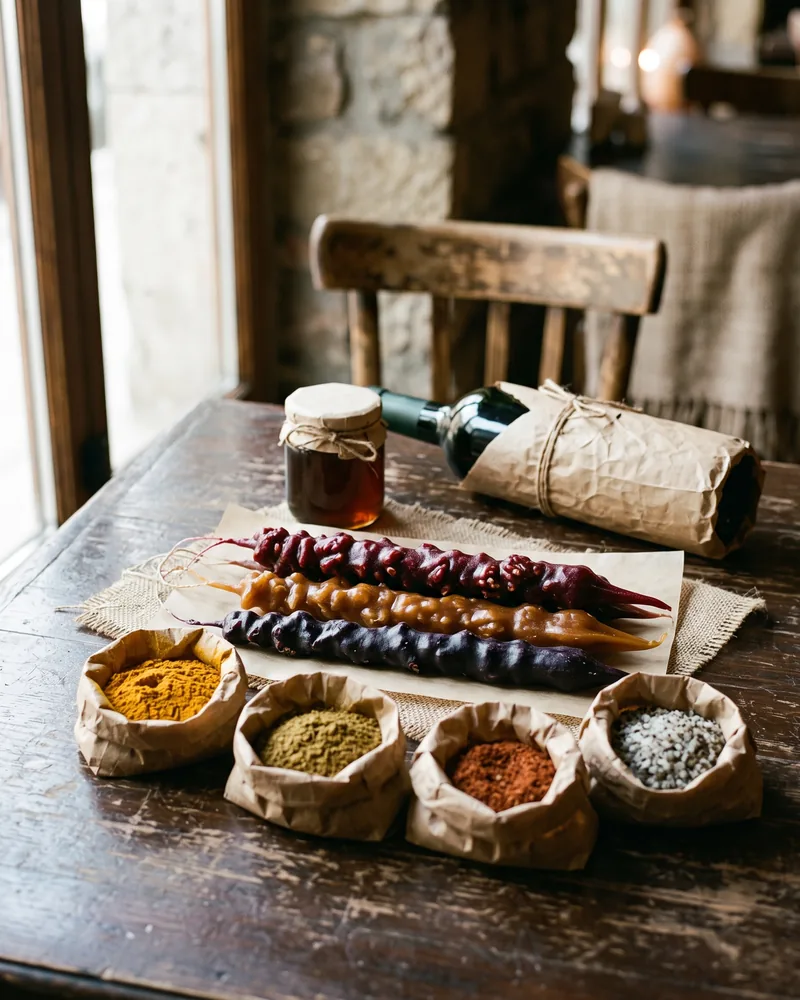
Buy what Georgia does that nobody else does, in a form that survives a suitcase. That's churchkhela, the walnut sweet on a string; the spice blends and Svan salt that make Georgian food taste like itself; a bottle of qvevri wine; and a bottle of chacha.
Georgian spices to buy: khmeli suneli, utskho suneli and Svan salt
Georgian cooking leans on a short list of dried spices, and they're among the lightest, cheapest souvenirs you can buy. Khmeli suneli is the all-purpose blend, built on coriander, blue fenugreek and dried marigold, and it goes into a lot of Georgian stews.
Utskho suneli is ground blue fenugreek on its own, the smell behind a lot of Georgian food and one reason pkhali tastes Georgian rather than just green. Dried marigold, sold as imeruli shafrani (Imeretian saffron), is what turns a sauce yellow.
Svan salt
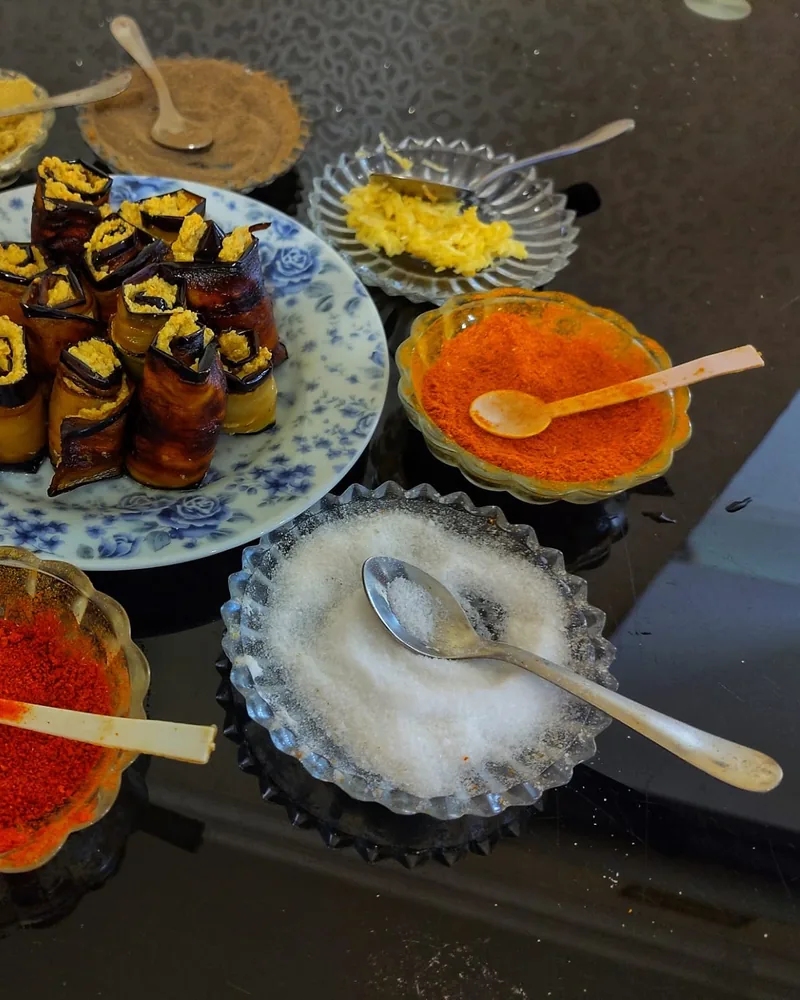
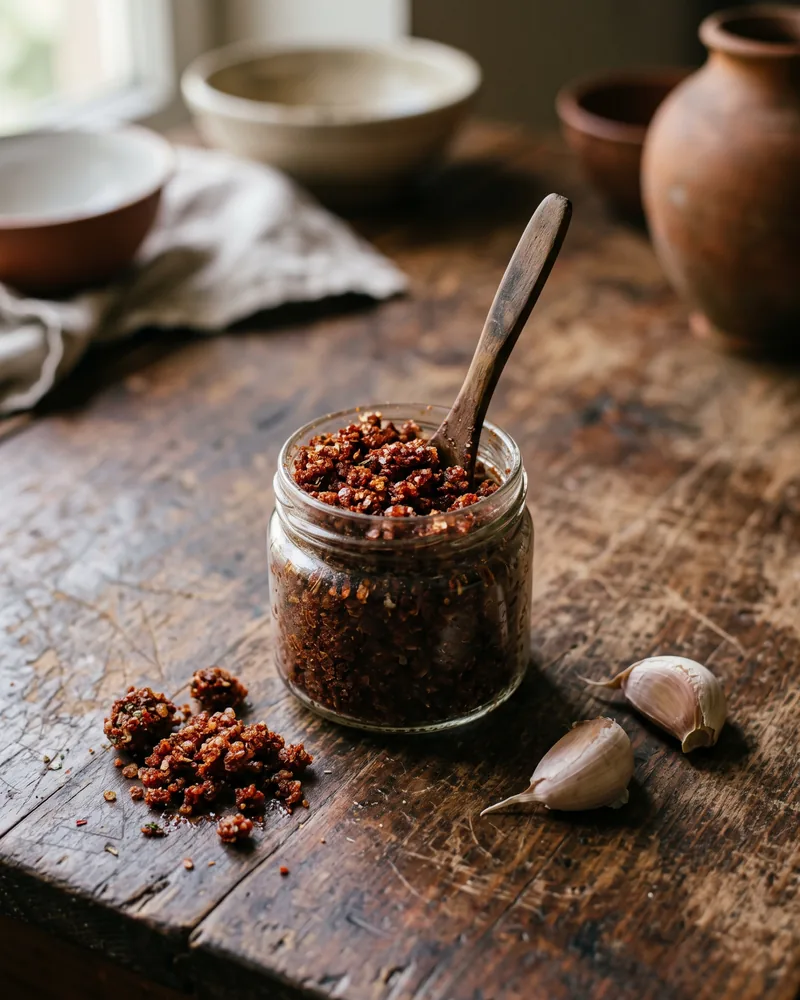
Svan salt (svanuri marili) is salt pounded with garlic and dried spices, and it's the one to buy if you only buy one. The tourism board's recipe is coriander, dill, blue fenugreek, red pepper, marigold and wild cumin, 4 times that volume in salt, and garlic to moisten it.
Use it wherever you'd use plain salt, from a tomato salad to grilled meat. The same source says to buy it moist and dark rather than bright yellow, with big grains, in a sealed jar.
If the person you're buying for has never cooked Georgian food, the spices come with homework. A cooking class is the shortcut, and some spend real time on the spice shelf.
Adjika and tkemali: the sauces in a jar
Adjika is Georgia's chilli paste, in 2 colours. Red is smoked red pepper ground with dried garlic, blue fenugreek, coriander and marigold, and it goes with meat; green is fresh green chilli and a fistful of herbs, and it goes with beans and pkhali.
You'll find both in most shops and markets. Adjika is also on Georgia's list of Monuments of Intangible Cultural Heritage, which is a lot of status for a condiment.
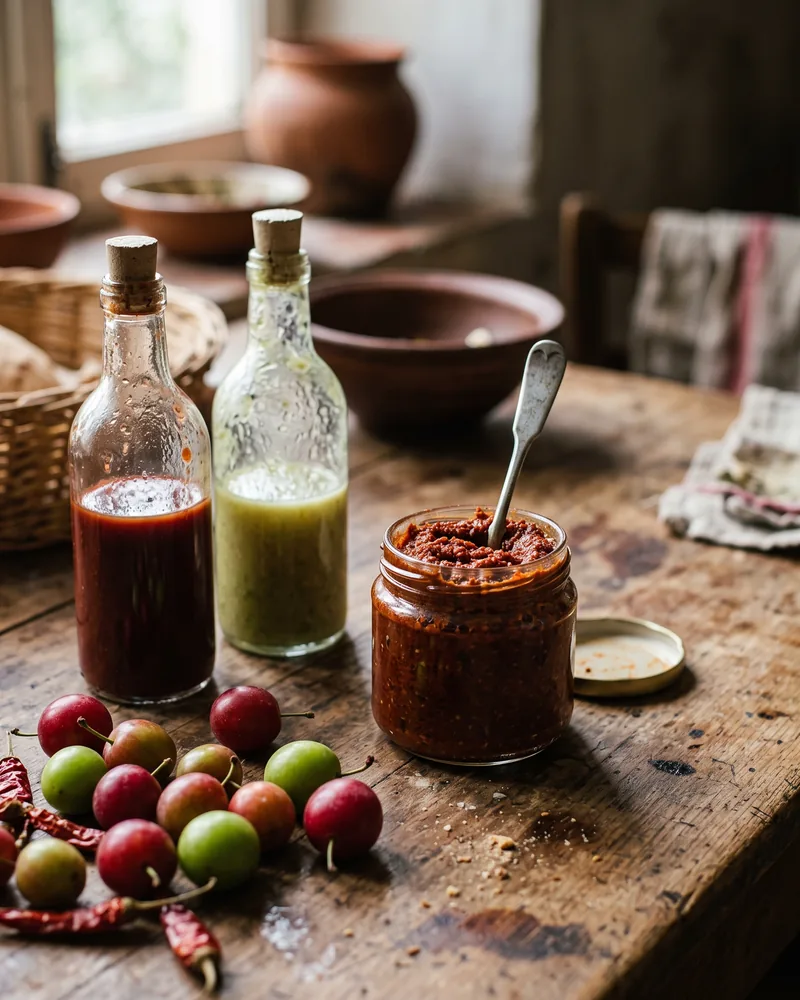
Tkemali is the sour one: red, yellow or green cherry plums cooked down with fresh coriander, garlic and ombalo (pennyroyal), for grilled meat and potatoes. The new season starts in May.
Both count as liquids at airport security, so they travel in the checked bag. Put each jar in its own sealed plastic bag, because a cracked jar of adjika will season everything else in the case.
Churchkhela, tklapi, honey and tea
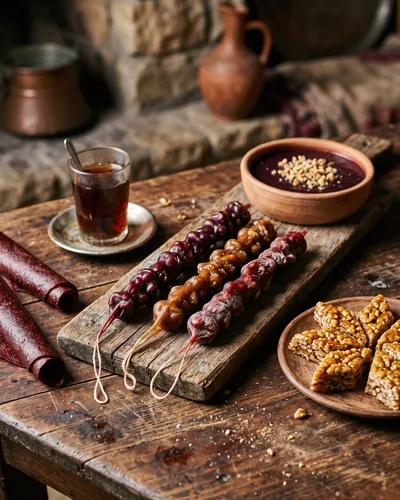
Churchkhela is the souvenir that travels best: walnuts on a string, dipped again and again in grape must thickened with flour, then dried. It's solid, it keeps for months somewhere dry and dark, and it can ride in the cabin.
It's also a protected name. Sakpatenti, Georgia's intellectual property office, registers churchkhela as a geographical indication, alongside chacha, sulguni and Machakhela honey.
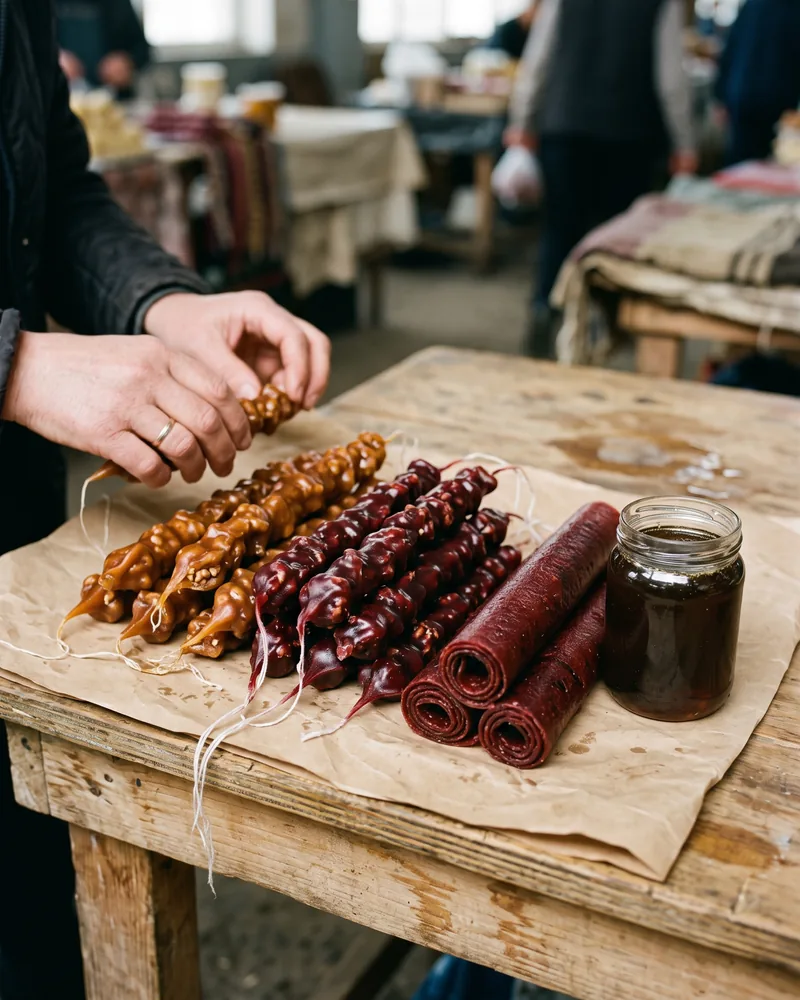
Tklapi, thin sheets of dried fruit purée, and gozinaki, walnuts set in boiled honey, are the other Georgian sweets worth packing. Gozinaki is the New Year sweet, so it's the natural gift if you're flying home for the holidays.
Honey is the heavy one, and it pours, so it goes in the checked bag. Machakhela is the protected name to look for.
Georgian tea is the gift that can't go wrong in transit. A few packs weigh less than a bottle of wine and can't break, and they cover the person at home who doesn't drink.
Georgian wine and chacha to take home
Bring home the wine that's hard to find abroad. That means a qvevri wine, fermented in a buried, egg-shaped clay jar, a method UNESCO added to its intangible heritage list in 2013, or an amber wine, the skin-contact white the rest of the world calls orange.
Grape names on the label, like Saperavi, Rkatsiteli and Kisi, tell you what's in the bottle. Khvanchkara, the semi-sweet red, is a protected name too, and it's the bottle for anyone at home who says they don't like dry wine.
Taste before you buy. Plenty of the city's wine shops pour before they sell, and a wine tasting is the fastest way to find the 1 bottle worth carrying.
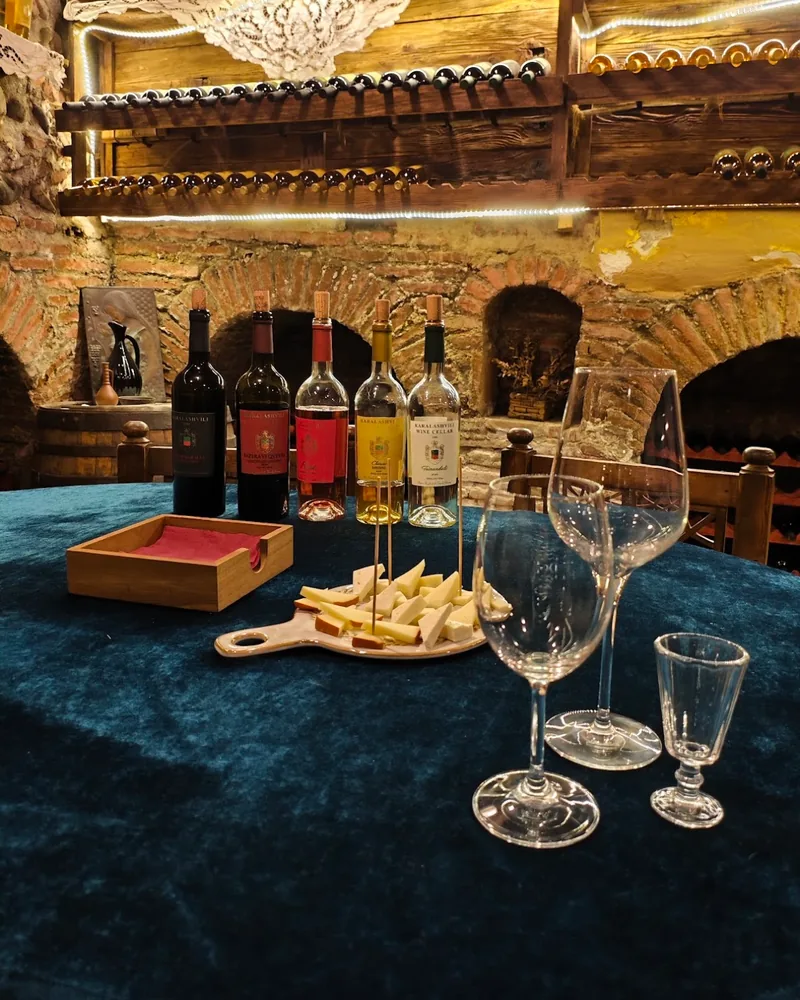
Chacha, the grape spirit, is the strong souvenir. Bottled chacha has to be at least 40% to use its protected name, which puts it in the band airlines take in the checked bag.
Homemade chacha is where it goes wrong. It carries no label to tell you its strength, and anything over 70% can't fly, so pack a labelled bottle and drink the homemade one in Georgia.
Where to buy food souvenirs in Tbilisi
For wine and chacha, go to a wine shop, where you can taste, buy and get it wrapped in one stop; most are in the old town. Prices run wide: at 8000 Vintages, a wine bar and shop, one reviewer saw bottles from 20 to 120 GEL and left with a Mtsvane for under 50.
For spices, Svan salt, churchkhela and tklapi, go to a market. Every Tbilisi bazaar has spice and churchkhela stalls, and you'll pay less there than at the souvenir shops on the old town's main streets.
In October, Tbilisoba, the city festival, adds pop-up stalls, Europe Square among them, selling churchkhela, pelamushi, tklapi, dried fruit, pickles, cheese and meat. It's the easiest time of year to do the whole shop in one walk, though the last 2 are for eating on the spot.
Cabin or checked bag: what travels and what doesn't
Flights out of Tbilisi follow the 100 ml rule: cabin liquids go in containers of 100 ml or less, inside a small clear resealable bag. Treat anything that pours or spreads as a liquid, from wine to adjika, honey and jam, and put it in the checked bag.
Alcohol has 2 more lines. Drinks from 24% to 70%, which covers bottled chacha, can go in checked luggage in shop packaging up to 5 L per person, and nothing over 70% can fly at all; wine, under 24%, is limited only by your baggage allowance.
| Souvenir | Which bag | The catch |
|---|---|---|
| Churchkhela | Either | Buy it firm but bendy, and keep it dry |
| Spice blends and tea | Either | None: they're the lightest gifts here |
| Svan salt | Either | It's meant to be damp, so buy it in a sealed jar |
| Tklapi and gozinaki | Either | Keep the tklapi sheets flat so they don't tear |
| Adjika, tkemali, honey and jam | Checked | Pastes and sauces count as liquids at security |
| Wine | Checked | Each bottle weighs well over 1 kg |
| Chacha, 24 to 70% | Checked | 5 L per person, in shop packaging |
| Chacha over 70% | Neither | It can't fly at all |
| Cheese and sausage | Neither, if you're flying to the EU or Great Britain | Banned on arrival, vacuum-packed or not |
Duty-free bought after security can go in the cabin. If you change planes on the way home, ask your airline about it first.
EU and UK allowances for wine, chacha, cheese and honey
Getting it on the plane is half the job; the other half is what your own border lets in. The numbers below are the EU's duty-free allowance and Great Britain's, and neither gives anyone under 17 an alcohol allowance. Flying anywhere else, your own customs service sets the numbers.
| What you're bringing | Into the EU | Into Great Britain |
|---|---|---|
| Still wine | 4 L | 18 L |
| Chacha and other spirits over 22% | 1 L, or 2 L of sparkling or fortified wine instead | 4 L, or 9 L of drinks up to 22%, or a split of the 2 |
| Beer | 16 L | 42 L |
| Honey | Up to 2 kg | Up to 2 kg |
| Cheese, matsoni and other dairy | Not allowed | Not allowed |
| Sausage and other meat | Not allowed | Not allowed |
The food rules are the strict ones. The EU allows no meat or dairy in from Georgia, and Great Britain bans meat and milk-based products from outside the EU, so the sulguni stays in Georgia.
How to pack wine bottles for the flight
Let the shop do it. Some of Tbilisi's wine shops expect you to fly with what you buy: one reviewer got sturdy packaging made for a suitcase at Ge-Wine, and another paid 6 GEL extra at Wine Store Orbeliani for a cushioned wrap.
Packing it yourself, wrap each bottle in clothes or a padded sleeve, seal it in a plastic bag in case it breaks, and put it in the middle of the case. Count as you go: each bottle weighs well over 1 kg, so 6 add more than 6 kg before the jars go in.

For the walk back to your flat, Dadi sells a shopper hand-sewn from a real paraglider, with 2 sewn-in pockets that fit wine bottles, for 150 GEL, according to its Instagram. It's the rare souvenir that carries the other souvenirs.
Frequently asked questions
What food should I bring home from Georgia?
Churchkhela, a spice blend such as khmeli suneli, a jar of Svan salt, a bottle of qvevri or amber wine and a bottle of chacha travel well and taste of Georgia. Add tea for a light gift, and honey or adjika if there's room in the checked bag. Flying to the EU or UK, leave the cheese and sausage behind.
What is Svanetian salt?
Svanetian salt, or Svan salt, is salt pounded with garlic and dried spices: coriander, dill, blue fenugreek, red pepper, marigold and wild cumin. It comes from Svaneti, in the mountains of north-west Georgia, and you use it like plain salt. Buy it moist and dark, in a sealed jar.
Can I take wine and chacha in my hand luggage?
Only in containers of 100 ml or less, or bottles bought at duty-free after security. Full-size bottles go in the checked bag, where chacha from 24% to 70% is allowed up to 5 L per person in shop packaging. Anything stronger than 70% can't fly in either bag.
How much wine and chacha can I bring into the EU or the UK?
Into the EU, 4 L of still wine plus 1 L of spirits over 22%, such as chacha, duty-free. Into Great Britain, 18 L of still wine plus 4 L of spirits. Nobody under 17 gets an alcohol allowance in either, and beer has its own, much bigger, limit.
Can I bring Georgian cheese home?
Not into the EU or Great Britain. Both ban dairy arriving from Georgia, so sulguni, imeruli and guda stay behind, vacuum-packed or not, and the EU says undeclared dairy is confiscated and destroyed. Eat the cheese in Tbilisi and pack churchkhela or spices instead.
Does churchkhela survive the flight?
Yes: churchkhela is solid and keeps for months somewhere dry and dark, so it can go in either bag. Pick strings that are firm but bend a little, and don't worry about a faint white bloom on the outside, which is sugar, not mould.