Georgian Tea: History, Brands and Where to Drink It in Tbilisi
Where Georgia's tea grows, why it nearly vanished, and where in Tbilisi to drink and buy it

Georgia grows its own tea, on wet green hills in the west of the country, and you can spend a week in Tbilisi without seeing it on a menu. It won a gold medal in Paris, fed the Soviet Union, collapsed and is slowly coming back. This page covers where it grows, how it got here, which packs to buy, and where in Tbilisi to drink a pot or take some home.
Quick summary
- Georgia grows its own tea in the humid west, in Guria, Adjara, Samegrelo and Imereti, and has done since the prince of Guria took up tea in 1809 and planted the first bushes.
- Tea brought over by the Chinese merchant Lao Jin Zhao won gold at the Paris World Expo in 1900, Georgia later grew most of the Soviet Union's tea, and the industry collapsed after 1991.
- A state programme started in 2016 pays 60 to 90% of the cost of bringing abandoned plantations back, and organic tea is one of its stated aims.
- In Tbilisi only 1 cafe on our lists names Georgian tea on its listing, and the tea reviewers bring up most is Turkish-style, often free after a Turkish or Persian meal.
- To take it home, buy Georgian black tea (kartuli shavi chai) at the Bitadze tea house at 15 Galaktion Tabidze Street or a wine and souvenir shop, and pick a pack that names its region.
What Georgian tea is
Georgian tea is the ordinary tea plant, grown in Georgia itself and sold as black or green tea. It's the hot drink among the traditional Georgian drinks, and it has a story as dramatic as the wine's, just with fewer people telling it.
The word you need is chai, which is simply tea. Georgian black tea is kartuli shavi chai, the phrase to use in a shop, and green tea is mtsvane chai, from the same word for green that names one of the country's white grapes.
Where Georgian tea grows
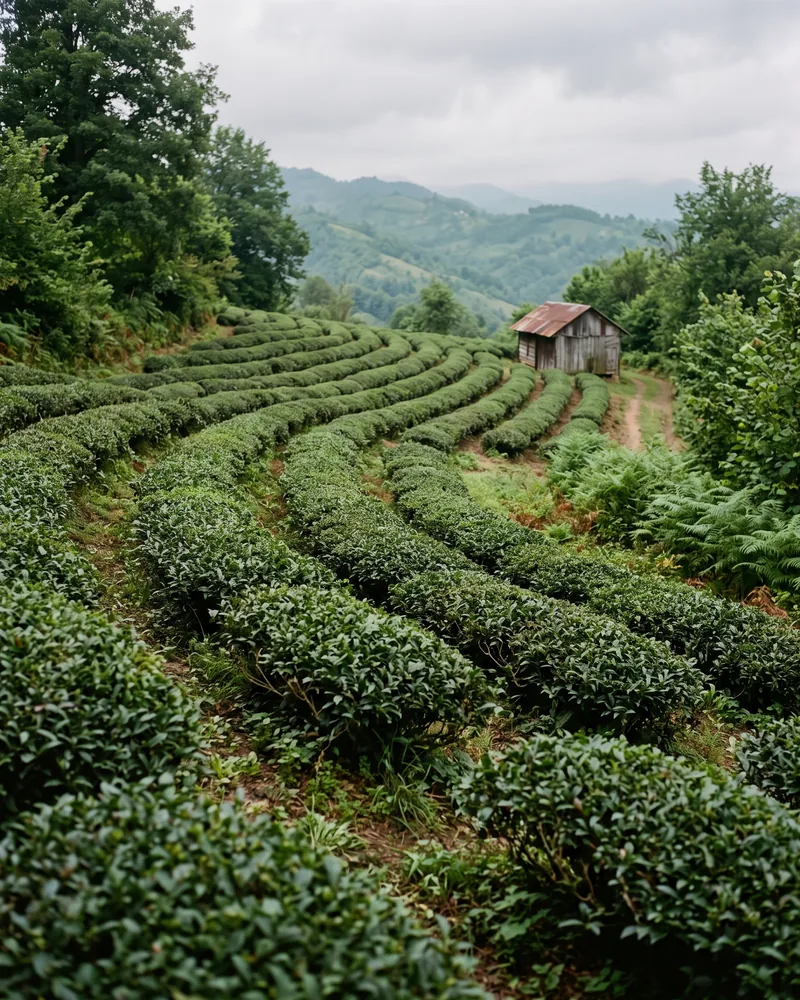
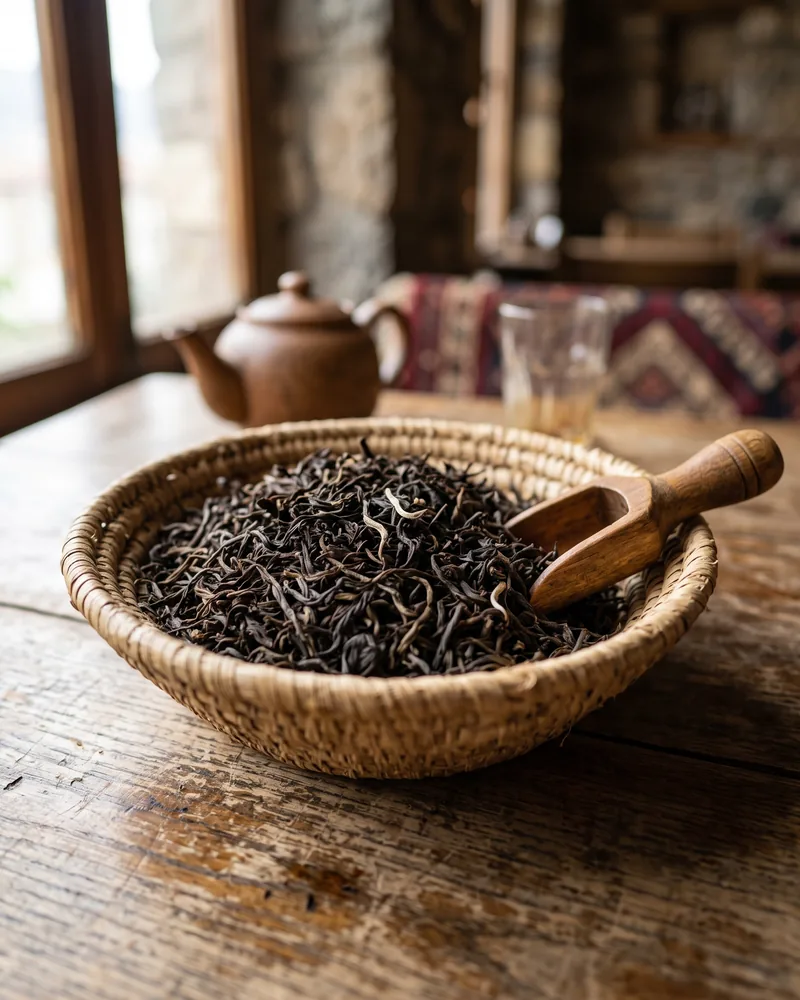
Tea wants warmth and a lot of rain, which is why it grows in the wet west of Georgia, between the Black Sea and the hills, and not around Tbilisi. The historic tea regions are Guria, Adjara, Samegrelo, Imereti and Abkhazia.
2 place names are worth knowing: Ozurgeti, in Guria, home to the Gurieli tea factory, and Chakvi, on the coast near Batumi, where the Chinese tea merchant Lao Jin Zhao lived and worked. Both sit on the far side of the country from Tbilisi, so a plantation visit belongs to a trip west; in the capital, you drink the tea and buy it.
How tea came to Georgia, and why it nearly disappeared
| When | What happened |
|---|---|
| 1809 | Mamia V Gurieli, ruler of Guria, takes an interest in tea and plants the first bushes |
| 19th century | Tea spreads through Guria, Samegrelo, Abkhazia, Imereti and Adjara |
| 1890s | The Chinese tea merchant Lao Jin Zhao arrives in Georgia |
| 1900 | Tea he brought to Georgia wins a gold medal at the Paris World Expo |
| Soviet era | Georgia grows most of the Soviet Union's tea |
| After 1991 | The industry collapses and plantations are abandoned |
| 2016 | The state starts paying to bring abandoned plantations back |
Tea reached Georgia through a prince. The Batumi museum that tells the story dates Mamia V Gurieli's interest to 1809, and the tea company that now carries his name says the first plants reached his botanical garden with a Scotsman, Jacob Montague Marr.
The name every Georgian tea story comes back to is Lao Jin Zhao, who arrived at the end of the 19th century and was still in Chakvi through the 1910s and 1920s. The same museum, the Nobel Brothers Technological Museum in Batumi, still keeps his slippers and the hat he wore in the tea fields.
Under Soviet rule Georgia grew most of the Soviet Union's tea. After 1991 the industry collapsed and the plantations were abandoned, and that abandoned land is exactly what the revival is now paying to win back.
Is Georgian tea coming back
Slowly, and with state money behind it. Georgia's Ministry of Environmental Protection and Agriculture started a tea plantation rehabilitation programme on 18 January 2016 that pays 60 to 90% of the cost of bringing an abandoned plantation back, on costs capped at 2,500 GEL a hectare, and hands primary-processing equipment to cooperatives.
The programme's stated aims include organic tea, more of the country's own supply and more exports. That tells you where the growers are heading, not what's already in every pack.
Georgian tea brands and what to buy
Gurieli is the company that took the prince's name. By its own account it runs a factory in Ozurgeti with 120,000 square metres of plantations, makes black, green, Earl Grey and berry teas, and exports to the USA, Canada, Germany, France and several other countries.
The Bitadze tea house in Tbilisi sells tea under its own names too; its business listing gives Georgian Tea 1847 and Golden Bud. Past those names, the region printed on the pack tells you more than the brand does.
The Bitadze tea house and museum
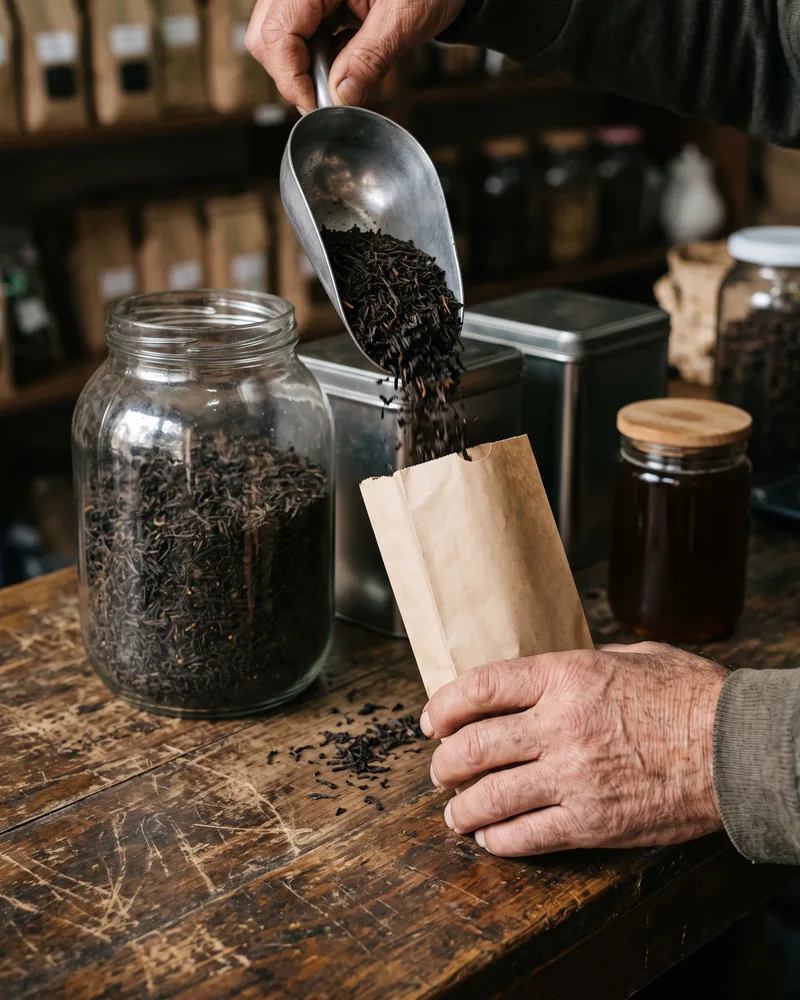
If Georgian tea is the whole point of a stop, the address is the Bitadze tea house at 15 Galaktion Tabidze Street, also known as the Bitadze tea museum. Its business listing describes a tea house, a tea museum and a tea school under one name, plus tea tours and a trade in tea and wine.
Come here when you want tea to be the reason you walked in, not a line under the coffees. Go with room in your bag, because the other half of the visit is leaving with a pack.
Where to drink tea in Tbilisi
Tbilisi's cafes run on specialty coffee, and Georgian tea by name is rare on their menus. The tea that comes up most in reviews here is Turkish-style, and a good deal of it is free.
A cup costs anything from nothing after a Turkish meal to 8 GEL for a single tea bag at one specialty cafe, going by one reviewer at Rituals Matcha Bar. That makes tea one of the few things on a Tbilisi bill that can come to zero.
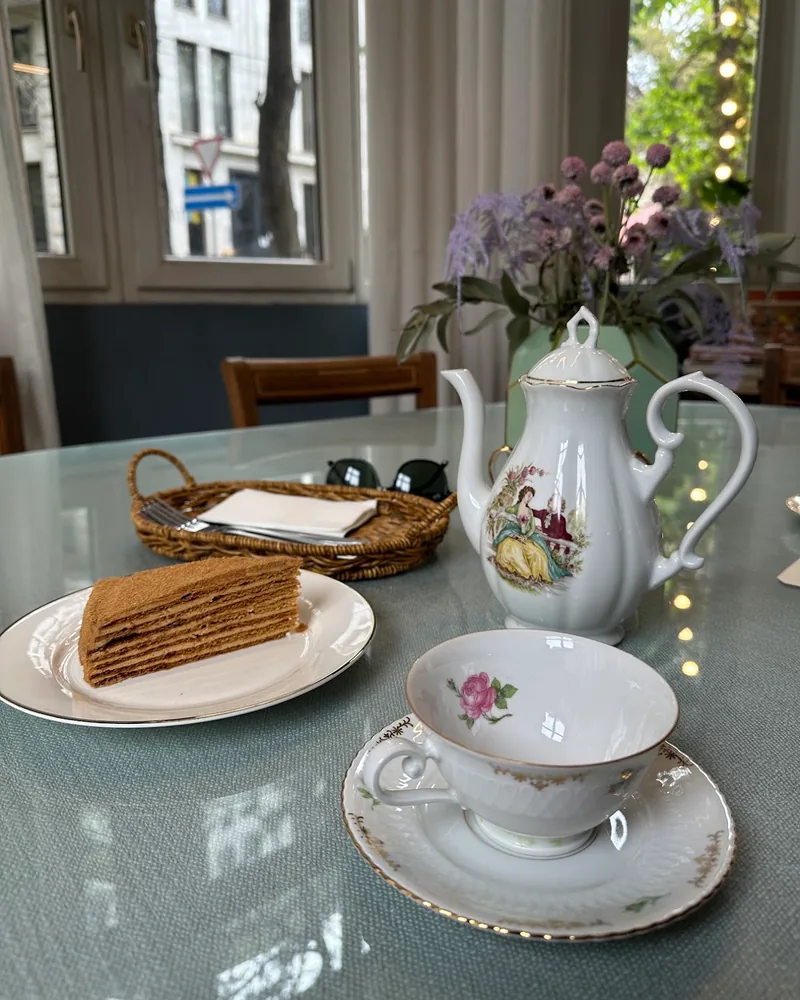
For tea with something sweet, one reviewer paired a rose petal tea with the Napoleon cake at Matasse1822. For something heavier, the karak tea at an Arab and Indian kitchen is sold as strong and creamy, and reviewers bring it up 12 times.
Turkish tea, and the glass that comes free
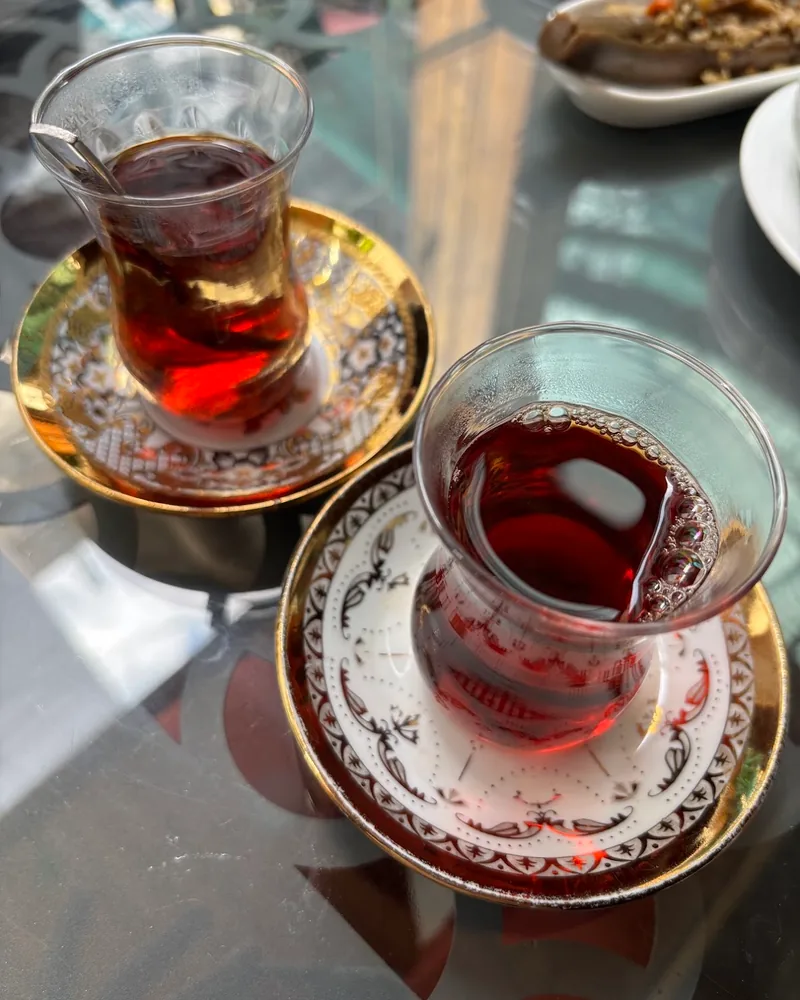
The Turkish kitchens pour tea the Turkish way, dark, in a small tulip glass on a saucer, and often without being asked. At one kebab and lahmacun place, complimentary tea comes up 15 times in the reviews, and reviewers at Nasimi and Kava mention free tea too.
Georgian herbal and mountain teas
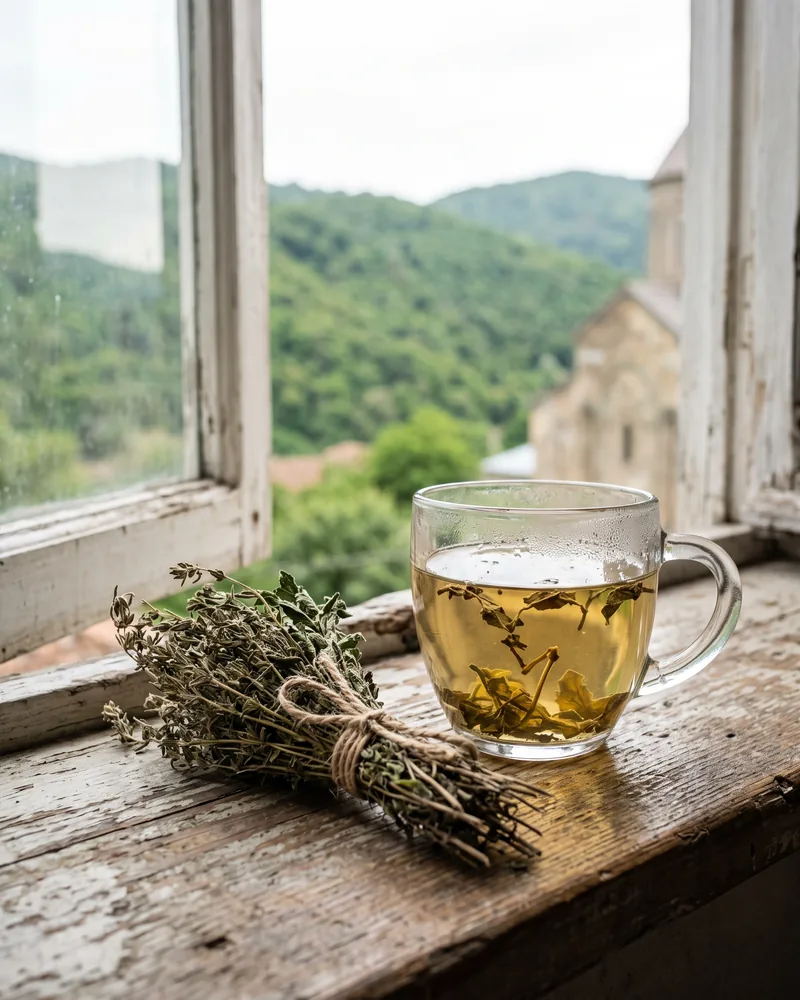
Mountain tea in Georgia means a herbal tea made from mountain herbs, thyme and mint among them, rather than leaves from the tea bush. What goes into a mix varies from maker to maker, so the ingredient list on the pack is the thing to read.
In Tbilisi, Gisho lists herbal tea next to its Georgian tea. Herbal tea also comes up 6 times in the reviews of a burger bar in Old Tbilisi, of all places, next to its fresh fruit lemonades and apple pie.
Where to buy Georgian tea to take home
Beyond the Bitadze tea house, our lists have one more stop: a family-run wine shop whose own listing offers natural teas from all over Georgia next to its wine, honey and homemade jam. It sells churchkhela too, which comes up 11 times in its reviews.
Tea is about the lightest souvenir Georgia sells: a few packs weigh less than a bottle of wine and can't break in a suitcase. Buy loose black tea that names its region, add a herbal mix, and you've covered most of the people you're buying for.
Frequently asked questions
Does Georgia grow its own tea?
Yes, in the wet west of the country: Guria, Adjara, Samegrelo and Imereti. Tea has grown there since the prince of Guria took it up in 1809, tea from Georgia won gold in Paris in 1900, and today the company Gurieli runs a factory in Ozurgeti, in Guria. None of it grows near Tbilisi.
What is the Bitadze Tea Museum?
It's the Bitadze tea house at 15 Galaktion Tabidze Street in Tbilisi, which its business listing describes as a tea house, a tea museum and a tea school. It also sells tea to take home under its own names, Georgian Tea 1847 and Golden Bud among them.
Is Georgian tea organic?
Not automatically. The state programme that has paid to rehabilitate abandoned plantations since 2016 lists organic tea among its aims, but that doesn't make every pack organic. If it matters to you, buy a pack that says organic and names its region, and ask the seller where the leaves were grown.
Can you visit a tea plantation from Tbilisi?
Not as an afternoon out: the plantations are out west, in regions like Guria and Adjara, on the far side of the country. Plan it into a trip west to Batumi or Ozurgeti, and add Batumi's Nobel Brothers Technological Museum, which keeps the slippers and field hat of Lao Jin Zhao, the Chinese tea merchant who lived in Chakvi.
Where can I drink Georgian tea in Tbilisi?
At the Bitadze tea house on Galaktion Tabidze Street, and at Gisho Specialty Coffee, the one cafe on our lists that names Georgian tea on its listing. Elsewhere, ask before you order, and expect Turkish-style tea, often free, at the city's Turkish and Persian restaurants.
What is Georgian mountain tea?
It's a herbal tea made from mountain herbs, thyme and mint among them, rather than from the tea bush. The mix varies by maker, so read the ingredients on the pack. To try a cup before you buy, Gisho Specialty Coffee lists herbal tea next to its Georgian tea.