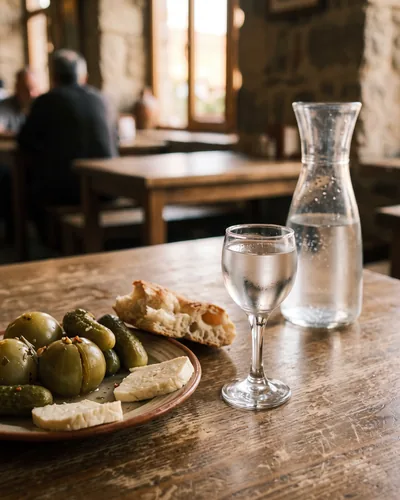
Traditional Georgian Drinks and Where to Order Them in Tbilisi
Wine, chacha, beer, Lagidze water, kompot, mineral water, tea and coffee, and the moment each one turns up

Georgia is a wine country first, but a Tbilisi table pours a lot more than wine: chacha at the end of a supra, a cold lager with the khinkali, a jug of kompot for whoever isn't drinking, bright green tarragon soda and a bottle of Borjomi. This page covers 10 traditional Georgian drinks, what each one is, when it turns up, what it costs and where to order it.
Quick summary
- Wine is what Georgia is known for, with about 8,000 years behind it and a qvevri method UNESCO listed as intangible heritage in 2013.
- Chacha is the grape-pomace spirit that ends a supra, Georgia's first registered geographical indication, and at least 40% in the bottle.
- Beer is the everyday drink with khinkali, mostly lager at 4.8 to 5%, and 3 to 5 GEL at a local bar or restaurant.
- The soft drinks to order are Lagidze water, a syrup soda made since 1887, and kompot, fruit stewed with sugar and served cold.
- Borjomi is the mineral water to know, and its maker says it rises from 8,000 m underground.
- Wine runs from 5 GEL for house wine at a cafe to 20 GEL a glass at a wine bar, going by reviewers.
Georgian drinks at a glance
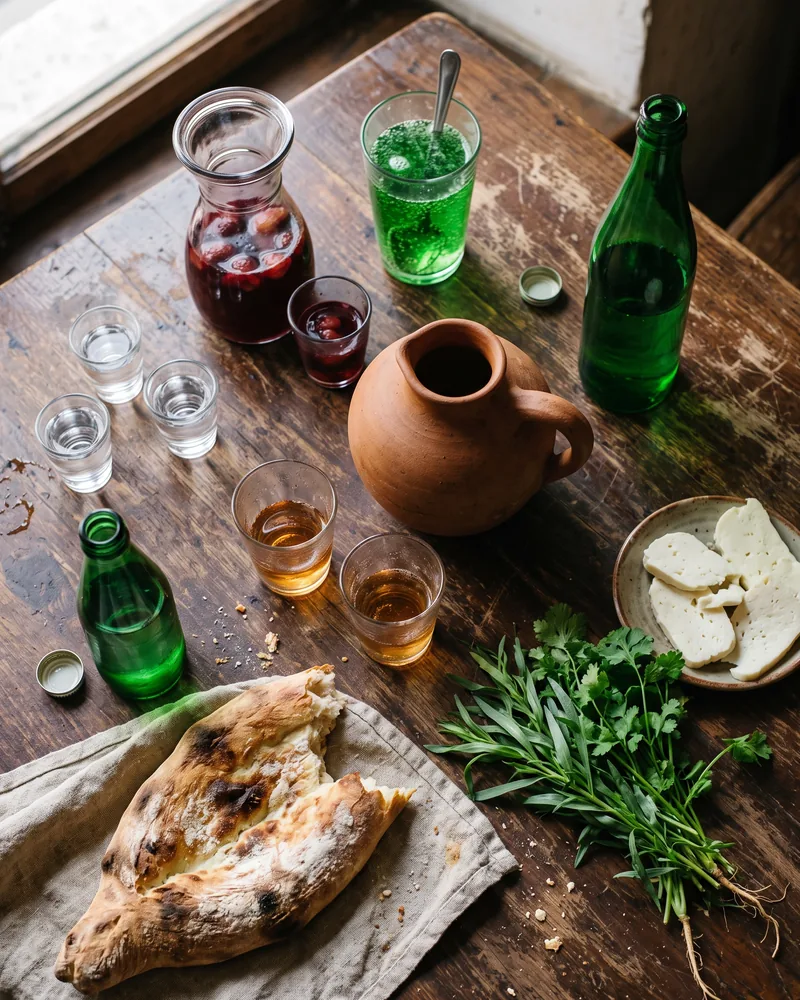
Georgian drinking runs on the clock as much as the menu: kompot or a cold lager at lunch, wine and toasts at dinner, chacha to close the night. Here's what each drink is and when it turns up.
| Drink | What it is | When you'll drink it |
|---|---|---|
| Wine | Amber, red or white, often from a clay qvevri | Dinner and every supra |
| Chacha | Grape-pomace spirit, 40% or more | The end of a supra, a late round |
| Beer | Mostly lager, plus craft sours in Tbilisi | Lunch with khinkali, the football |
| Highland beer | Mountain barley beer, called aludi in Tusheti | Summer village festivals, not Tbilisi |
| Lagidze water | Syrup topped with soda water, since 1887 | With khachapuri |
| Tarkhuna | Bright green tarragon soda, mostly bottled | Lunch, cold from the bottle |
| Homemade lemonade | The kitchen's own, from fruit or herbs | Lunch at a Georgian restaurant |
| Kompot | Fruit stewed with sugar, served cold | Lunch, for anyone not drinking |
| Mineral water | Borjomi, Nabeghlavi or Sairme | Any meal |
| Tea and coffee | Georgian black tea, Turkish coffee, specialty roasts | Mid-afternoon |
Wine, the drink Georgia is known for
Georgia's tourism administration dates its winemaking back about 8,000 years, and it still turns on the qvevri, an egg-shaped clay vessel buried in the ground. UNESCO listed the qvevri method as intangible heritage in 2013, and at a supra the wine comes with toasts, with the tamada deciding when you drink.
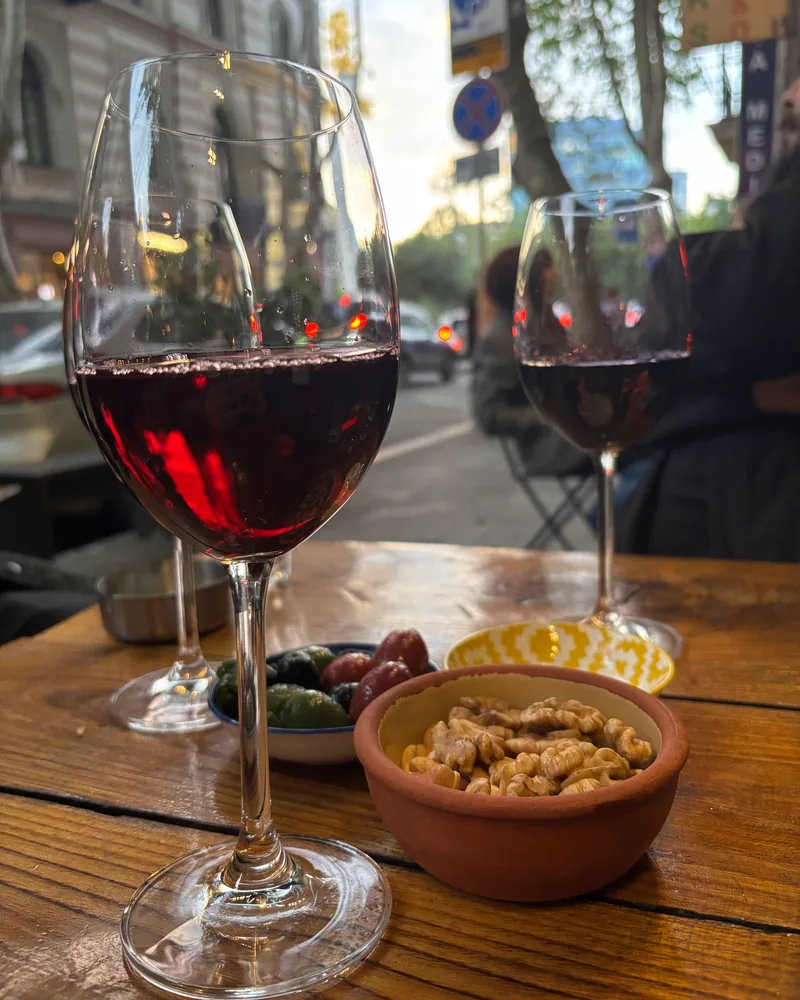
Start with amber wine: white grapes left on their skins until the wine turns gold to tea-coloured and a little grippy. Beyond that, Georgian wine is a question of grape and region, with Saperavi (red) and Rkatsiteli (white) the names you'll meet first. Tbilisi's wine bars pour all 3 colours by the glass, so you can go from white through amber to red in one evening.
Chacha, the grape spirit for toasts
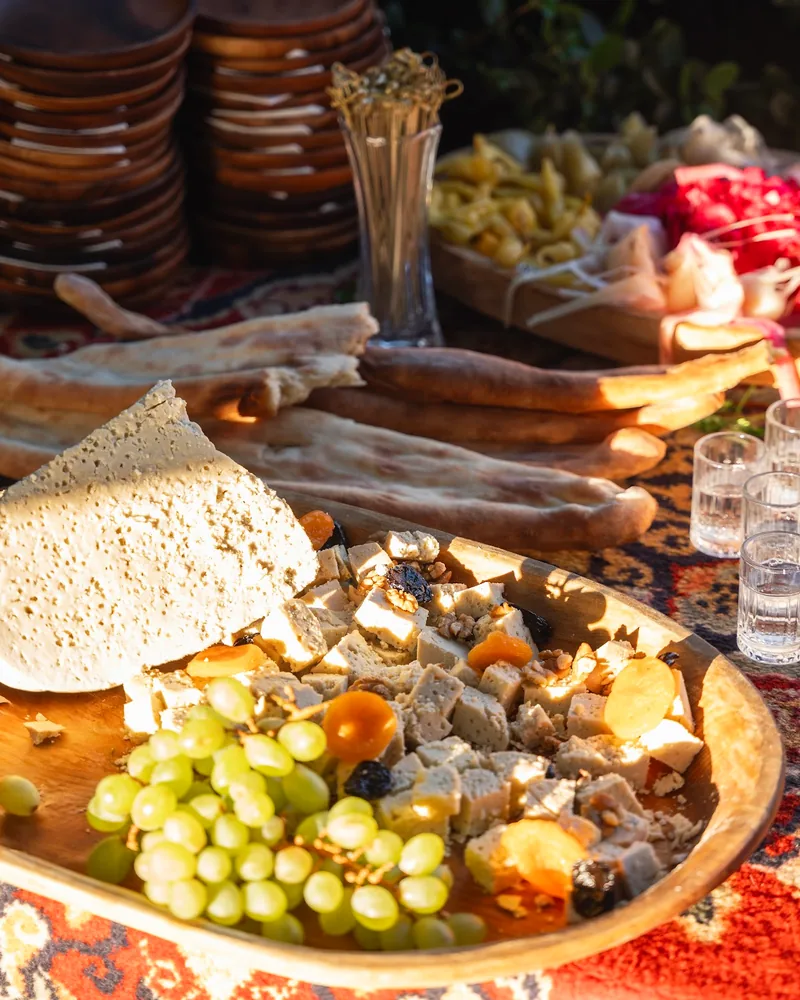
Chacha is distilled from grape pomace, the skins and pips left over once the wine is made, and it's the spirit that closes a supra. Georgia registered it as geographical indication No. 1 in 2011, and the rules say the bottled drink has to be at least 40%.
You'll meet it as a toast at the table, as a tasting set at a bar that treats it like wine, or in a cocktail. A cellar wine tasting often pours a glass alongside the wines, and a round of shots is how a night out in Tbilisi turns into a late one.
Beer with khinkali, and the mountain beer
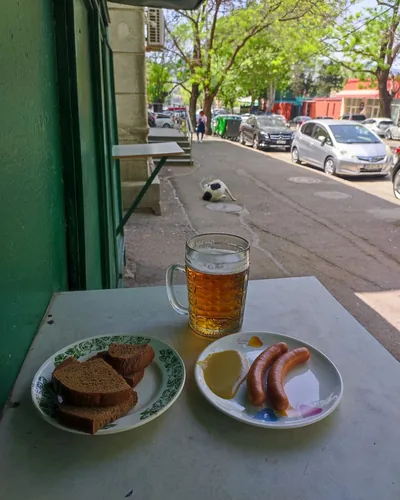
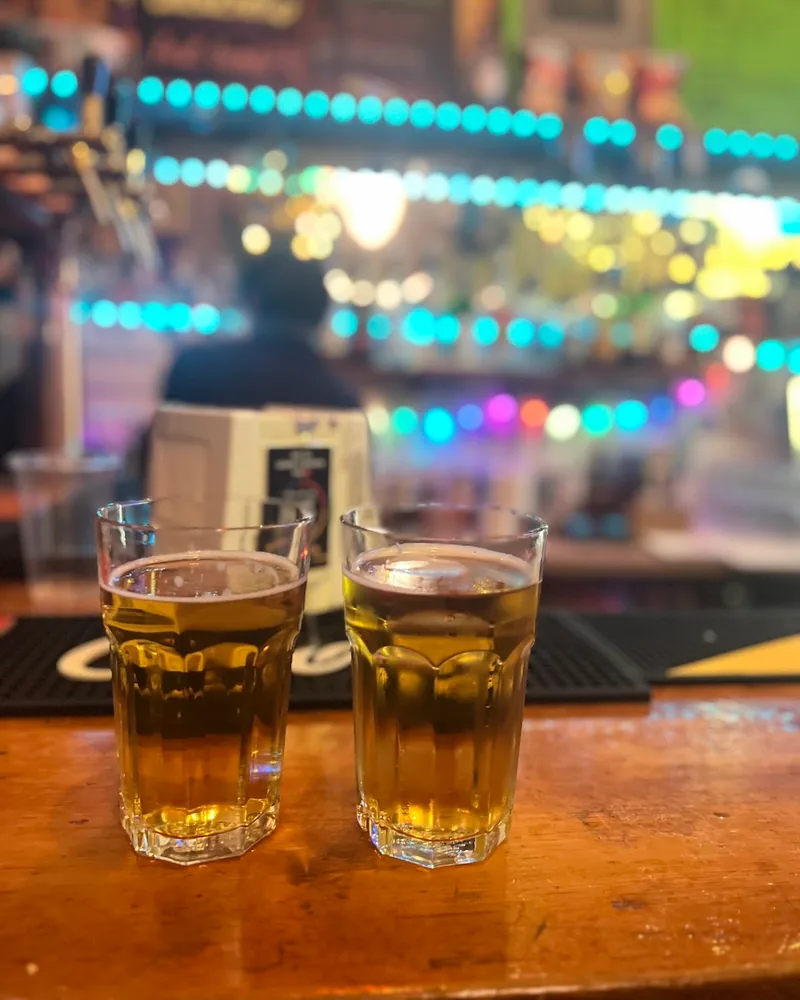
Georgian beer runs from supermarket lager to sours in Tbilisi taprooms. Natakhtari and Zedazeni, both 5%, are the big lagers, and Argo Lager (4.8%) is brewed inside Tbilisi itself.
A cold lager is the classic partner for khinkali, and a pub on Baratashvili Street sells itself on ice-cold draft beer as much as on its khinkali. For sours, Megobrebi brewery runs its own taproom in old Tbilisi, where one reviewer's pick was a tomato beer.
The traditional one is highland beer, registered as an appellation in 2025: barley beer from Tusheti and Pshav-Khevsureti, 4.7 to 5.5%, brewed for religious holidays. The Tush version, aludi, is boiled in copper cauldrons and poured in village squares in summer, not in Tbilisi bars.
Lagidze water, tarkhuna and homemade lemonade
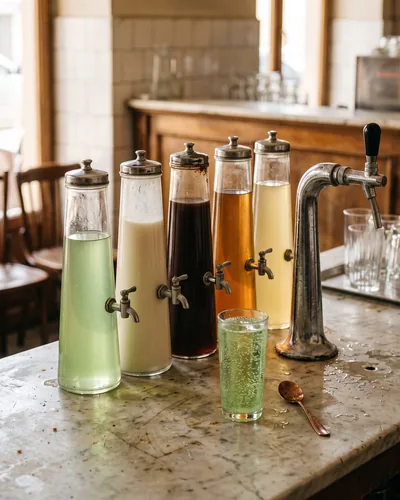
Lagidze water is a measure of flavoured syrup topped with soda water. Mitrofan Lagidze created it in Kutaisi in 1887, opened his first Tbilisi shop on what's now Rustaveli Avenue in 1906, and it's on Georgia's national list of intangible cultural heritage.
Order cream for the oddest one, since the company's cream syrup is made with milk and eggs, or tarragon or pear for something closer to soda. The old pairing is a glass with a cheese khachapuri, and one reviewer singles out exactly that pair at a shawarma counter.
Tarkhuna, Georgian for tarragon, is the green soda that Natakhtari, Zedazeni and Kazbegi bottle, and Zedazeni's own product page lists colourings in it, so the green isn't all herb. Homemade lemonade is a different drink again, with mint and berry among the flavours reviewers name, and a lemonade cost one reviewer 8 GEL at a cafe.
Kompot, the jug on the lunch table
Kompot is fruit stewed in water with sugar and served cold, and at Georgian restaurants it's the jug that turns up for anyone not drinking. It's sweet and still, which is the point next to salty cheese bread and fried chebureki, and reviews spell it both ways.
Mineral water: Borjomi, Nabeghlavi and Sairme
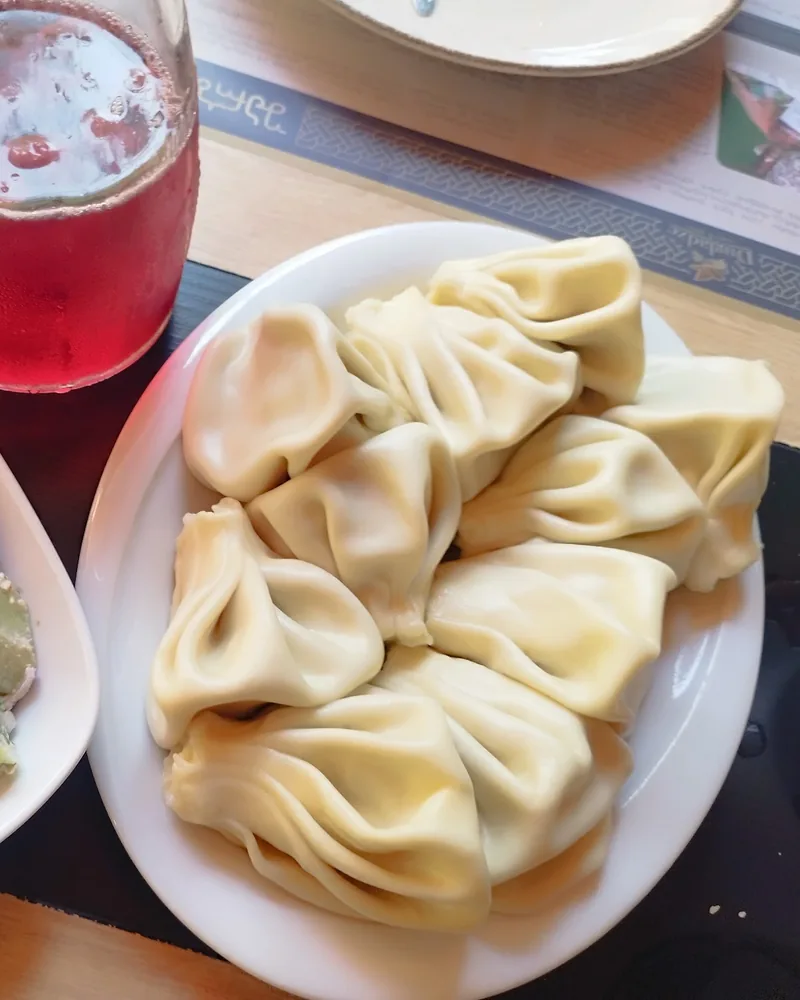
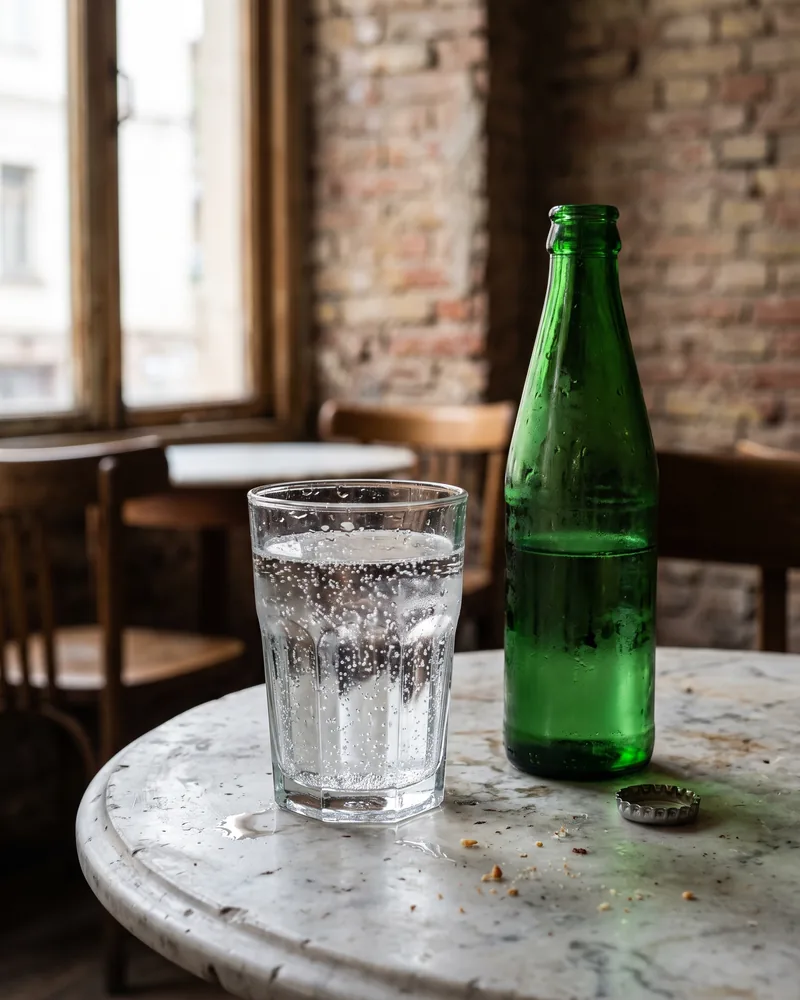
Borjomi is the famous one, and Nabeghlavi and Sairme are the other 2 mineral waters on Tbilisi menus. Borjomi says its water rises from 8,000 m under the Lesser Caucasus, comes out at 37 to 41 C and picks up more than 60 minerals on the way, and it's been bottled for more than a century.
Tea and coffee in Tbilisi
Georgia grows its own tea in the west: Prince Mamia V Gurieli took it up as early as 1809 and planted the first bushes, and tea brought to Georgia by the Chinese merchant Lao Jin Zhao, who later lived in Chakvi, won a gold medal in Paris in 1900. After growing most of the Soviet Union's tea and collapsing in the 1990s, Georgian tea is coming back under a state programme started in 2016.
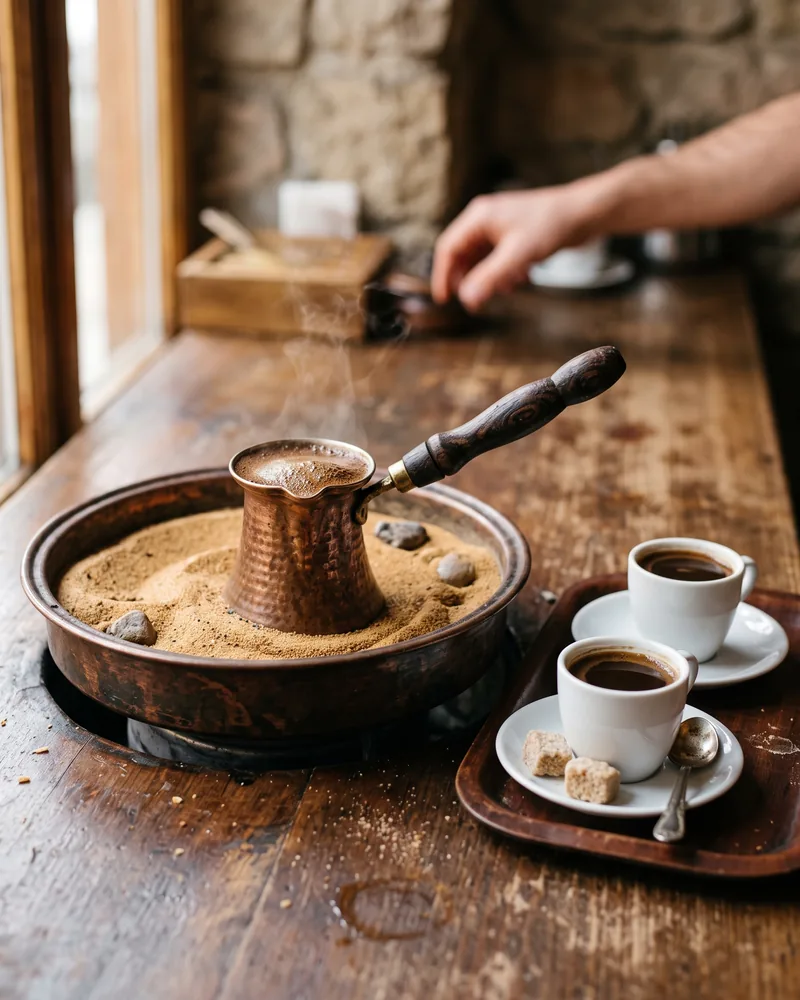
In town, one specialty cafe lists Georgian tea and herbal tea next to its coffee. Coffee is Turkish-style or specialty, from coffee brewed on hot sand at a tiny waffle cafe to single-origin roasts at the city's roasters.
What drinks cost in Tbilisi
Tbilisi prices swing more with the place than the drink: a beer is 3 GEL at a local restaurant and 20 GEL for a small 0.33 L beer on a rooftop. Every figure below comes from reviews, not menus, so read them as a range.
| Drink | Where | Price |
|---|---|---|
| Beer | Nikala's Yard, a Georgian restaurant | 3 GEL |
| Lager | Warszawa, a small bar | 5 GEL |
| Beer, 0.33 L | Weather Report Sky Bar, a rooftop | 20 GEL |
| House wine | Cafe Nice, a family-run Georgian cafe | 5 GEL |
| Wine, a glass | Chateau Mukhrani Wine Bar | 20 GEL |
| Wine by the litre | Wine Time, a wine shop (2023 and 2024) | 10 to 20 GEL |
| Chacha tasting, 6 pours | Sancho Wine Bar (2024) | 40 GEL |
| Lemonade | Walkers Espresso Bar | 8 GEL |
| Large cappuccino | Walkers Espresso Bar | 9 GEL |
What to drink with Georgian food
Georgian food is salty, rich and heavy on cheese, walnuts and grilled meat, so the drink's job is to cut through it. Lager goes with khinkali, cream Lagidze or kompot with cheese bread, a dry Saperavi with mtsvadi, and amber wine with walnut dishes like pkhali.
Frequently asked questions
What drink is Georgia known for?
Wine. Georgia's tourism administration dates its winemaking back about 8,000 years, and UNESCO lists the qvevri method as intangible heritage. Chacha, the grape-pomace spirit, is the one most people call the national spirit, and it was the first product Georgia registered as a geographical indication, in 2011.
What non-alcoholic drinks do Georgians drink?
Kompot, Lagidze water, homemade lemonade, mineral water and tea. Kompot is stewed fruit served cold, Lagidze water is syrup topped with soda (cream and tarragon are the classics), and Borjomi, Nabeghlavi and Sairme are the mineral waters on Tbilisi menus. Tarkhuna, the bright green bottled soda, is tarragon.
What is kompot?
Fruit stewed in water with sugar and served cold, usually in a jug for the table. It's sweet and still, and in Tbilisi it turns up with Georgian lunches: reviewers mention it 19 times each at Vakhtanguri and Chokhi Veraze. Order it for anyone not drinking, or when 2 PM is too hot for wine.
How strong is chacha, and how do you drink it?
Bottled chacha is at least 40%, and the distillate can legally reach 75%, so treat it like a strong vodka. It comes in small glasses, usually as a toast rather than a sip, and a tasting set of 5 or 6 pours with food between them is the gentle way to try it.
Which Georgian mineral water should I order?
Borjomi, if you want the famous one: its maker says it rises from 8,000 m under the Lesser Caucasus and carries more than 60 minerals. Nabeghlavi and Sairme are the other 2 names on Tbilisi menus, so if the menu just says mineral water, ask which one you're getting.
What is Georgian coffee like?
Mostly Turkish-style or specialty. Turkish coffee, sometimes brewed on hot sand, is easy to find in Tbilisi, and the city's specialty roasters sell single-origin beans. One reviewer paid 9 GEL for a large cappuccino at a cafe. For something hot and Georgian, ask for Georgian black tea instead, though few cafes name it on the menu.