Georgian Cheese: Types, Dishes and Where to Try Them in Tbilisi
The 2 everyday cheeses, the 4 mountain ones, the dishes they're in and where to order them

Georgian cheese is mostly white, salty and kept in brine, and it turns up at every meal: baked into khachapuri, sliced onto a plate with bread, melted over mushrooms in a clay dish. This page sorts the everyday cheeses from the mountain ones, matches each cheese to the dishes you'll order in Tbilisi, and says where to eat it with wine.
Quick summary
- Georgia has around 60 cheeses by its tourism board's count, but 2 carry most menus: stretchy, layered sulguni and fresh, crumbly imeruli.
- Imeretian khachapuri is filled with imeruli, while Megrelian uses 2 cheeses, chkinti and sulguni, with more baked on top.
- The mountain cheeses are aged: guda for 60 days in a sheepskin bag, tenili for at least 2 months in a clay pot, and dambalkhacho until it's mouldy outside and golden inside.
- In Tbilisi, order mushrooms with sulguni, elarji or gebzhalia at dinner, and a cheese board at a wine bar like Wine Not?, which Google puts at 10 to 20 GEL a head.
- 13 Georgian cheese names are protected abroad, and tenili's method has been national heritage since 2013.
- The cheese festival is in early June at Mtatsminda Park, and the cheese stays here, because the EU and Great Britain ban dairy from Georgia.
What Georgian cheese is
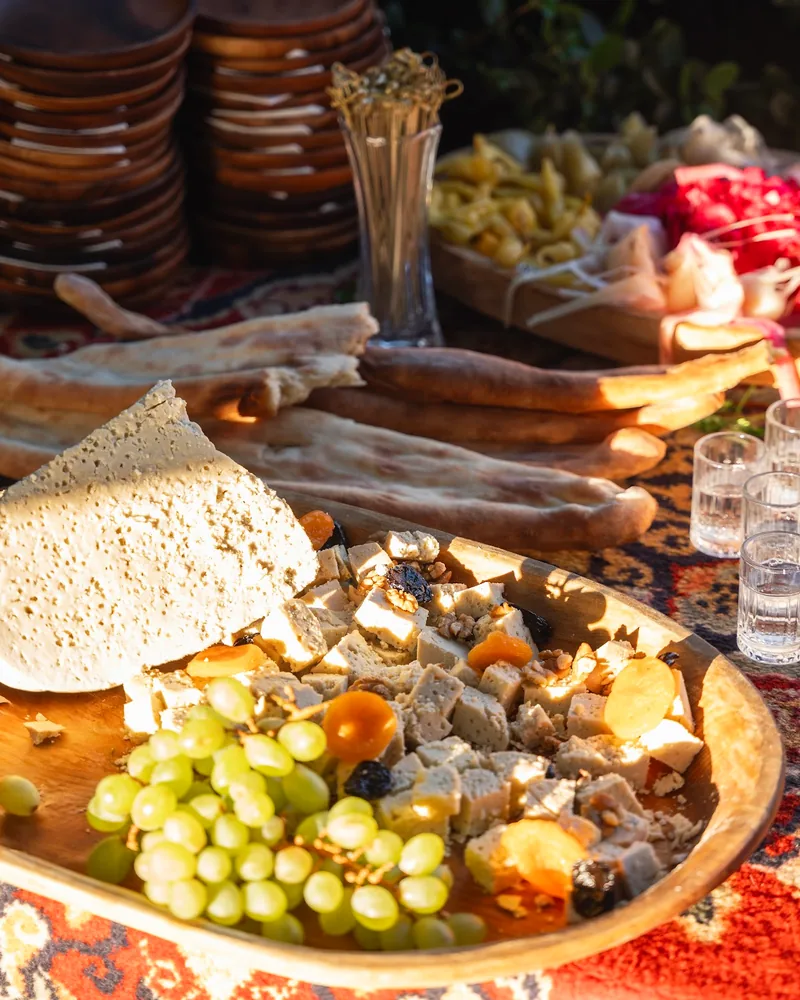
Cheese in Georgia is a staple rather than a course, and Georgia's official tourism site counts around 60 kinds, from imeruli and sulguni to chogi, kobi and kazla. It calls cheese a fundamental part of the everyday menu, on every table.
In Georgian food it does 3 jobs: it's the filling in khachapuri, a plate of its own with bread from breakfast onwards, and an ingredient melted into cornmeal, rolled round mint or baked over mushrooms. Learn 2 names, sulguni and imeruli, and you can read most of a menu.
Sulguni and imeruli, the 2 everyday cheeses
Sulguni is the stretchy one. The Mingrelians and Svans made it first, from cow or buffalo milk: the curd is kneaded, cut into strips, worked in hot water and pulled into balls, which is why it peels into layers cold and runs into strings hot.
Smoked sulguni is the same cheese hung under a high beam in Samegrelo with smoke blown onto it for at least 2 months. It's the one to order with wine, and one reviewer at a Tbilisi wine bar recommends it with honey.
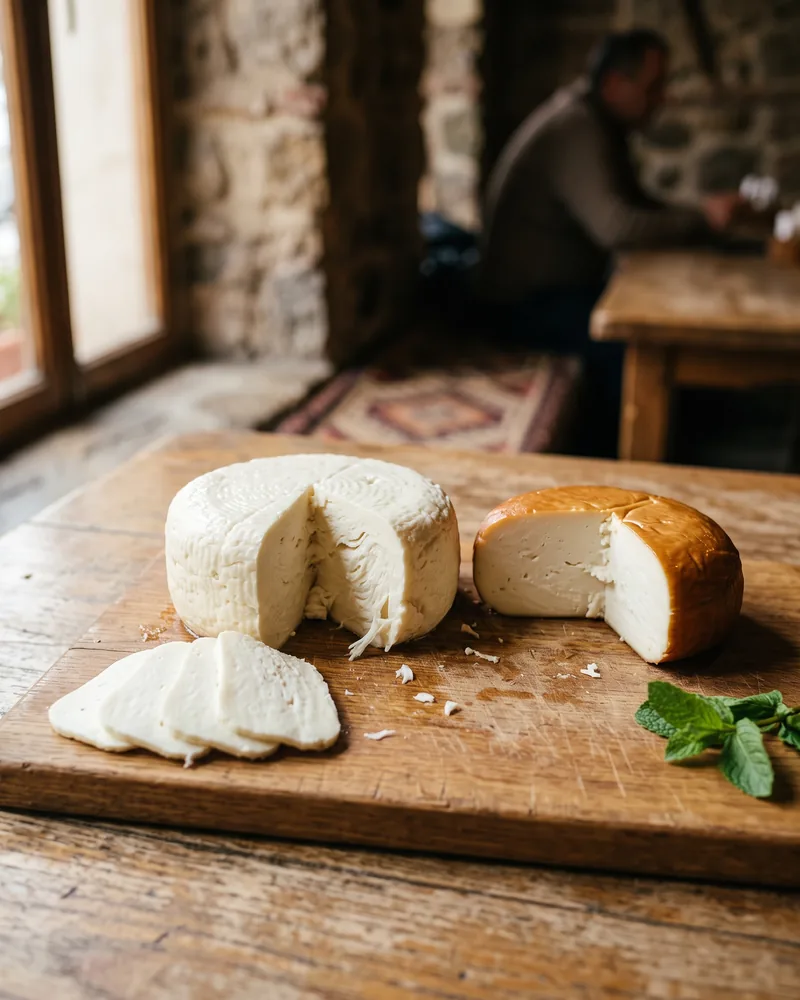
Imeruli, from Imereti, is the fresh one: the curd is shaped into balls by hand, salted with rock salt and kept in brine, so it's soft, crumbly and salty rather than stretchy. It fills the Imeretian khachapuri, which the tourism board calls the most widespread of the types of khachapuri.
| Detail | Sulguni | Imeruli |
|---|---|---|
| From | Samegrelo and Svaneti | Imereti |
| Made | Curd worked in hot water and pulled into balls | Curd pressed into balls by hand, salted with rock salt |
| Texture | Layered, stretchy when hot | Soft and crumbly |
| Kept in | Salt water, sometimes with matsoni, or smoked | Brine |
| In khachapuri | Megrelian, with fresh chkinti, and on top | Imeretian, on its own |
Guda, tenili, dambalkhacho and narchvi: the mountain cheeses
The everyday cheeses are eaten fresh, while the mountain ones are made to keep, each aged for months in its own container. You'll meet them less often, so when a menu names one, order it.
| Cheese | From | How it's made | Aged |
|---|---|---|---|
| Guda | Tusheti | Sheep's milk, sometimes with cow's, salted into a sheepskin bag | 60 days |
| Tenili | Meskheti | Curd pulled into strings, rolled in cream, packed into a clay pot set over ash | At least 2 months |
| Dambalkhacho | Tianeti and Pshavi | Curd balls dried in a basket, rinsed in whey, packed into clay vessels | 1.5 to 2 months |
| Narchvi | Svaneti | Cow's milk cheese made in August, pressed into a wooden box | Until Christmas |
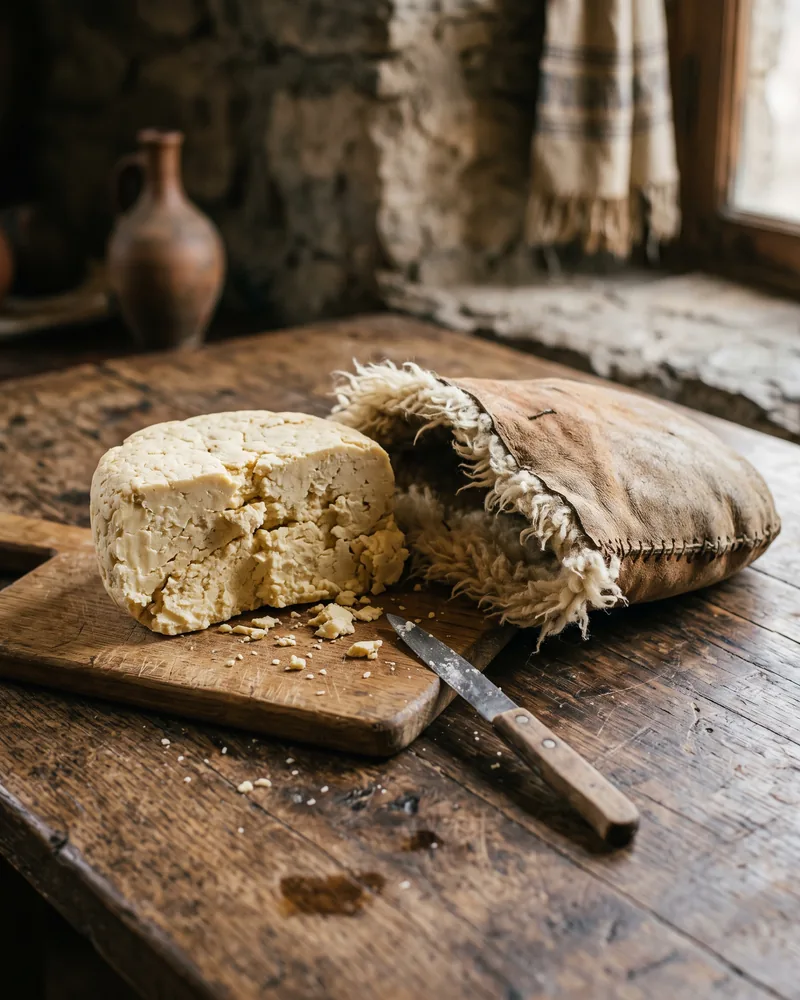
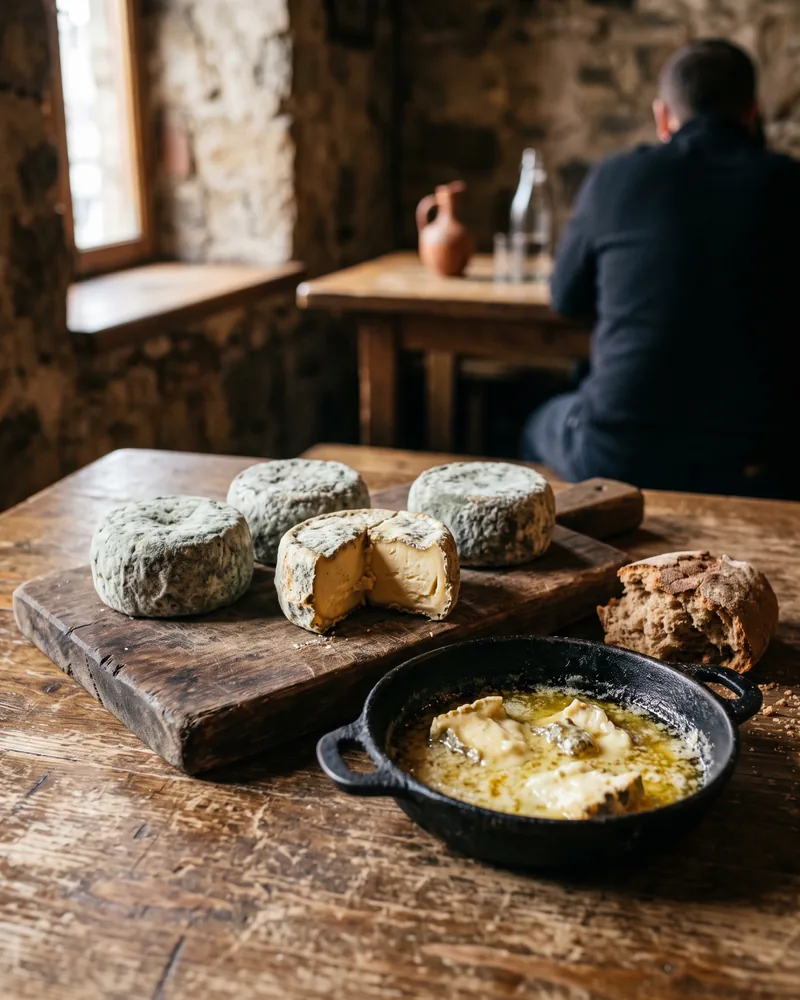
Dambalkhacho is the one to be ready for. It's mouldy on the outside and golden inside by design, and the tourism board calls the flavour intense and spicy; in the mountains it's heated in a pan with plenty of clarified butter, a dish called khachoerbo. Tenili looks least like cheese, a nest of fine white strings, and it goes into salads.
Which cheese is in which dish
Cheese is on a Georgian menu far more often than it gets its own heading. Sulguni is in most of these dishes, because it melts and stretches.
| Dish | Cheese | What arrives |
|---|---|---|
| Imeretian khachapuri | Imeruli | Round bread with the cheese sealed inside |
| Megrelian khachapuri | Chkinti and sulguni | The same, with cheese baked on top |
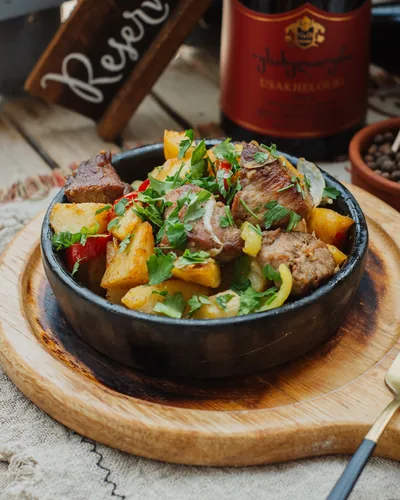
| Mushrooms with sulguni | Sulguni | Mushrooms baked with cheese in a clay ketsi |
| Elarji | Sulguni | Stretchy cornmeal and cheese from Samegrelo |
| Gebzhalia | Sulguni | Sulguni rolls with mint in a matsoni sauce |
| Tashmijabi | Sulguni | A Svan mash of potato and cheese |
| Khachoerbo | Dambalkhacho | The mouldy mountain cheese melted in clarified butter |
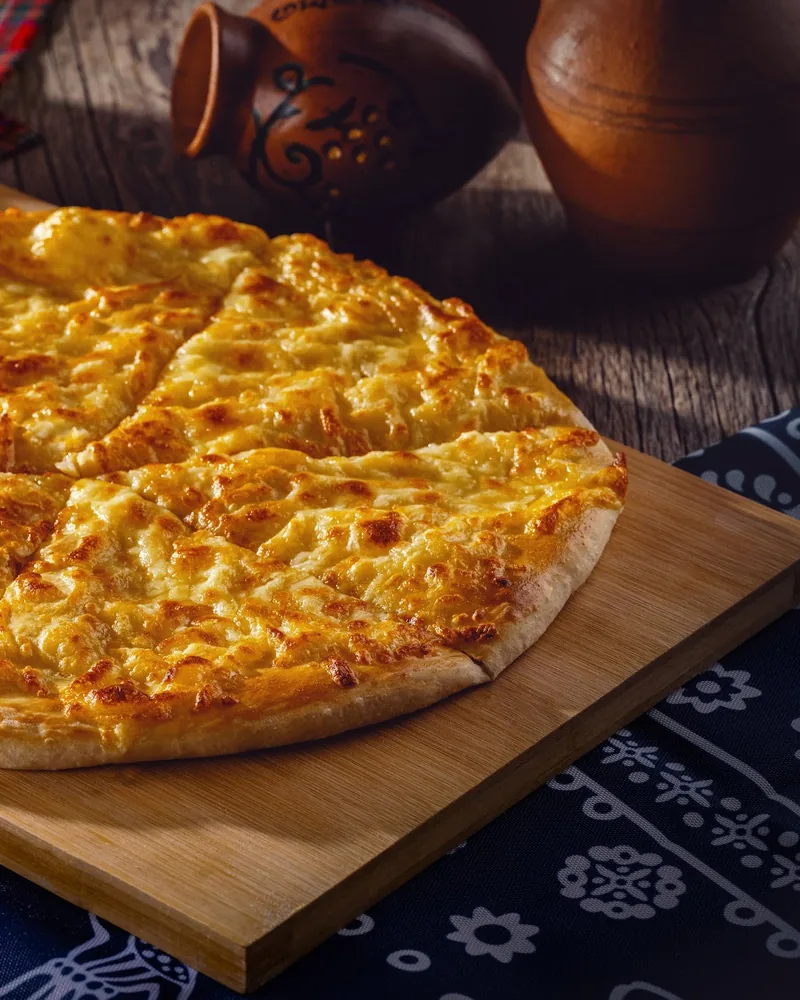
Khachapuri is filling, so for 2 people the move is 1 khachapuri and 1 hot cheese dish. Gobi and Pasanauri, below, are both on our khachapuri list, so the bread and the cheese dish can come from the same kitchen.
Georgian cheese boards and wine in Tbilisi
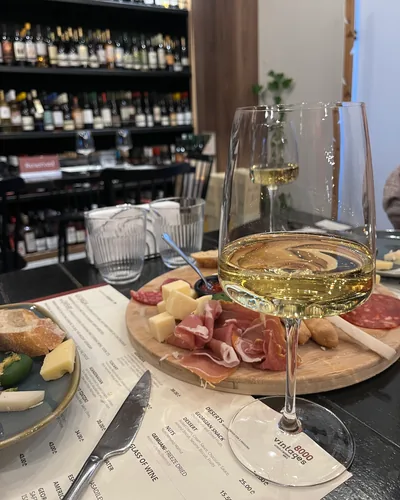
A Georgian cheese board is a normal thing to order with wine. The tourism board describes one as imeruli, sulguni, smoked sulguni and curd wrapped in sulguni slices, and it wants a torn loaf of shotis puri next to it.
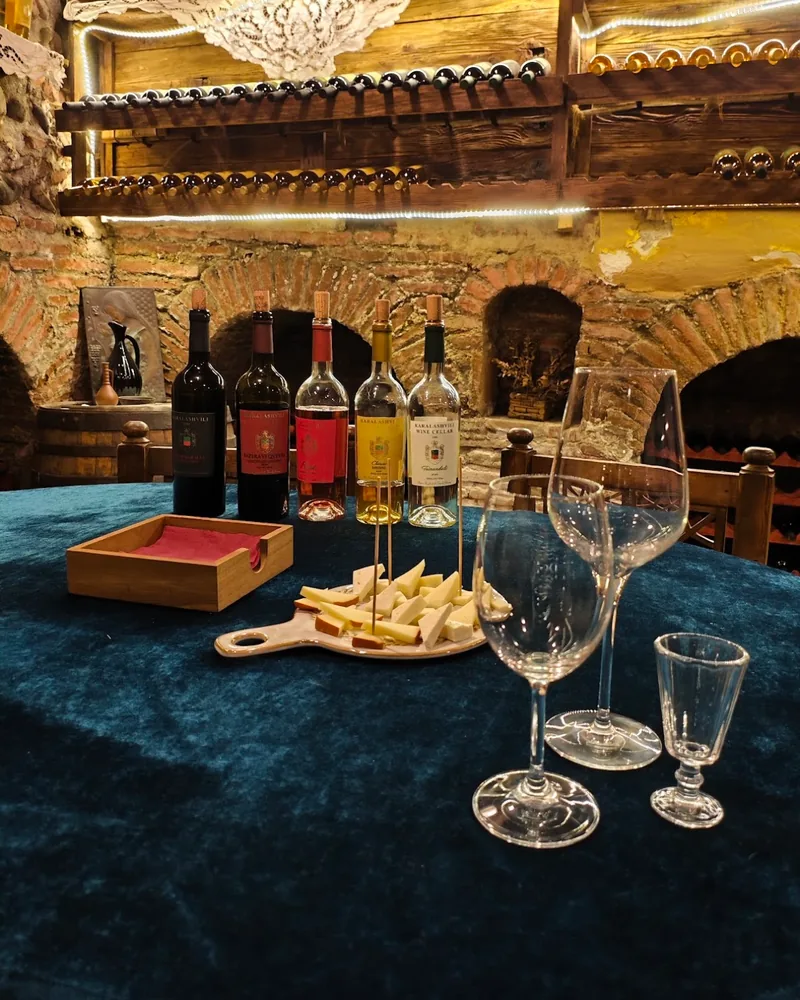
At a wine tasting, cheese often comes with the glasses; at a wine bar it's a board you order. The tourism board pairs dambalkhacho with rkatsiteli, the white grape behind a lot of amber wine, so try guda or smoked sulguni the same way.
Protected names and heritage status
Georgian cheese carries 2 different kinds of official status. The first is a protected name: the National Intellectual Property Center of Georgia lists 13 cheese names among the Georgian indications protected abroad, nearly all of them in the EU, Switzerland, the UK and Moldova.
The second is heritage status for the way a cheese is made. The tourism board says tenili's method has been on Georgia's list of intangible cultural heritage monuments since 2013, and dambalkhacho is on the same list.
| Cheese | Protected name abroad | Heritage monument in Georgia |
|---|---|---|
| Sulguni | Sulguni, Megrelian Sulguni and Svanetian Sulguni | Not on record |
| Imeruli | Imeretian Cheese | Not on record |
| Guda | Tushetian Guda, plus Guda in Switzerland and Moldova | Not on record |
| Dambalkhacho | Dambalkhacho | Yes |
| Tenili | Tenili | Yes, since 2013 |
| Chechili | Meskhetian Chechili | Not on record |
| Kobi, chogi and Adjarian clechili | All 3, plus the plain name Georgian Cheese | Not on record |
| Narchvi | Not on the list | Not on record |
The cheese festival, and why the cheese stays in Tbilisi
Tbilisi's annual cheese festival is in early June at Mtatsminda Park, where the agriculture ministry counted 45 cheese producers in 2023. It's the cheese date on the food festival calendar, and Tbilisoba in October brings cheeses from every part of the country to Rike Park.
Cheese is also sold at the city's markets and in supermarkets, but buy it to eat here. Churchkhela and spices are the edible souvenirs that travel.
Frequently asked questions
What is the most common Georgian cheese?
Sulguni and imeruli, the 2 cheeses on almost every menu. Sulguni is pulled in hot water, so it peels into layers and stretches when melted; imeruli is fresh, crumbly and kept in brine. Between them they fill most khachapuri and cheese plates.
What's the difference between sulguni and imeruli?
Texture and method. Sulguni's curd is worked in hot water and pulled into balls, so it's layered and stretchy, and it also comes smoked. Imeruli's curd is pressed into balls by hand, salted with rock salt and kept in brine, so it stays soft and crumbly.
What cheese is in khachapuri?
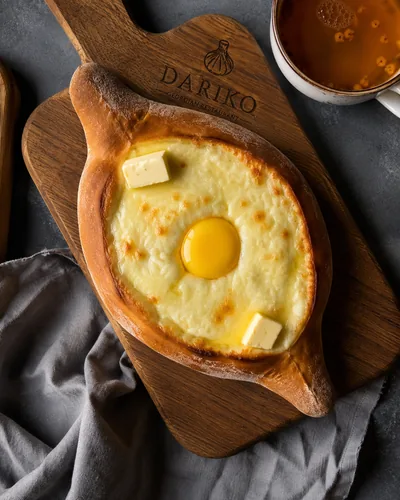
Mostly imeruli and sulguni, depending on the type. Imeretian khachapuri is filled with imeruli, Megrelian uses fresh chkinti and sulguni with more cheese on top, and Meskhetian can take tenili. The Adjarian boat adds an egg yolk and butter to its cheese.
What is guda cheese?
Guda is a sheep's milk cheese from Tusheti, sometimes mixed with cow's, named after the sheepskin bag it ripens in: 4 or 5 cheeses go into each bag with salt between them for 60 days. Its name is protected abroad as Tushetian Guda.
Where can you try Georgian cheese in Tbilisi?
At a Georgian restaurant for the dishes and a wine bar for a board. Gobi's reviews mention a tenili cheese salad, Pasanauri on Kazbegi Avenue does mushrooms with sulguni, and Wine Not? and Karalashvili Wine Cellar serve cheese with the wine. In early June, the annual cheese festival at Mtatsminda Park brings the producers to you: 45 came in 2023.