Types of Khachapuri: What Each One Is and Where to Order It in Tbilisi
The round, the double-cheese, the boat, the flaky bakery square, and which one to order first

Khachapuri is bread baked around cheese, and every region of Georgia bakes its own: round, boat-shaped, layered, flaky, stuffed with egg or potato. A Tbilisi menu will list 3 or 4 of them and explain none. This page sorts the ones you'll actually meet, what's in each, how to eat the boat, what they cost and where in the city to order them.
Quick summary
- Khachapuri is Georgian bread baked around cheese, and a National Geographic feature republished by Georgia's tourism board counts 47 regional varieties.
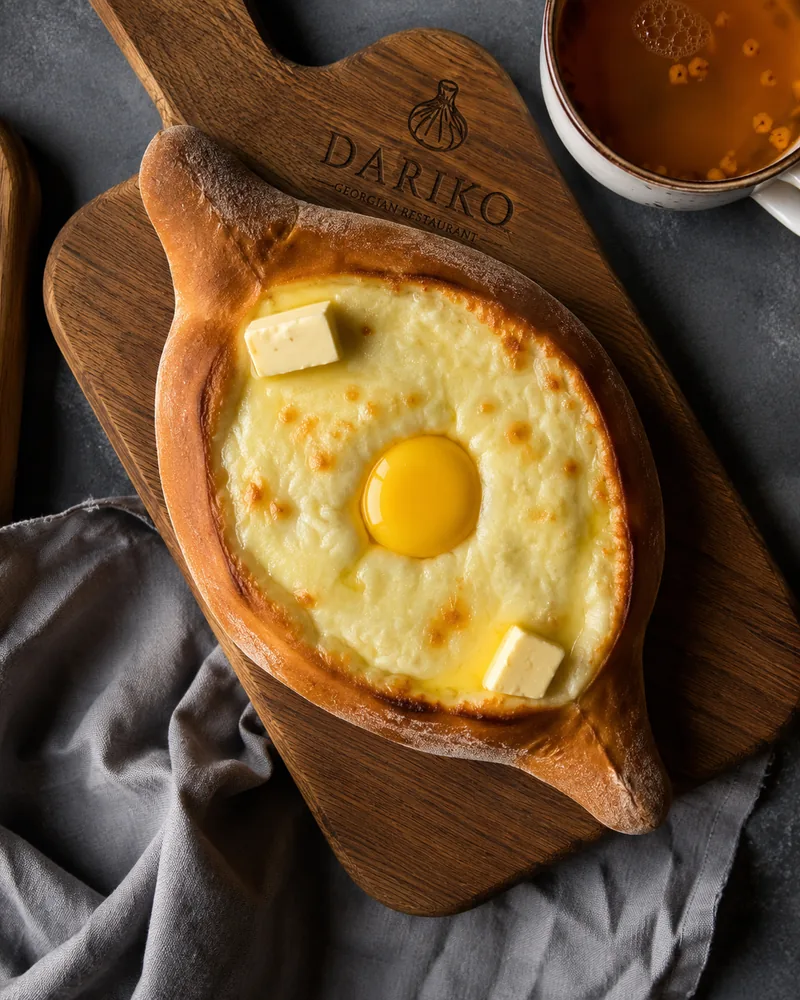
- The 3 on most Tbilisi menus are Imeruli (a closed round with cheese inside), Megruli (the same round with more cheese melted on top) and Adjaruli (an open boat with an egg yolk and butter).
- Eat an Adjaruli by stirring the yolk and butter into the hot cheese the moment it lands, then tearing off the 2 crust ends to scoop.
- A bakery khachapuri can cost 3 GEL by one reviewer's count, against 20 GEL a head and up at a sit-down restaurant, and the bakery hatch is also where you find penovani (puff pastry) and the Guruli crescent.
- Lobiani (beans) and kubdari (Svan meat pie) are sold at the same counters, but with no cheese in them they're cousins rather than types.
What khachapuri is
The name says it all: khacho is Georgian for cheese curds and puri is bread. According to a National Geographic feature republished by Georgia's tourism board, researchers have documented 47 regional varieties using more than 80 kinds of traditional cheese, though the word itself doesn't appear in writing until 1725.
The same feature quotes TV chef Esma Kunchulia on what counts: no cheese, no khachapuri. It's also a chapter of Georgian food with official standing, since the khachapuri tradition went onto Georgia's national list of intangible cultural heritage in 2019.
Types of khachapuri at a glance
Here's the whole family in one place, with where you'll actually meet each one in Tbilisi. The last 2 rows are the no-cheese cousins sold right next to them.
| Type | From | What it is | Where in Tbilisi |
|---|---|---|---|
| Imeruli (Imeretian) | Imereti | Closed round, Imeretian cheese inside | The most widespread; Pasanauri (Kazbegi Avenue) |
| Megruli (Megrelian) | Samegrelo | The same round, more cheese melted on top | Usakhelouri, Supra Sololakshi |
| Adjaruli (Adjarian) | Adjara | Open boat of cheese, egg yolk and butter | Dariko, Khinkali Bar N1 |
| Penovani | Disputed | Puff pastry square or triangle | Bakery counters; a bean one at Lazuri Bakery |
| Guruli (Gurian) | Guria | Crescent of cheese and boiled egg | Caravanserai Bakery, Breadbar Bakery |
| Achma | Adjara | Layers of cooked dough, cheese and butter | OtsY does an eggplant one |
| Ossetian (khabizgina) | Shida Kartli | Potato and Ossetian cheese | The Osetian Khachapuri House is named for it |
| Meskhetian | Meskheti | Very thin dough in a turban shape | None on our lists |
| Svan (petvraali) | Svaneti | Millet in the filling | None on our lists |
| Lobiani (cousin) | Racha | Beans, no cheese | The Osetian Khachapuri House, Lavera |
| Kubdari (cousin) | Svaneti | Chopped meat, herbs and Svan spices | The Osetian Khachapuri House |
Imeruli khachapuri, the everyday round
Imeruli gets called the mother of khachapuri, and the tourism board's guide to the types calls it the most widespread. It's a closed round with Imeretian cheese inside, fresh, crumbly and of medium fattiness in the board's words, and it was traditionally baked over embers in a clay pan called a ketsi.
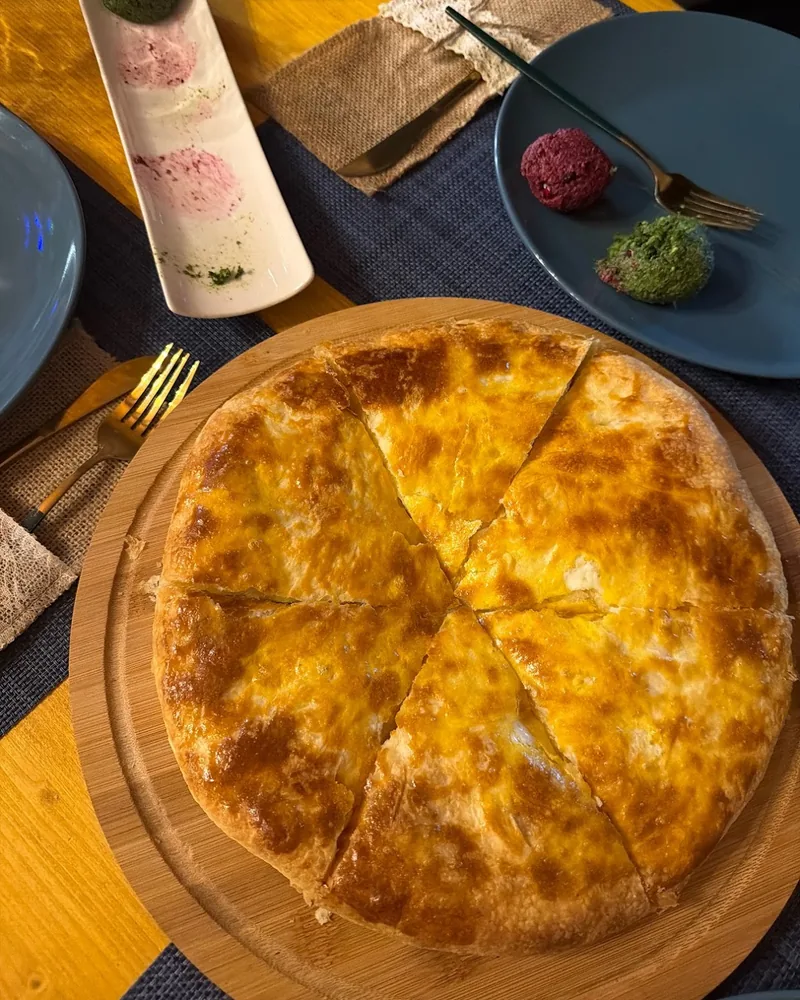
It's the plain one, cut into wedges and set in the middle while everything else is still coming, and day-old and cold it turns up at a home Georgian breakfast too. Imeretian cheese and sulguni do most of the work in the fillings on this page. At Pasanauri on Kazbegi Avenue, one reviewer in September 2026 had the Imeretian khachapuri alongside mushrooms with sulguni.
Megruli khachapuri, with cheese on top
Megruli comes from Samegrelo, in the west, and it's an Imeruli with a 2nd helping: cheese inside, then more melted over the top until it browns. The tourism board says it takes 2 cheeses, fresh chkinti and sulguni, and a dough always kneaded with milk or whey.
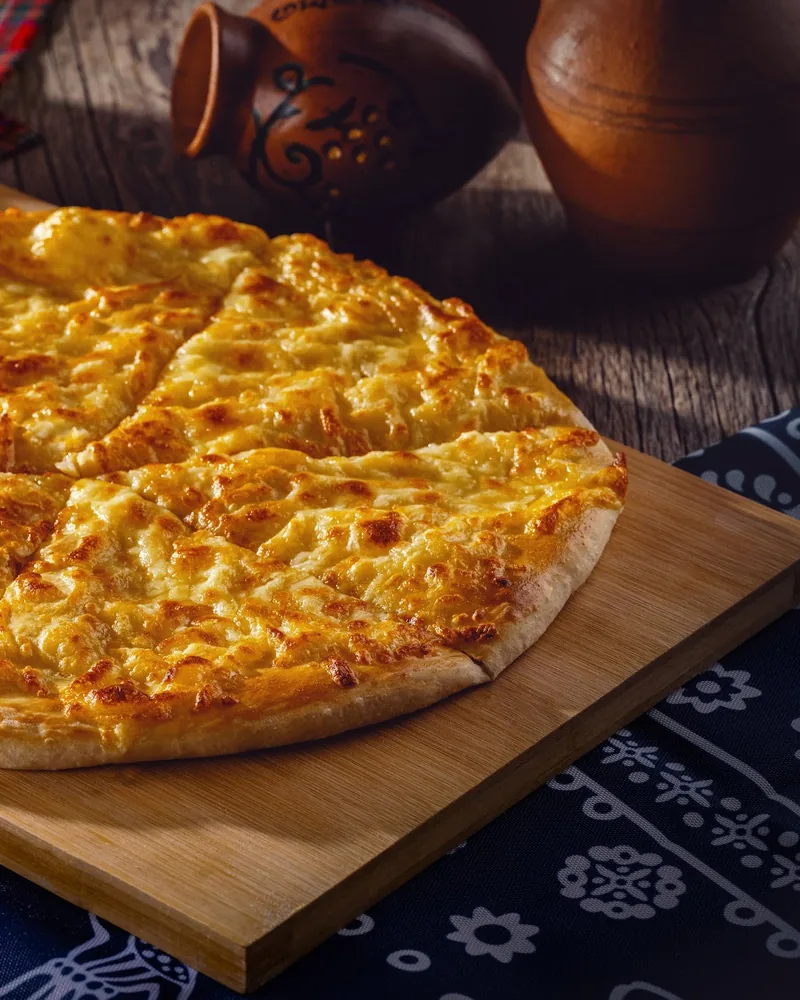
If you want the most cheese per bite, this is your order. At Badagoni on Liberty Square one reviewer singled out the melted cheese and a lightly fried finish, and at Gobi on Vasil Barnov Street another puts the megreli on the short list of dishes to get.
Adjarian khachapuri, the boat with the egg
This is the one on the postcards: an open boat of cheese with a raw egg in the middle and butter on top. The tourism board's rundown of Georgian dishes describes the yolk as the sun on a sea of cheese and butter, and its guide to the types calls the boat a symbol of Batumi, the Black Sea capital of Adjara.
It's the type that turns up most often on the khachapuri list, and kitchens play with the formula. One reviewer at Dariko found the pastry a little sweet, one at Tbili Kera argued the boat wants 2 eggs rather than 1, and at Sakhli Kipianze another had mini khachapuri with a quail egg.
How to eat Adjarian khachapuri
The boat lands with the yolk raw and the butter still melting, and stirring both into the hot cheese is what turns the middle into a sauce. Then you tear off the crust and scoop, which is how the tourism board's feature describes it being eaten.
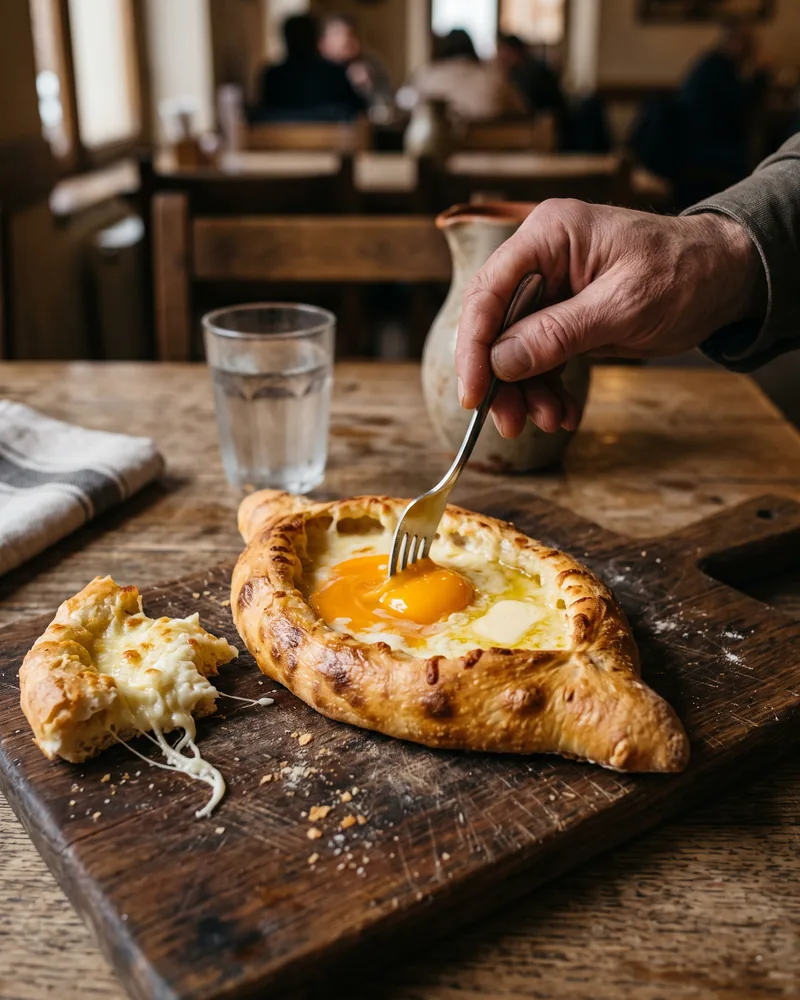
Khinkali, the other dish you eat with your hands here, come with a whole set of rules. The Adjaruli has just one that can't wait, the stirring, because the cheese sets as it cools.
Bakery khachapuri vs restaurant khachapuri
A restaurant khachapuri is baked to order and eaten at a table. Penovani, lobiani and the Guruli pie are counter food, the kind Tbilisi's bakeries hand through a hatch in paper for you to eat standing up or on the nearest bench.
The price gap is the real difference: one reviewer at Caravanserai Bakery, opposite the History Museum, paid 3 GEL for a khachapuri in January 2026. In between sits the counter kitchen, where Family Kitchen Tar Tun opens at 9 AM and Google puts a meal at 10 to 20 GEL.
Penovani, the flaky one
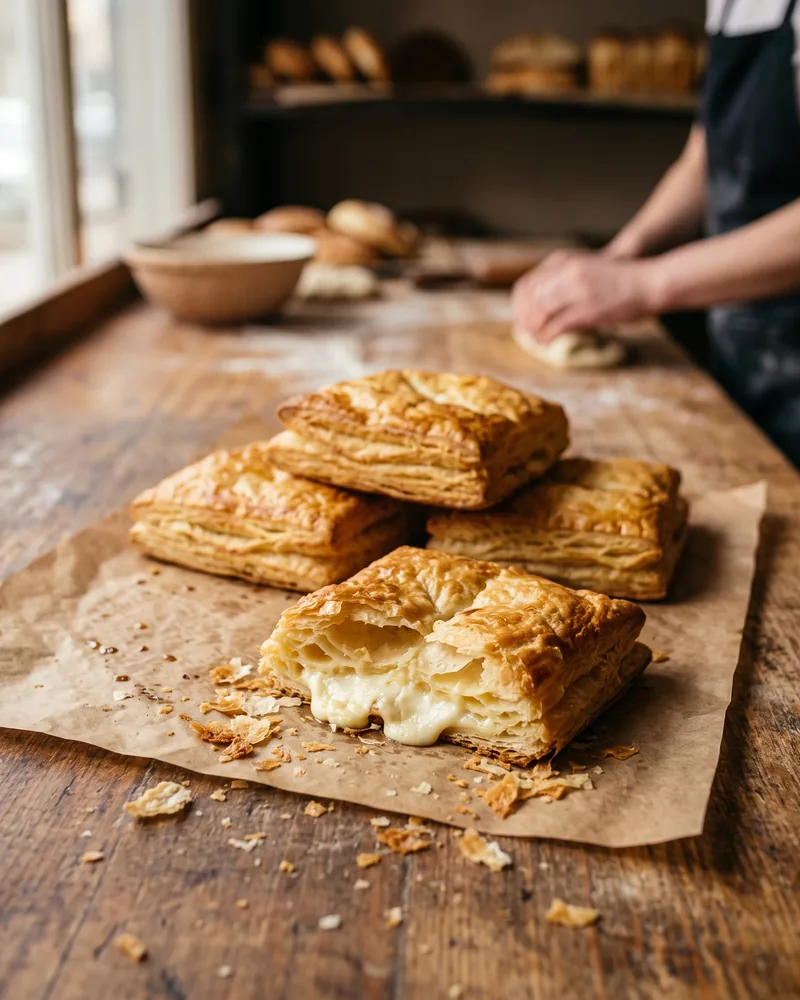
Penovani is khachapuri made with puff pastry, folded into a square or triangle so the cheese melts between flaky layers. The same dough takes other fillings: at Lazuri Bakery, a regular of 3 years swears by the penovani lobiani, beans in place of cheese.
Guruli, the Christmas crescent
Gurian khachapuri is a crescent-shaped pie from Guria, in western Georgia, filled with cheese and boiled eggs and tied to Christmas, according to the tourism board. You needn't wait for Christmas: one reviewer at Caravanserai Bakery calls the Guruli pie probably the best thing they ate in Georgia.
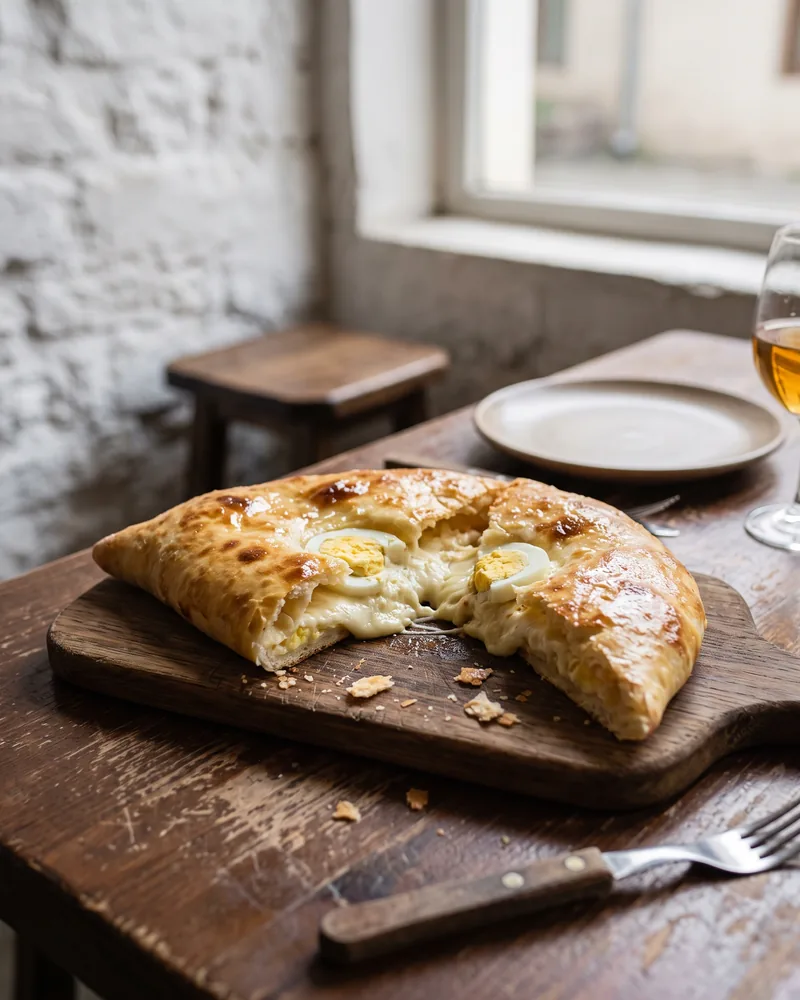
Bakery khachapuri is best early. One Caravanserai reviewer who came back later in the afternoon found a pastry's dough had gone slightly stale, and another says the hatch offers to heat things up, so say yes.
Achma, the layered khachapuri
Achma is the khachapuri that gets compared to lasagne: the tourism board's page on Adjarian dishes describes thin, cooked layers of dough embedded with cheese and melted butter. It's listed as Adjarian, but the board says it has spread across Georgia.
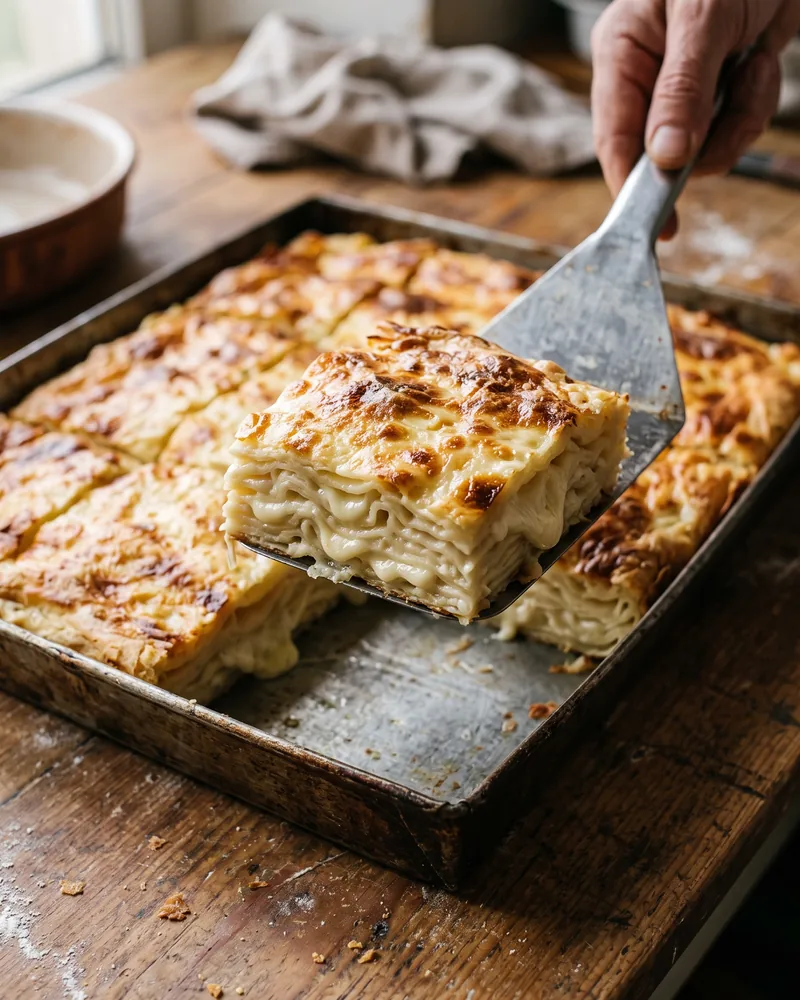
None of the kitchens on our lists is on record for the classic cheese achma, so order it whenever you spot it on a menu. OtsY, the fine-dining room on Ioane Shavteli Street, does an Eggplant Achma that 2 recent reviewers single out, but that's a modern take rather than the original.
Regional khachapuri: Meskhetian, Ossetian, Svan and more
Beyond the big 3, most regions keep a khachapuri of their own, and several rarely make a Tbilisi menu. These are the ones the tourism board lists.
- Meskhetian: the hardest to make, in the board's words, and nicknamed turban khachapuri for its shape, with very thin dough worked with pig, goose or cow fat.
- Ossetian (khabizgina): potato and Ossetian cheese, especially common in Shida Kartli; in Tbilisi, The Osetian Khachapuri House in Nadzaladevi carries the name.
- Svan (petvraali): made with millet, which earns it the nickname dirty khachapuri for its colour.
- Tushetian kotori: paper-thin, filled with kalti (aged curds) and baked mainly for New Year. The board calls it the only khachapuri not made with cheese, a debate for a Tushetian and Esma Kunchulia to settle.
- Rachan: square, rectangular, triangular or round, and some are stamped with wooden rings before baking.
Lobiani and kubdari, the cousins with no cheese
By the cheese rule these 2 aren't khachapuri, but they share the oven and the counter. Lobiani is bread filled with beans, which the tourism board ties to Racha; kubdari is chopped (not minced) meat, forest herbs and Svan spices in a round, and the board calls it an Intangible Monument of Georgian Cultural Heritage.
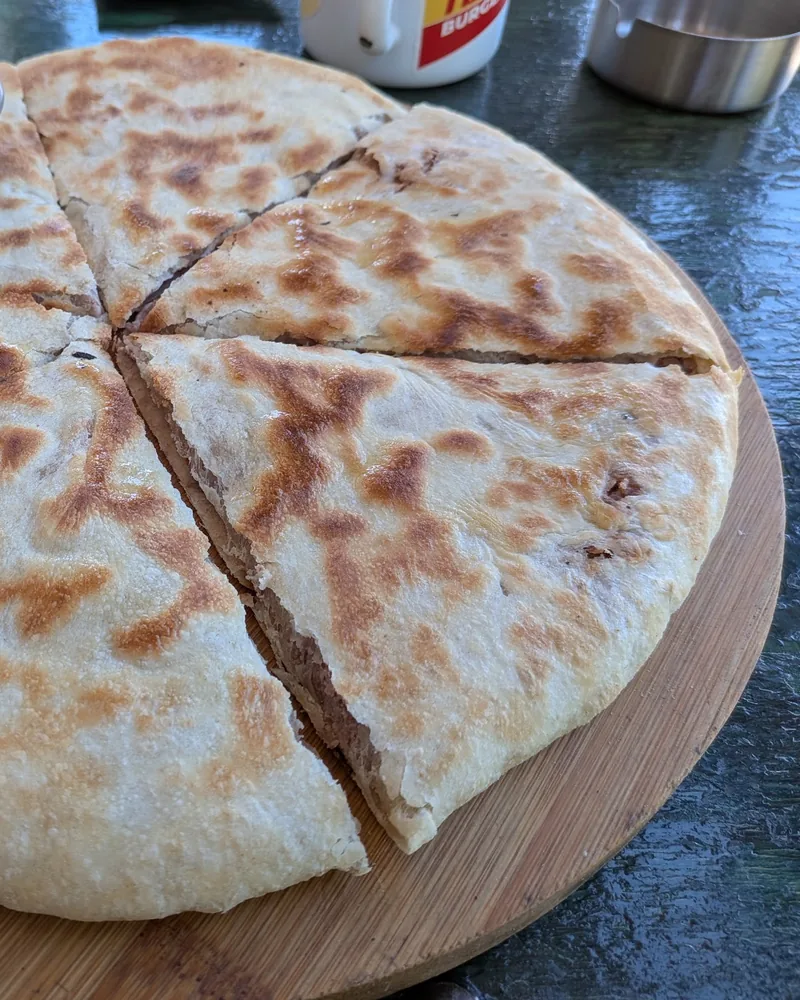
Both travel well, which is why they turn up on the street food circuit. At The Osetian Khachapuri House kubdari comes up 9 times in the review topics and lobiani 8, and Green Buffet N1, where lobiani comes up 11 times, stays open until 2 AM.
Bread with nothing in it at all is shotis puri, baked on the wall of a clay tone oven, but lobiani is the one that carries a lot of vegetarian Georgian food. One reviewer at Turbo Burgers, of all places, called its lobiani with cheese the best they'd had since arriving in Georgia.
Which khachapuri to order first
Don't ask which khachapuri is best; ask where you are and who you're with. Here's how we'd pick.
- Your first one, at a table: the Adjaruli, because stirring the yolk is half the reason to order it.
- Cheese above all else: the Megruli, with its 2nd layer melted on top.
- Breakfast on the move: a penovani or a Guruli pie from a bakery hatch.
- After midnight: an Adjaruli from the late-night kitchens; Dariko takes orders until 1:30 AM, and Lavera on Gogebashvili Street is open 24 hours.
Frequently asked questions
What are the main types of khachapuri?
Imeruli, Megruli and Adjaruli are the 3 on most Tbilisi menus: a closed round with cheese inside, the same round with more cheese on top, and an open boat with egg yolk and butter. Then come penovani (puff pastry), Guruli (a crescent with boiled egg), achma (layered) and regional ones such as Meskhetian and Svan.
How do you eat Adjarian khachapuri?
Stir the egg yolk and butter into the hot cheese with a fork as soon as it arrives, then tear off the crust ends and use them to scoop. Finish on the soaked base, and don't wait to start: the cheese sets as it cools, and the yolk won't mix in once it has.
Is khachapuri the same as pizza?
No. Khachapuri is bread built around cheese, with no tomato sauce, and the cheese is the point rather than a topping. Dalila Tsatava, president of the Georgian Gastronomy Association, told the National Geographic feature that khachapuri existed long before pizza, and the word is in writing from 1725.
What is penovani?
Penovani is puff-pastry khachapuri: cheese folded into a square or triangle of flaky dough, sold at bakery counters rather than restaurants. The same pastry comes with beans as penovani lobiani, which a regular at Lazuri Bakery swears by. Buy it early, while it's still warm.
How much does khachapuri cost in Tbilisi?
From about 3 GEL at a bakery hatch, by one reviewer's count at Caravanserai Bakery in January 2026. Google puts a meal at Family Kitchen Tar Tun's counter at 10 to 20 GEL, and its price bands for the sit-down places on our khachapuri list start at 20 to 30 GEL a head.