Georgian Desserts: The Sweets to Know and Where to Eat Them in Tbilisi
Grape, walnut and honey sweets, the cafe cakes Tbilisi actually eats, and when each one turns up

Georgian desserts start in the vineyard and under the walnut tree. The old sweets are grape must boiled down and set with flour, walnuts threaded on string and dipped in it, and honey cooked with nuts, and most of them belong to a moment: the harvest, New Year, Easter, a fast. This page covers what each is, when it turns up, which are vegan and where to eat them in Tbilisi, plus the cafe cakes the city runs on.
Quick summary
- Churchkhela, walnuts threaded on a 20 to 35 cm string and dipped again and again in thickened grape must, is the Georgian sweet to start with, and its name is protected by law.
- Pelamushi is grape juice boiled down and set with about 1 cup of corn meal per litre, tatara is the same pudding made with wheat flour, and neither traditionally takes added sugar.
- Gozinaki, walnuts cooked in honey and cut into diamonds while hot, is Georgia's New Year sweet for 1 January and a common gift over the holidays.
- In Tbilisi's cafes the cakes to order are honey cake (medoki) and napoleon, 2 cafe classics across the former Soviet Union rather than old Georgian recipes.
- Pelamushi, tatara and churchkhela are vegan by recipe, which makes them fasting food on Wednesdays, Fridays and through the 4 long Orthodox fasts.
- October is the month for the old sweets, when the Tbilisoba festival's stalls sell 4 of them side by side: churchkhela, pelamushi, tatara and tklapi.
What Georgian desserts are made of
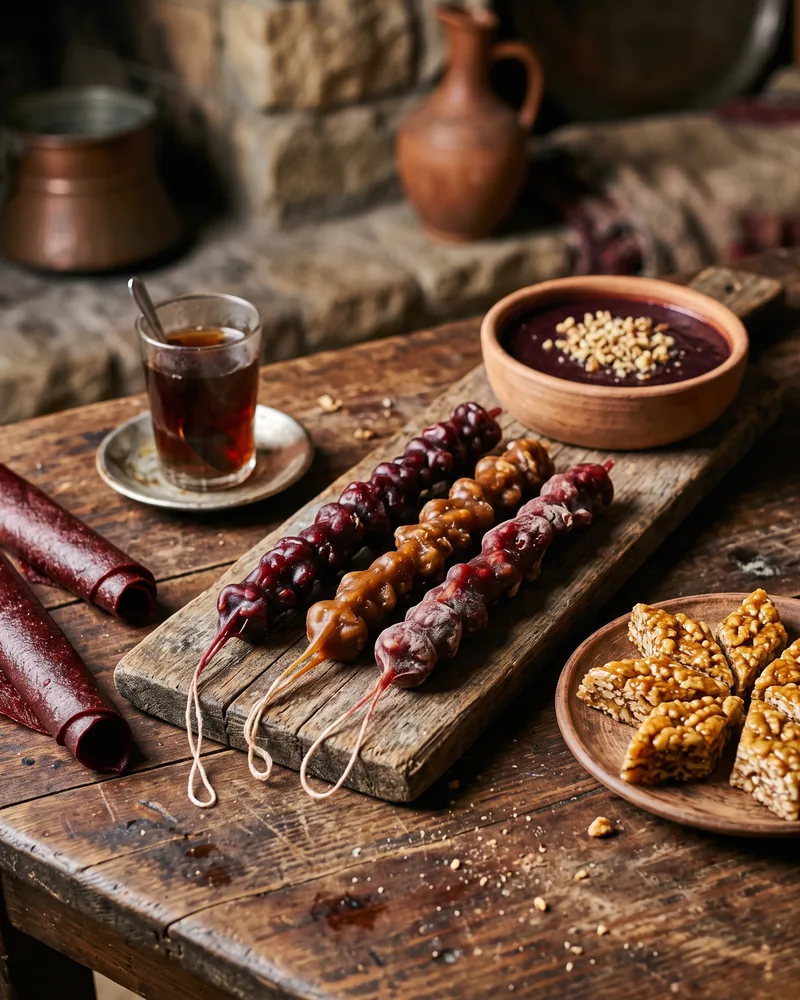
Traditional Georgian sweets are built from what a village has once the harvest is in: grape must, walnuts, hazelnuts, honey and a little flour. The must is boiled down until it's thick and sweet on its own, which is why the old recipes need little or no sugar.
The grape sweets come out of the same harvest as Georgian wine. Once the grapes are pressed, some of the juice goes off to ferment and some goes into a wide pot to be boiled down for pelamushi, tatara and churchkhela.
They belong to occasions more than to menus. In the reviews we've gathered for the restaurants and cafes on our lists, honey cake comes up again and again and pelamushi not once, so the old sweets are something you go looking for rather than stumble on.
Churchkhela, the sweet everyone takes home
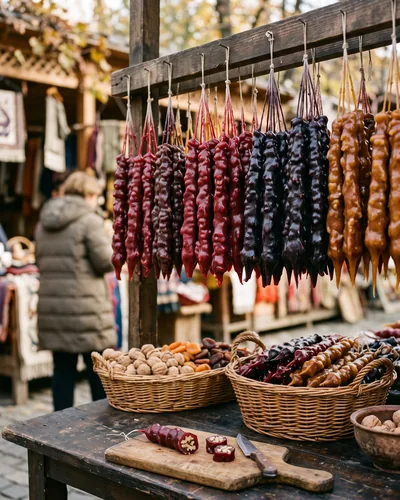
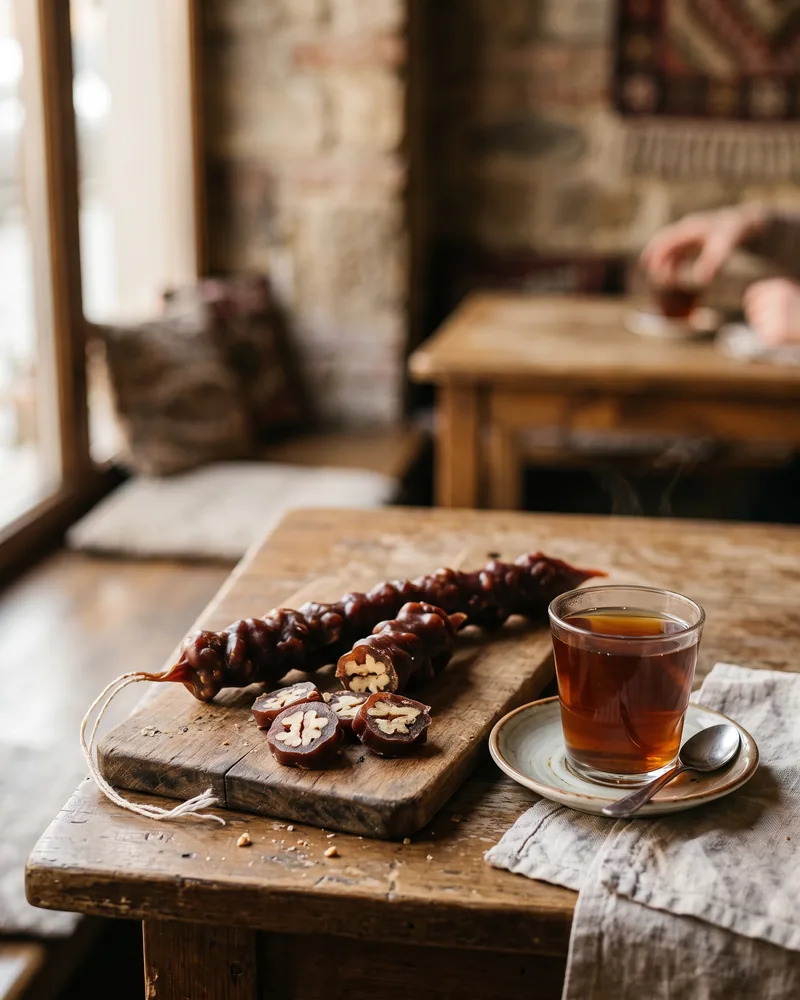
Churchkhela is a string of nuts dipped again and again in tatara, grape must thickened with wheat flour, then hung up to dry into a chewy stick about the length of your forearm. It's the Georgian sweet every visitor meets, it's sold at bazaar stalls across the city, and it keeps for months, which is why so much of it ends up in suitcases.
The classic from Kakheti has walnut halves inside. In western Georgia the version called janjukha uses hazelnuts and a must thickened with corn flour, and in Racha you'll find dried fruit, apricots and pumpkin seeds on the string instead.
A good churchkhela is matte and firm but still bends, and a faint white bloom on the skin is sugar, not mould. The name is protected too: churchkhela sits on Georgia's register of geographical indications alongside chacha and sulguni, and its specification says it can only be made in Georgia.
Pelamushi and tatara, the grape puddings
Pelamushi is grape juice boiled down and set with white corn meal into a soft pudding the colour of the grapes it came from. Tatara is the same thing made with dark wheat flour, and it's tatara that coats a Kakhetian churchkhela.
The method on Georgia's tourism board's pelamushi page takes late-harvest grapes from October or November, boils the pressed juice in a wide lidless pot called a chakhana, then stirs in about 1 cup of corn meal per litre and simmers it for 25 to 30 minutes. No sugar goes in, because the boiled juice is sweet enough, and the same page dates corn meal's arrival in Georgia, from Italy, to the second half of the 17th century.
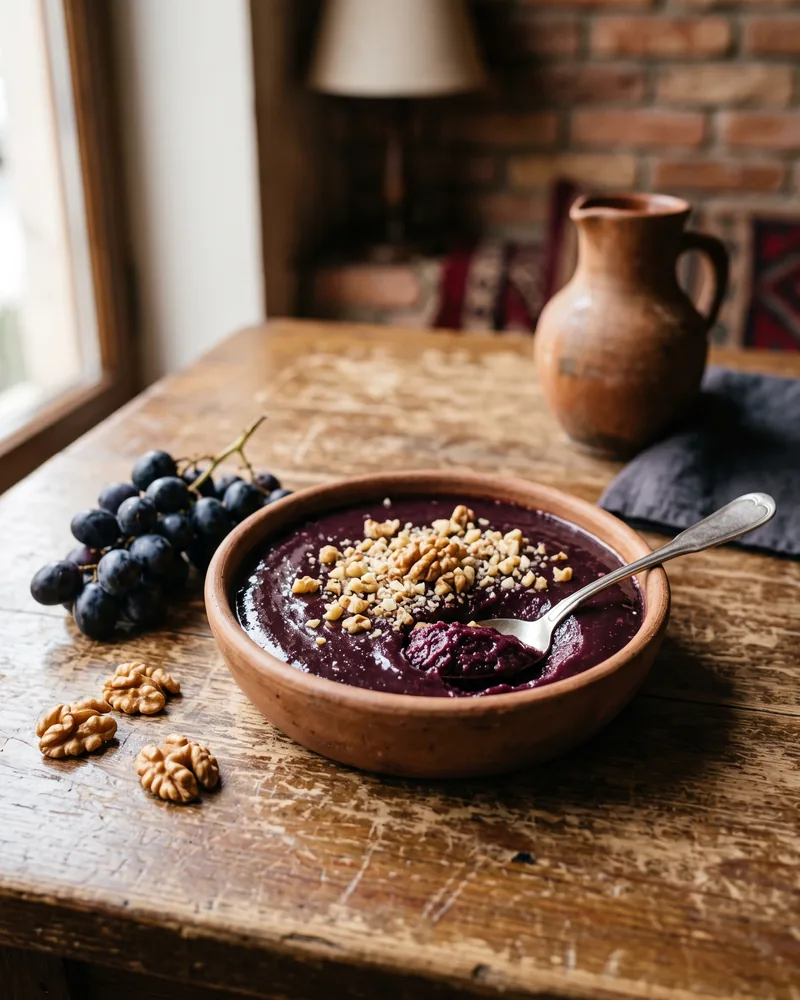
In Guria and Adjara the boiled-down juice is called petmezi, and badagi is the word you'll hear for the plain boiled must before any flour goes in. Pelamushi is a home and harvest sweet more than a menu item, so your best chance of a bowl in Tbilisi is a festival stall in October.
Gozinaki, the New Year sweet
Gozinaki is walnuts and honey and very little else. The tourism board's recipe boils the honey, stirs in roasted, crushed walnuts and a little sugar, spreads the mass on a wet wooden board and cuts it into diamonds while it's still hot.
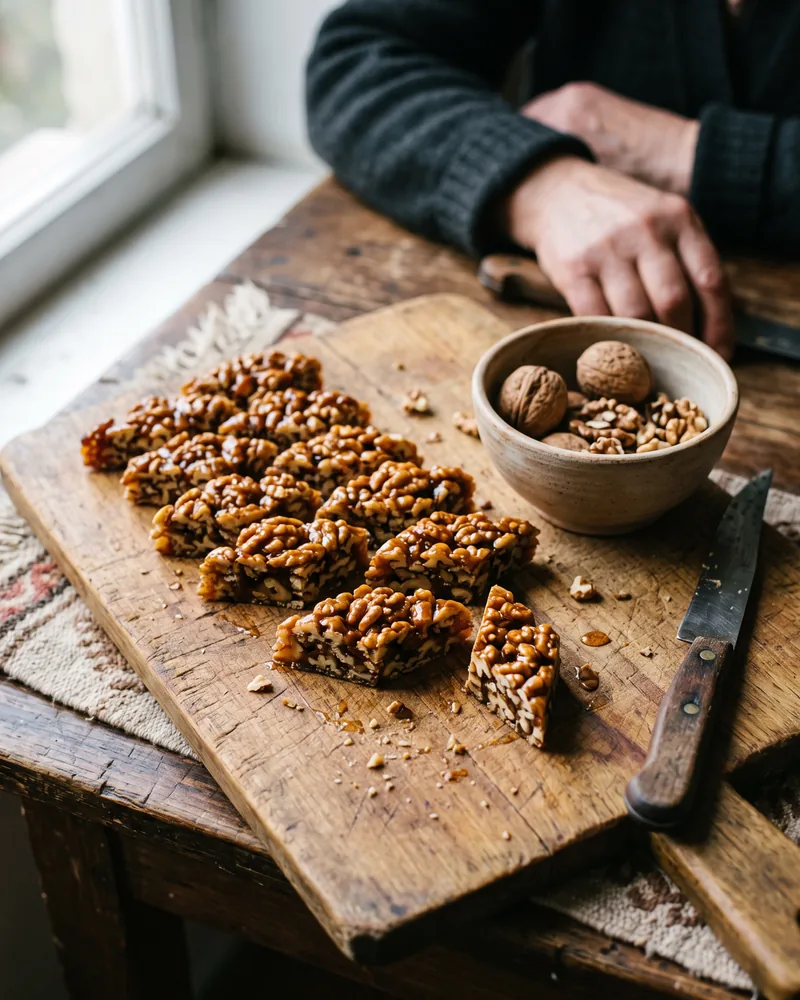
It's so tied to New Year that the same page calls it a synonym for the holiday, and it's a common gift at that time of year. Newer versions swap the walnuts for hazelnuts, almonds, sunflower seeds or pumpkin seeds, and every version is dairy-free, though the honey means it isn't vegan.
Tklapi, nazuki, pakhlava and the other traditional sweets
Beyond the big 4, the rest belong to a region, a holiday or a single ritual. Georgia's tourism board lists kada, Georgian doughnuts, baklava, dried fruit, churchkhela and tklapi among the sweets you can buy on the street in Tbilisi, and the others you'll meet at a table or on a road trip.
| Sweet | What it is | Where or when you'll meet it |
|---|---|---|
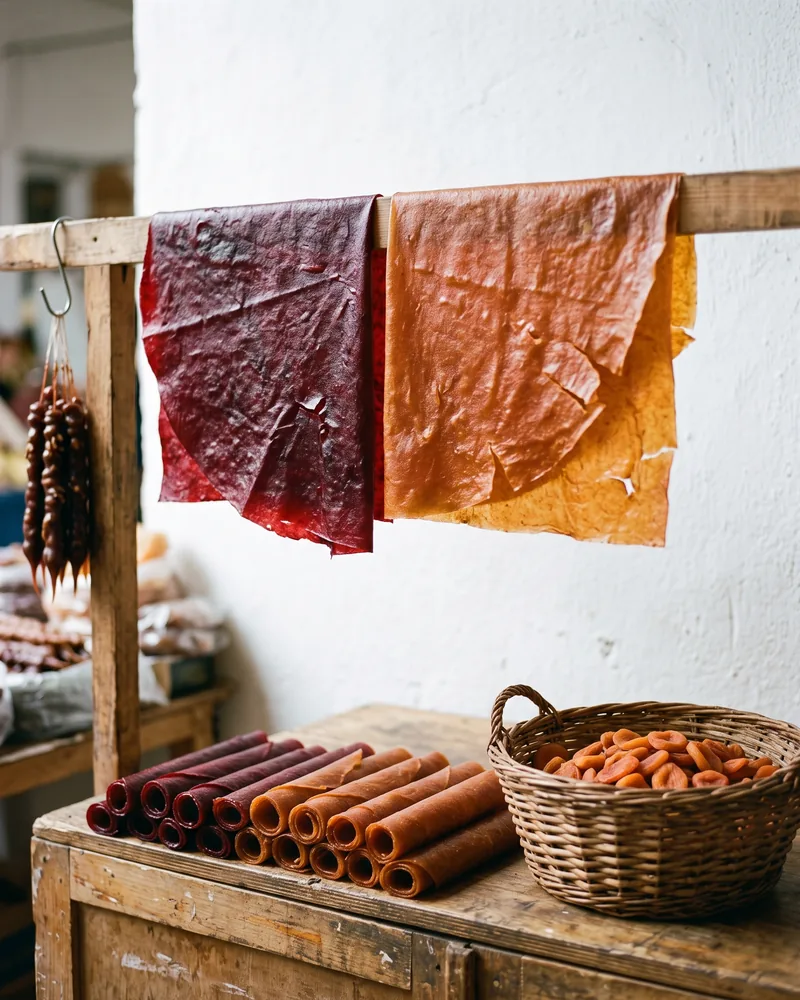
| Tklapi | A thin sheet of dried fruit purée, sweet or sour; sour plum tklapi also goes into cooking | Street stalls in Tbilisi and the Tbilisoba festival in October |
| Nazuki | A sweet bread with raisins, cinnamon and cloves, best baked in a clay tone oven; the word comes from Persian | Roadside tone ovens in Surami, where a stretch of road is known as Nazukebi |
| Kada | A filled pastry; the sweet kind has a buttery, sugary filling, and ritual versions are baked for holidays | Street stalls around Tbilisi |
| Pakhlava | Georgia's baklava: layered pastry, nuts and syrup, most associated with Adjara | Adjara; in Tbilisi, the Turkish-style pastry shops sell the baklava version |
| Burme | An Adjarian roll of pastry, butter and walnuts soaked in hot syrup with saffron and lemon | Adjarian kitchens, on the Black Sea coast |
| Majuni | Rice, honey and black pepper | Weddings in Adjara |
| Korkoti | Boiled wheat with walnuts, honey, raisins and sugar, also called tsandili | The meal after a funeral, in every region of Georgia |
| Paska | The Easter cake | Easter weekend, next to the red eggs |
Korkoti is the one that isn't a treat. It's cooked at home for the meal after a funeral, the most solemn kind of Georgian supra, and it's on that table in every region of the country.
Nazuki is the one worth a detour. Surami, a small town in central Georgia, sells it from roadside tone ovens, and the local name for that stretch of road, Nazukebi, just means the nazukis.
Which Georgian sweet belongs to which season
Most traditional sweets are tied to a date, so what you can find depends on when you're here. Here's the calendar in a single table, with the church dates converted to the civil calendar Georgia's holidays run on.
| When | The sweet | Why then |
|---|---|---|
| Autumn, after the grape harvest | Churchkhela, tatara, badagi | They're made from fresh must once the grapes are pressed |
| October and November | Pelamushi | The traditional recipe calls for late-harvest grapes |
| October, Tbilisoba | Churchkhela, janjukha, pelamushi, tatara, tklapi, dried fruit | The city festival's pop-up stalls sell them side by side |
| New Year, 1 January | Gozinaki, churchkhela | Gozinaki is the holiday's sweet and a common gift |
| Fast days: most Wednesdays and Fridays, late November to 6 January, and Lent (15 March to 1 May in 2027) | Churchkhela, pelamushi, tatara | Strict fast days rule out eggs, dairy and oil, and none of them goes into these |
| Easter (2 May in 2027) | Paska | The Easter cake that ends Lent |
| Weddings in Adjara | Majuni | Rice, honey and black pepper, made for the wedding table |
| A mourning supra | Korkoti | Boiled wheat with honey and walnuts, cooked at home |
Christmas is on 7 January here, because the Georgian Church keeps the old Julian calendar, so the Nativity fast runs right up to it and New Year lands in the middle. If gozinaki is what you're after, come in the run-up to 1 January.
The cakes Tbilisi's cafes actually sell
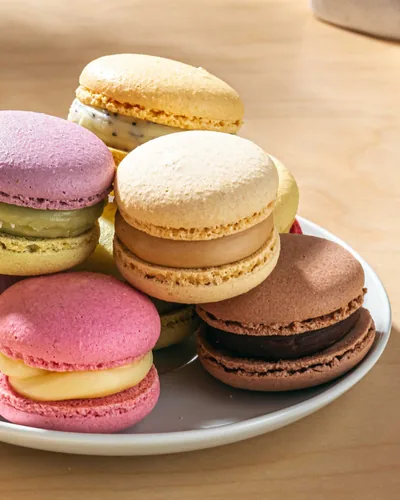
The counters at Tbilisi's cake shops look more like a Soviet-era cafe than a harvest table. Honey cake, napoleon, eclairs and cheesecake are what their reviewers keep naming, and none of them is an old Georgian recipe.
Honey cake, medoki in Georgian and medovik in Russian, is thin layers of honey sponge stacked with cream, a Soviet-era cafe classic. The napoleon is the Russian-speaking world's take on mille-feuille, puff pastry stacked with custard, and you'll find both on the counters of the city's best cake shops.
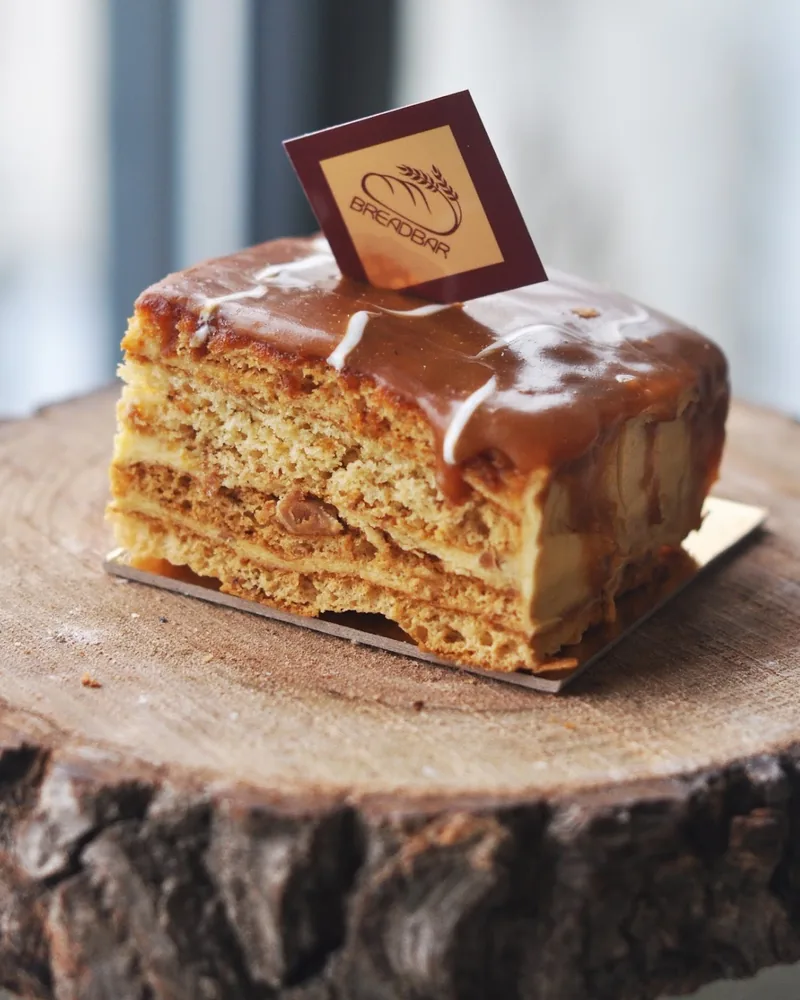
A slice and a coffee is a small decision: one reviewer puts a big slice of chocolate cake with Baileys at Dessert Ballet at 12 GEL, and Google puts a visit to Cafe Madeleine at 10 to 20 GEL a head. Honey cake with a coffee is the easy afternoon order at Tbilisi's cafes, and it turns up in the reviews of Zilina Cafe on Lado Asatiani St as well.
Honey cake also turns up at the end of restaurant meals. At Ethnographer Restaurant one reviewer's birthday table was brought one by the staff, and on the fine-dining side Reserve's honey cake comes up twice in its review topics and one reviewer at Fragment singles theirs out.
Georgian patisseries and their walnut cakes
For a cake with a Georgian accent, go to a Georgian patisserie. Patisserie Bela has been baking since 1993 and calls itself the first Georgian confectionery brand, carrying on family recipes next to newer desserts, and Madart, founded in 2009, now runs 5 branches across the city.
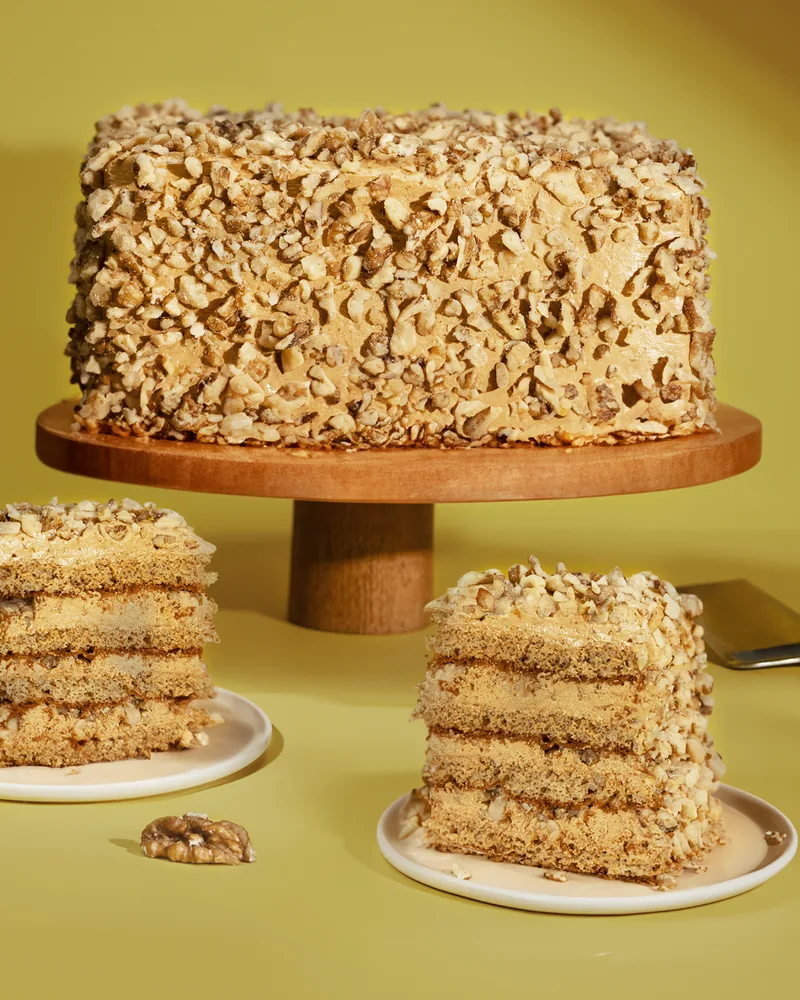
Lika, a Tbilisi bakery whose own description promises homemade cakes, gets reviews for its eclairs and for bird's milk, the Soviet-era soufflé cake under a chocolate glaze. Ponchiki, doughnuts often filled with custard, are the other Soviet-era classic, and doughnuts and kada are the sweet end of Tbilisi street food.
Chocolate khinkali and Georgian-flavoured ice cream
A few Tbilisi kitchens turn Georgian classics into dessert. The most talked-about is the chocolate khinkali at Khinkali Bar N1 on Meidan, with 68 mentions in its reviews: dumplings filled with milk chocolate and served with vanilla ice cream, according to its Instagram.
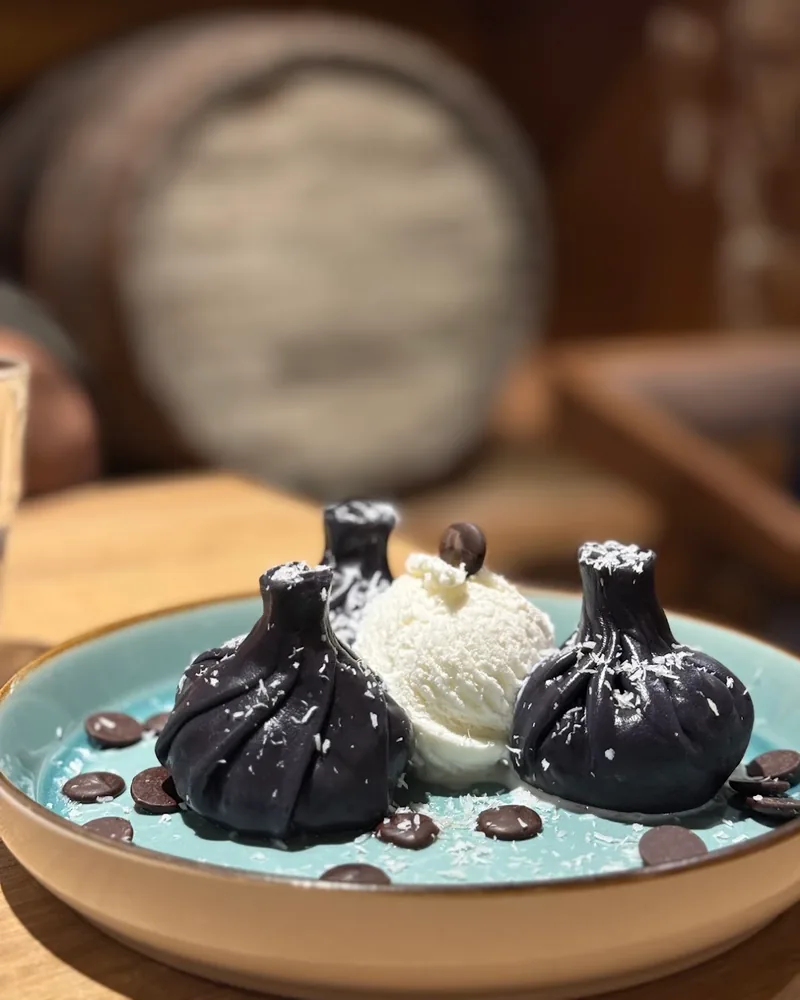
Reviewers there also mention khinkali with cherries 57 times, so a table can finish on a sweet round of the same dumplings it started with. It's open 1 PM to 11:30 PM daily, and table reservations are free.
Ice cream is where Georgian flavours go furthest. At The Cone Culture on Taras Shevchenko St, reviewers mention the blue cheese ice cream 31 times and ice cream with adjika 5 times, and one reviewer's picks were Georgian cheese with tarragon and chocolate adjika with candied orange.
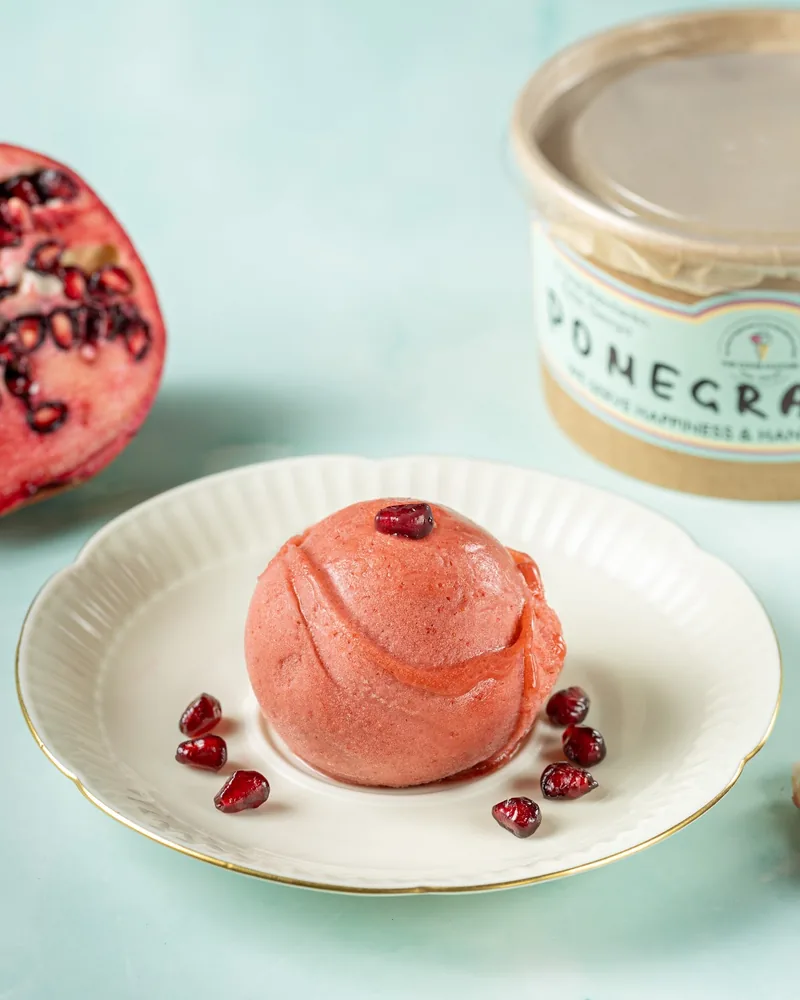
Another reviewer sums the shop up as local, seasonal Georgian flavours next to the classics. That's the move: 1 scoop you know and 1 you'd never order at home.
Vegan and fasting-friendly Georgian sweets
The grape sweets are vegan by recipe: pelamushi and tatara are grape juice and flour, and churchkhela adds nuts. That makes them fasting food too, since on a strict Orthodox fast day no meat, eggs, dairy, fish, wine or oil is eaten, and the calendar Georgia's church follows sets fasts on most Wednesdays and Fridays plus 4 long seasons.
It's the same rule that shapes vegetarian Georgian food, and the Georgian word samarkhvo, for the fast, marks dishes made without meat, dairy or eggs. Gozinaki is dairy-free but made with honey, and it's worth reading the label on a factory-made churchkhela rather than assuming.

For vegan cake, go to Stricha on Anton Purtseladze St, where one reviewer says everything is vegan and another recommends the honey cake and the sernik. The doughnuts are the draw, with 57 mentions, but 2 reviewers say they're made only at weekends and one warns they sell out fast, so go early on a Saturday.
Where to buy Georgian sweets in Tbilisi
Churchkhela is sold at bazaar stalls all over the city and at a couple of wine shops, which are the easier stop if you're buying a bottle anyway. A stall usually charges less than a souvenir shop for the same stick, so buy the bulk of it there.
For gifts, churchkhela and gozinaki are the obvious pair, since both are solid and gozinaki is already a common present at New Year. They sit happily next to the other Georgian food souvenirs worth packing, from spice blends to wine.
Frequently asked questions
What is the most famous Georgian dessert?
Churchkhela is the most famous: walnuts or hazelnuts on a string, dipped in grape must thickened with flour and dried into a chewy stick. Its name is protected in Georgia, it's sold at bazaar stalls and some wine shops in Tbilisi, and it keeps for months, which makes it the sweet most visitors take home. Gozinaki and pelamushi are the next 2 to know.
What is the difference between pelamushi and tatara?
The flour. Both are grape juice boiled down and thickened into a pudding, but pelamushi uses white corn meal and tatara uses dark wheat flour. Tatara is also what coats the classic walnut churchkhela from Kakheti, while western Georgia's hazelnut janjukha uses a corn-flour must. Neither traditionally takes added sugar.
Why do Georgians eat gozinaki at New Year?
Because it's the holiday's sweet: Georgia's tourism board calls gozinaki very much a synonym for New Year. It's walnuts cooked in boiled honey and cut into diamonds while hot, and it's also a common gift over the holidays. Newer versions use hazelnuts, almonds or seeds, but walnut is the classic.
Is Georgian pakhlava the same as baklava?
Close enough to order it expecting baklava: pakhlava is Georgia's layered pastry of nuts and syrup, most associated with Adjara. Adjara's own speciality is burme, a roll of pastry, butter and walnuts soaked in hot syrup with saffron and lemon. For Turkish-style baklava in Tbilisi, Sapore Cafe on Aghmashenebeli Ave is the pick: its reviewers mention baklava 64 times.
What is tklapi?
Tklapi is Georgian fruit leather: fruit purée spread thin and dried into sheets, which are sold rolled up or flat. It comes sweet or sour, and sour plum tklapi also goes into cooking. You'll find it at street stalls in Tbilisi and, in October, at the Tbilisoba festival stalls next to churchkhela, pelamushi and tatara.
Is honey cake a Georgian dessert?
It's Georgian by habit rather than by origin. Honey cake, medoki in Georgian, is a Soviet-era cafe classic of thin honey sponge layers and cream, and it's now everywhere in Tbilisi: reviewers name it 21 times at Matasse1822 and 13 times at Cafe Madeleine. Several restaurants, Georgian and fine dining, serve it to end a meal.
Which Georgian desserts are vegan?
Pelamushi, tatara and churchkhela are vegan by recipe: grape juice, flour and, for churchkhela, nuts. Gozinaki is dairy-free but uses honey, and it's worth checking the label on factory-made churchkhela. For vegan cakes and doughnuts, Stricha in Tbilisi is an all-vegan bakery, according to one reviewer, and its doughnuts come out only at weekends.
Where can I eat Georgian desserts in Tbilisi?
For honey cake and napoleon, go to a cake shop such as Matasse1822 or Dessert Ballet. For churchkhela to take away, try Ge-Wine or a bazaar stall. For pelamushi and tklapi, the Tbilisoba festival stalls in October are the surest bet, and for a modern twist, order the chocolate khinkali at Khinkali Bar N1.