Georgian Food: What to Order in Tbilisi, Dish by Dish
The dishes on a Tbilisi menu, grouped the way you'll order them, and where to eat each one

Georgian food is walnuts pounded into paste, cheese baked into bread, dumplings you eat with your hands and pork grilled over vine cuttings, all of it set down in the middle of the table and shared. This page takes a Tbilisi menu group by group: what each dish is, which ones to order first, when in the year to eat them, what dinner costs and where in the city to find each one.
Quick summary
- Start with the 2 dishes everyone names, khachapuri (cheese bread) and khinkali (meat dumplings), then add 2 cold walnut starters, 1 clay-pot stew and a plate of mtsvadi for the table.
- Most Georgian food is herby, garlicky and sour rather than hot: of the 12 dishes to try first, only chashushuli and kharcho sometimes bite, and the rest of the chilli comes from ajika, a red pepper paste.
- Khinkali are sold by the piece at about 2 to 3 GEL each, and 5 a head is the usual start when other dishes share the table.
- A sit-down Georgian dinner typically runs 20 to 60 GEL a head on Google's price bands for the Georgian restaurants on our lists, and a bakery khachapuri can cost 3 GEL.
- Vegetarians eat well: at least 5 classics (pkhali, badrijani, lobio, ajapsandali and mushroom khinkali) are meat-free, a legacy of the Orthodox fasts.
- Tie 3 dishes to the calendar: chakapuli in spring, satsivi at New Year and khashi the morning after a long night.
What is Georgian food?
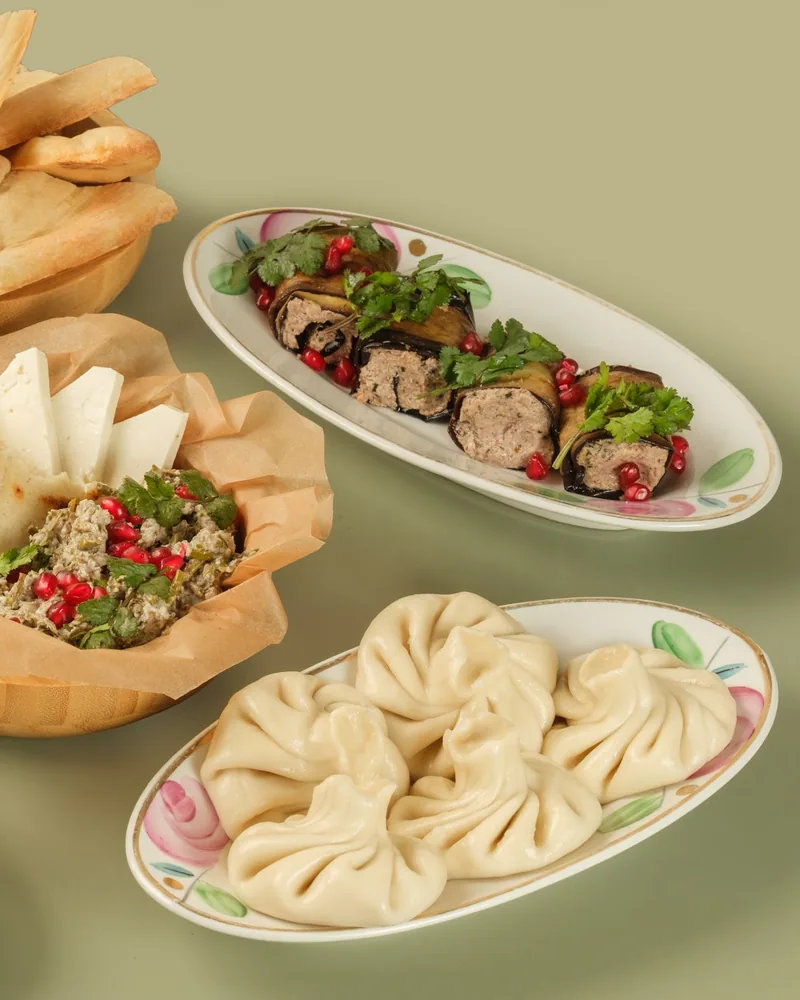
Georgian food is a table, not a course. Everything arrives as it's ready and goes in the middle to share: cold walnut starters, a basket of bread, cheese, a clay pot still bubbling, a plate of grilled pork and a round of dumplings that someone orders halfway through.
The flavours come from a short list used everywhere. Walnuts are pounded into paste for pkhali, badrijani and satsivi; fresh coriander, tarragon, dill and parsley go on nearly everything; and cheese, mostly sulguni and imeruli, fills the breads. Garlic, sour plums and a dried spice blend called khmeli suneli do the rest.
It's regional food served in one city. Khinkali came down from the mountains, the boat-shaped khachapuri from the Black Sea coast and the cornmeal-and-cheese elarji from Samegrelo in the west, and a Tbilisi menu puts all of it on the same page.
| Region | What it gave the menu |
|---|---|
| Adjara, on the Black Sea | Adjaruli, the open khachapuri boat with egg and butter, and achma, thin layers of dough baked with cheese and butter |
| Samegrelo, in the west | Megruli khachapuri, elarji and Megrelian kharcho; ajika is especially popular here |
| Imereti, in the west | Imeruli, the everyday round khachapuri, and the fresh Imeretian cheese inside it |
| Guria, in the west | The crescent-shaped Gurian khachapuri baked for Christmas |
| Svaneti, in the mountains | Kubdari, the chopped-meat pie, and Svan salt |
| Racha, in the mountains | Shkmeruli, named after the village of Shkmeri, and lobiani |
| Pshavi and Tusheti, in the mountains | Khinkali, and the Tushetian kotori pie baked for New Year |
| Kakheti, in the east | Shoti bread from the clay tone, walnut churchkhela and, says the tourism board, the best mtsvadi |
| Tbilisi | Kalakuri khinkali with herbs, and ajapsandali, which the tourism board calls a native Tbilisi dish |
Georgia takes its bread seriously on paper too. Khachapuri is on the country's national list of intangible cultural heritage, and in December 2025 UNESCO inscribed Georgian wheat culture, the baking and sharing of ritual bread, on its list of the world's intangible heritage.
The Georgian dishes to try first
If you've got 3 or 4 meals in Tbilisi, these 12 dishes cover most of the cuisine. They run roughly in the order a Georgian table eats them, cold plates first and sweets last, and each group gets its own section further down.
| Dish | What it is | How to order it |
|---|---|---|
| Pkhali | Spinach, beetroot or aubergine pounded with walnuts into a pâté | Cold, as a mixed plate for the table |
| Badrijani nigvzit | Fried aubergine rolled round walnut paste, topped with pomegranate | Cold, with bread |
| Satsivi | Chicken or turkey under a cold walnut sauce | As a cold starter |
| Khachapuri | Cheese-filled bread; the Adjarian boat adds egg yolk and butter | 1 to share between 2 or 3 |
| Lobio | Kidney beans stewed with herbs, served in a clay pot | With mchadi (cornbread) and pickles |
| Kharcho | Beef soup with rice, walnuts and sour plum | As a starter, or as lunch on its own |
| Khinkali | Twisted dumplings of spiced meat and broth, eaten by hand | By the piece, about 5 each |
| Ojakhuri | Pork roasted with potatoes and onion | Hot, in a clay dish, to share |
| Chashushuli | Beef stewed with tomato, peppers and herbs | Hot; ask how spicy the kitchen makes it |
| Shkmeruli | Fried chicken in a milk, cream and garlic sauce | Hot, ideally in a clay dish |
| Mtsvadi | Pork, veal, lamb or chicken grilled on skewers | Last, with tkemali plum sauce |
| Churchkhela | Walnuts on a string dipped in thickened grape juice | As a sweet, or to take home |
That's also the shape of a well-run dinner: something cold with walnuts, then bread and cheese, then the dumplings or a hot pot, then the grill. Kharcho and lobio are the 2 that also work as a lunch on their own, with nothing but bread alongside.
Khachapuri, shoti and the other breads
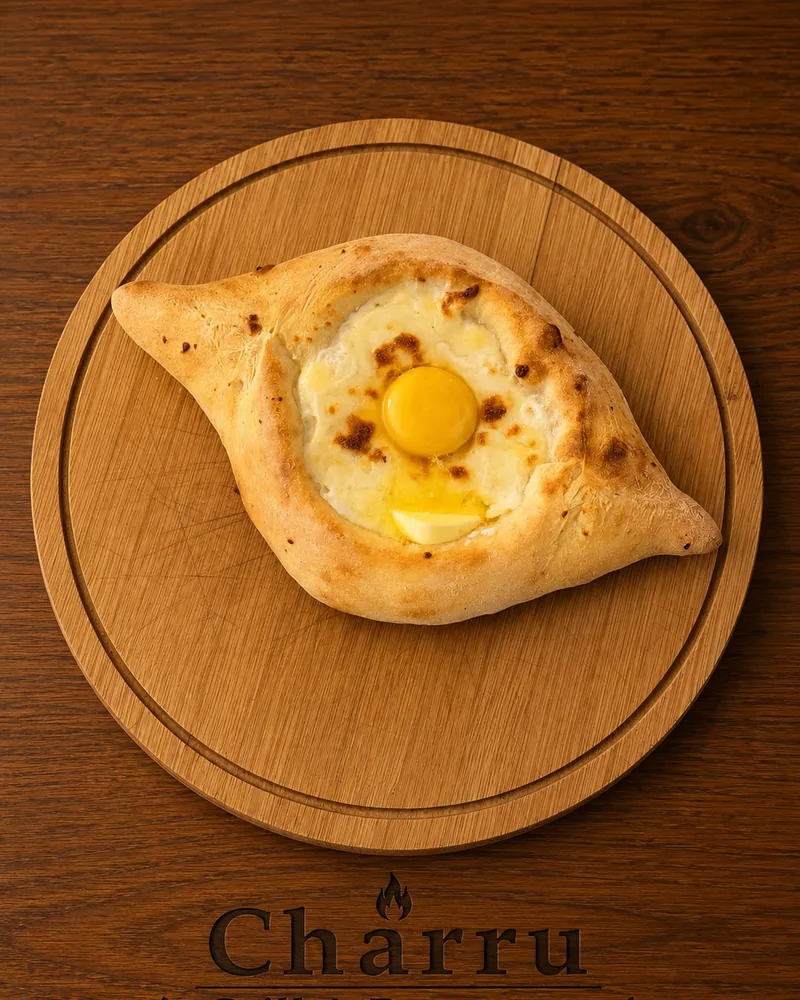
Khachapuri is cheese bread, and the name says exactly that, joining the Georgian words for cheese curds (khacho) and bread (puri). There are dozens of types of khachapuri, and in your first week you'll meet 3: Imeruli, a closed round of dough filled with Imeretian cheese; Megruli, the same round with more cheese melted on top; and Adjaruli, the boat.
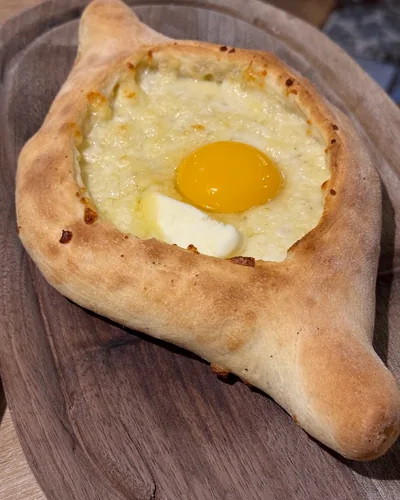
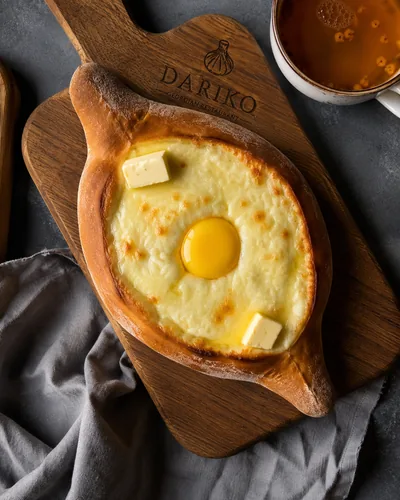
Adjaruli is the khachapuri everyone photographs: an open boat of dough full of molten cheese, finished with a raw egg yolk and a pat of butter that you stir in before tearing off the crust ends to dip. It's the dish the khachapuri places get judged on, and it comes from Adjara on the Black Sea coast.
The bread on every table is shotis puri, a long loaf pointed at both ends and baked against the hot inner wall of a tone, a round clay oven dug into the ground. Georgia's tourism board says it's also called dedis puri, mother's bread, and it costs next to nothing: one reviewer paid 1.3 GEL for a large one at Tone (Georgian Bakery) in 2025.
The cheese-free cousins matter just as much. Lobiani is bread filled with seasoned beans and kubdari from Svaneti is a round pie of chopped meat, forest herbs and Svan spices that the tourism board lists as intangible heritage; both are counter food at Tbilisi's bakeries, where one reviewer at Caravanserai Bakery notes a khachapuri costs 3 GEL. Mchadi, the flat cornbread of western Georgia, is the one that comes with lobio.
Khinkali and chebureki
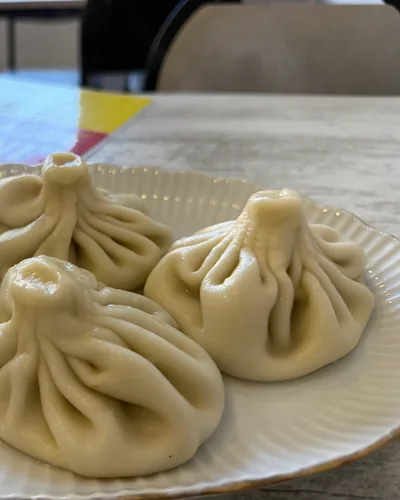
Khinkali are twisted dumplings filled with spiced meat and a mouthful of broth. They came from the mountains of Pshavi and Tusheti, where they were first made with mutton, and in the valleys and the city the filling became minced pork and beef. The Tbilisi version, kalakuri, adds fresh herbs, while mtiuluri, the mountain style, sticks to meat, onion, salt and pepper.
They come with rules, and eating them by hand is the first: hold one by the knot, bite a small hole, drink the broth, then eat the rest and leave the knot on the plate. Georgia's tourism board says people count how many they've eaten by the knots left behind, which turns every table into a quiet competition.
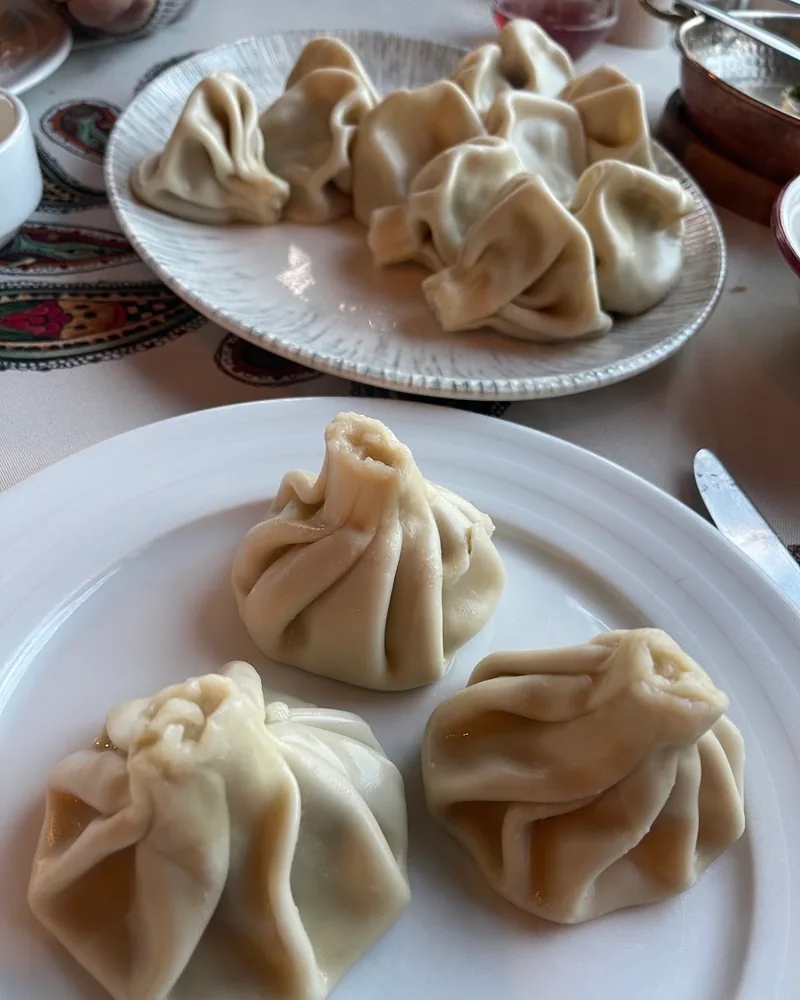
The khinkali houses sell them by the piece, usually at about 2 to 3 GEL each, and 5 a head is a sensible start when other dishes are coming. Beyond beef and pork you'll see cheese, mushroom and potato fillings, and at Khinkali Bar N1 fried khinkali come up 163 times in the Google review topics, with chocolate ones at 68.
Chebureki are the fried relative: a half-moon of thin dough folded over raw minced meat and deep-fried, so the filling cooks in its own juice. They're Crimean Tatar in origin, and at Vakhtanguri, whose own listing calls it famous for them, chebureki come up 403 times in the Google review topics. Eat them hot and bite a corner first, or the juice ends up on the plate instead of in you.
Walnut starters: pkhali, badrijani and satsivi
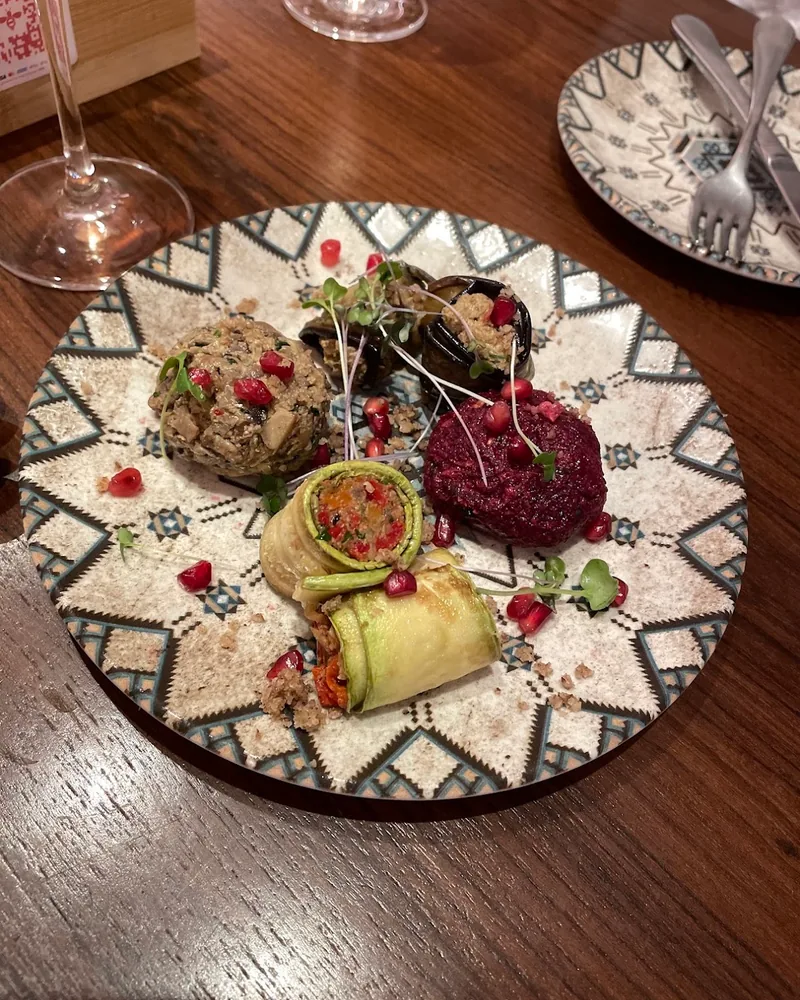
Order these first, while everything else cooks. Pkhali is a family of vegetable pâtés, usually spinach, beetroot or aubergine pounded with walnuts, and it tends to arrive as a mixed plate of green and deep red rounds dotted with pomegranate seeds. Badrijani nigvzit is fried aubergine rolled around the same kind of walnut paste.
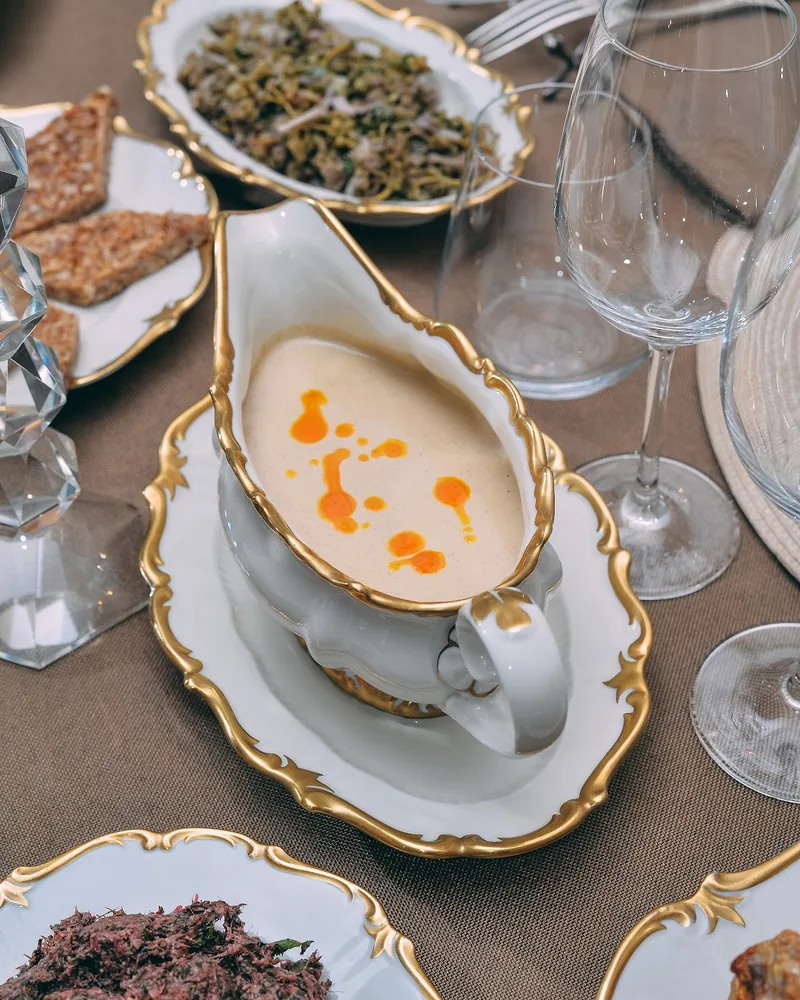
Satsivi is the walnut dish with meat in it: chicken or turkey served cold under a thick walnut sauce. Georgia's tourism board calls it a ritual New Year's dish, and it's the one walnut plate a vegetarian has to skip.
The Orthodox fasts keep meat and dairy off the table for weeks at a time, which is why this cold, meat-free side of the menu is so big, and why vegetarian Georgian food is far easier than the grill smoke suggests. The same walnut paste also dresses the Georgian salad of tomato and cucumber, so walnuts turn up in more of the cold starters than their names suggest.
Mtsvadi and the grill
Mtsvadi is meat grilled on skewers over embers, and the classic is pork. Georgia's tourism board says pork mtsvadi is the most popular kind, that it's grilled over vine cuttings, and that the best comes from Kakheti, the wine region; the mtsvadi grills in Tbilisi also do veal, lamb and chicken.
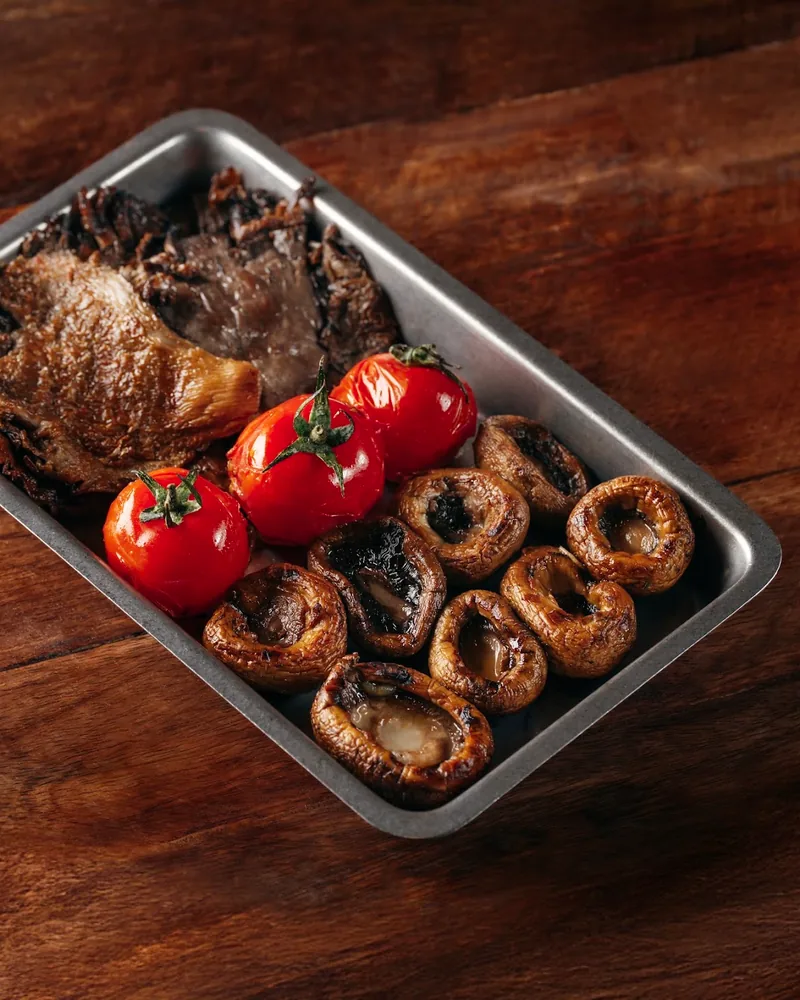
It usually lands plain, with raw onion, and the sauce is your call: tkemali, the sour plum sauce, is the classic partner. Kababi, minced meat grilled on a skewer, comes with satsebela sauce, the tourism board notes.
Mtsvadi also comes to go. At Tsetskhli Ainto on Tashkenti Street, reviewers mention mtsvadi 73 times, and one describes the place as barbecue done as fast food, with paper bags for takeaway.
Clay-pot dishes: ojakhuri, chashushuli, shkmeruli and chakapuli
The hot mains mostly come in a ketsi, a small clay dish that goes from the oven to the table and stays hot long after it lands. Ojakhuri, whose name means family, is pork roasted with potatoes and onion, and chashushuli is beef stewed with tomato, peppers and herbs, sometimes with real heat.
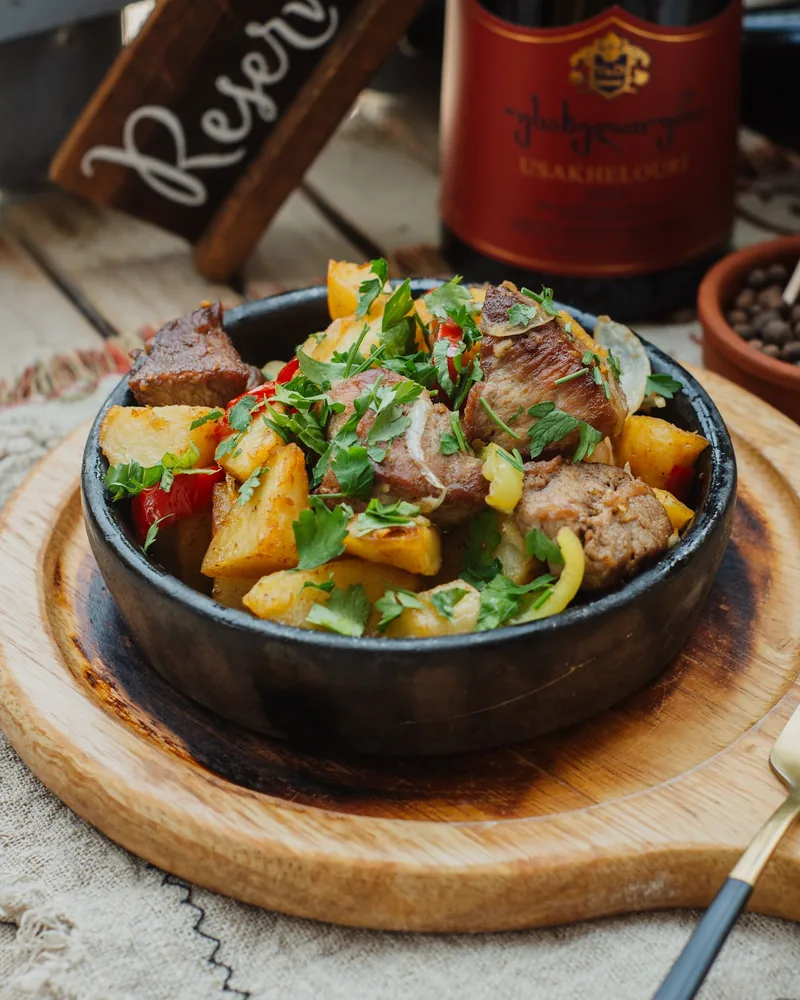
Shkmeruli is fried chicken finished in a sauce of milk, cream and garlic, named after the village of Shkmeri in Racha, and the tourism board says it's at its best made in a ketsi. Chakhokhbili is poultry stewed with tomatoes and vegetables, and khashlama is meat slow-cooked with onion, garlic, bay leaves and peppercorns.
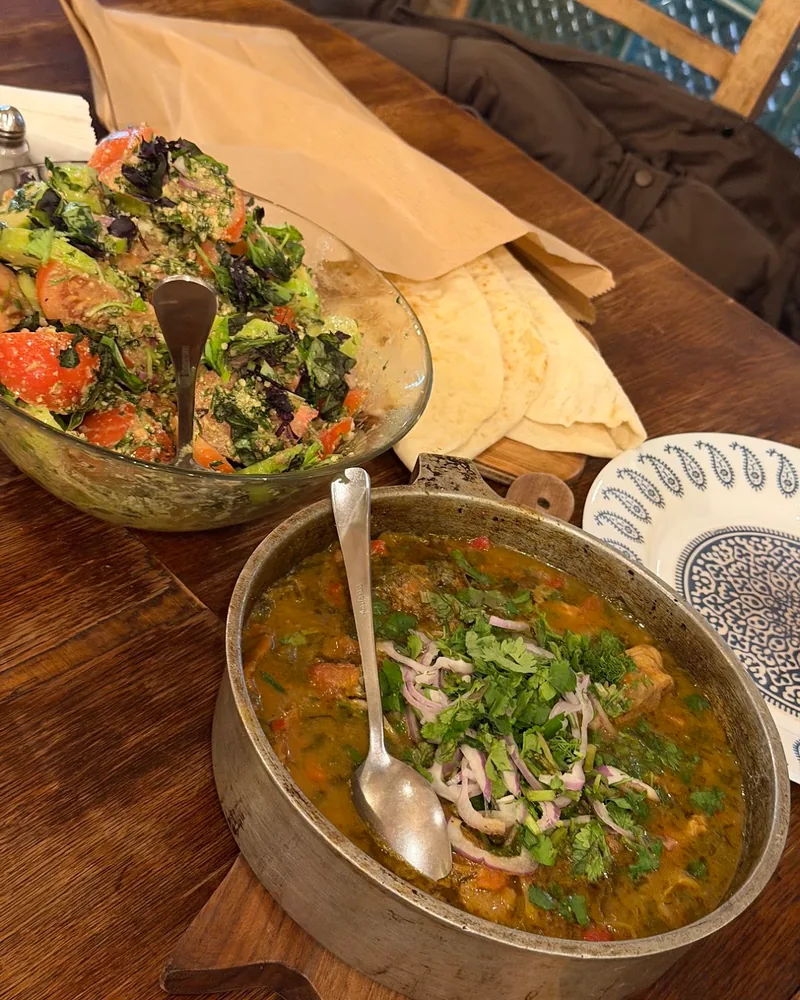
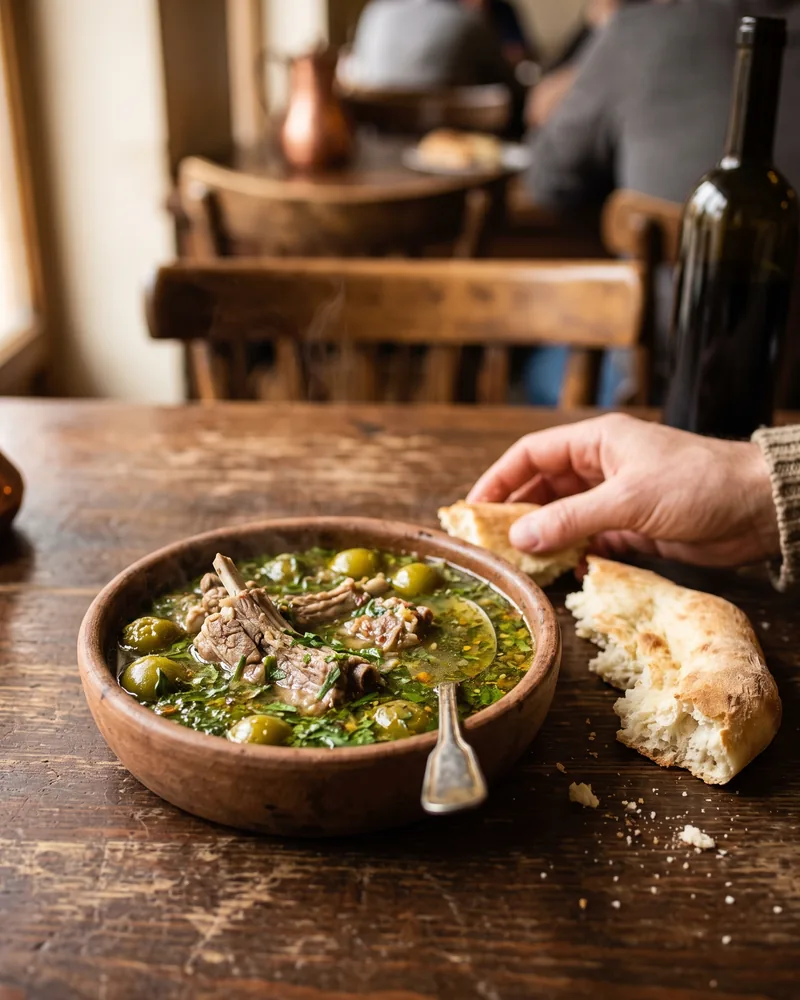
Chakapuli is the one to catch in season: lamb or veal stewed with tarragon, green plums and white wine, which the tourism board calls a springtime favourite. It's a sour green broth heavy with tarragon, and if spring is when you're in Tbilisi, it's the pot to order.
Soups: kharcho, chikhirtma and khashi
Kharcho is the soup to know: beef with rice, walnuts and sour plum, thick enough to count as lunch. Megrelian kharcho is a different dish, chicken in a walnut sauce, and at Oro on Sandro Euli Street one reviewer called its Megrelian kharcho unrivalled.
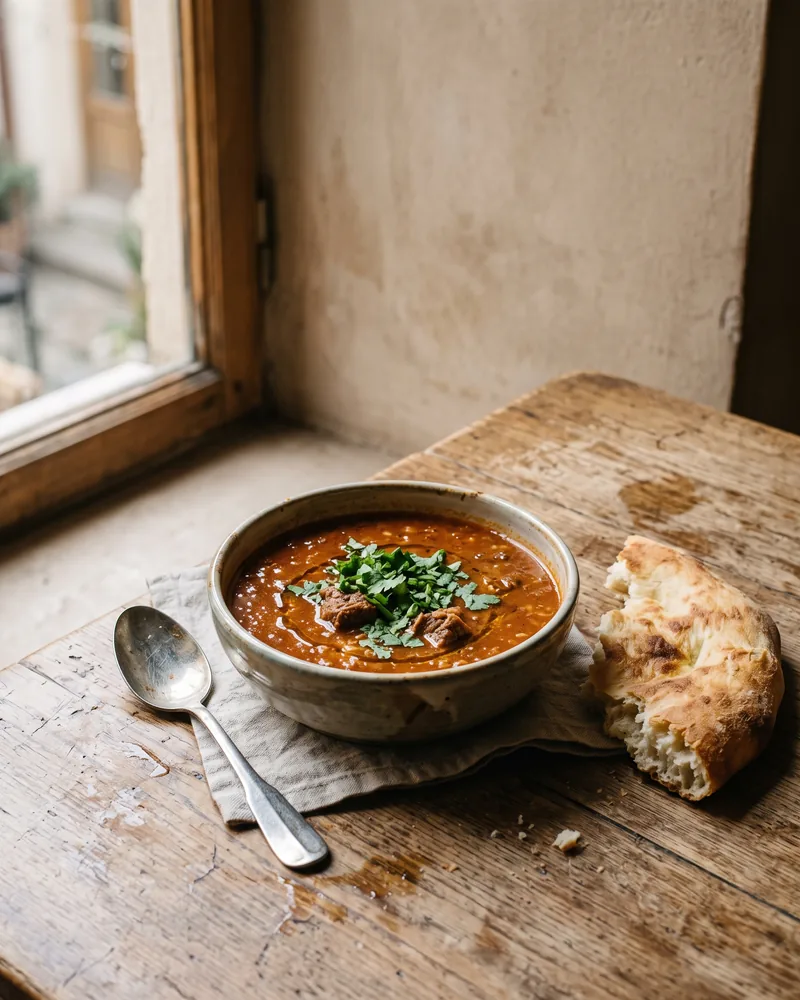
Chikhirtma is chicken broth thickened with beaten egg and flour, and the tourism board recommends it as the cure after a night on chacha. The heavier cure is khashi, a garlicky broth of beef tripe and feet that the same board says is served at the start of the day, especially if you're hungover.
Khashi comes with a rule of its own: the tourism board says you should never go and eat it alone. That makes it the one Georgian dish that needs a wingman as well as an appetite.
Cheese, cornmeal and beans: sulguni, elarji and lobio
Georgia's tourism board counts around 60 cheeses across the country, but 2 do most of the work in Tbilisi: sulguni, the brined, stretchy one on every cheese plate, and imeruli, the fresh, crumbly one inside khachapuri. Several Georgian cheeses are protected names: sulguni, Imeretian cheese and Tushetian guda are among the Georgian geographical indications protected abroad, along with matsoni, the local yogurt.
Bread and cheese also carry a Georgian breakfast. At home it's often just that, with butter and tea, because the cuisine saves its effort for dinner.
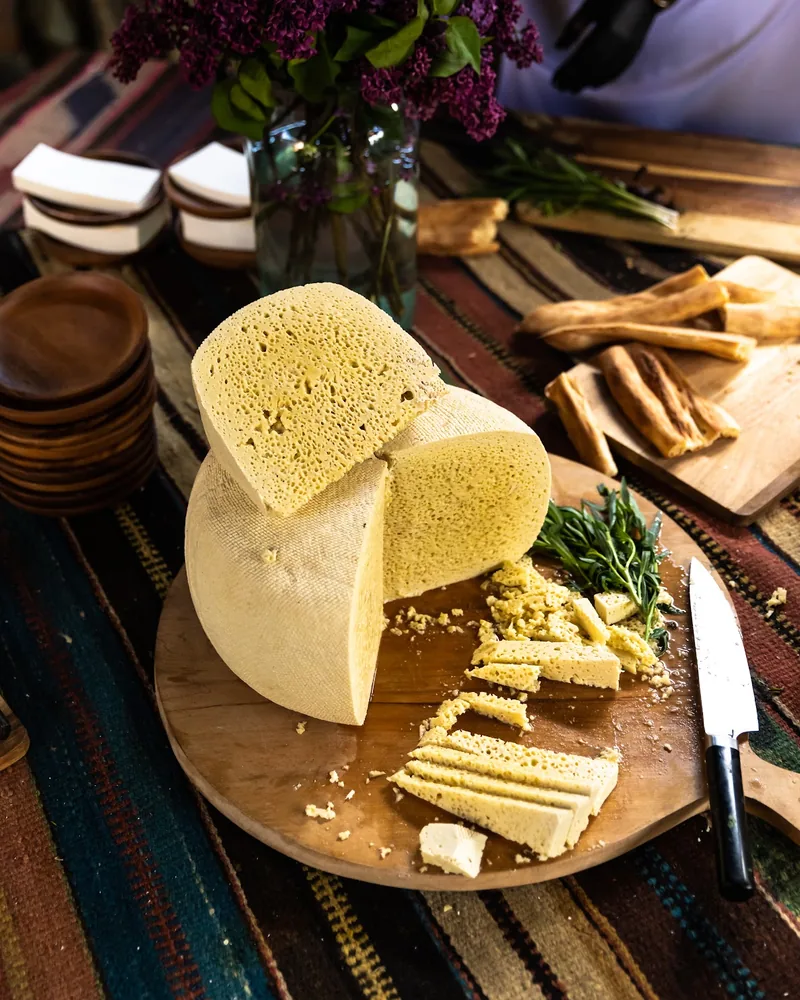
Cornmeal is western Georgia's answer to wheat. Elarji, from Samegrelo, is cornmeal and cheese cooked together into a stretchy mass, ghomi is the softer porridge eaten with cheese and sauces, and at Sheen Aura, a restaurant in a Georgian artist's former house and studio, one reviewer singled out the fried elarji.
Lobio is kidney beans stewed with herbs and brought to the table in its clay pot, with mchadi and pickles alongside, and it's the most filling meat-free order on the menu; at Pirosmani's Dukani it comes up 14 times in the review topics. Ajapsandali, aubergine, peppers and tomato stewed down together, is what the tourism board calls a fasting food and a native Tbilisi dish.
Sauces and spices: tkemali, ajika and Svan salt
Georgian food leans sour and herby before it leans hot. Tkemali is the sauce you'll meet first, cherry plums (red, yellow or green) cooked down with coriander, garlic and pepper, and the tourism board pairs it with barbecue, boiled meat, potatoes, kharcho and fried chicken.
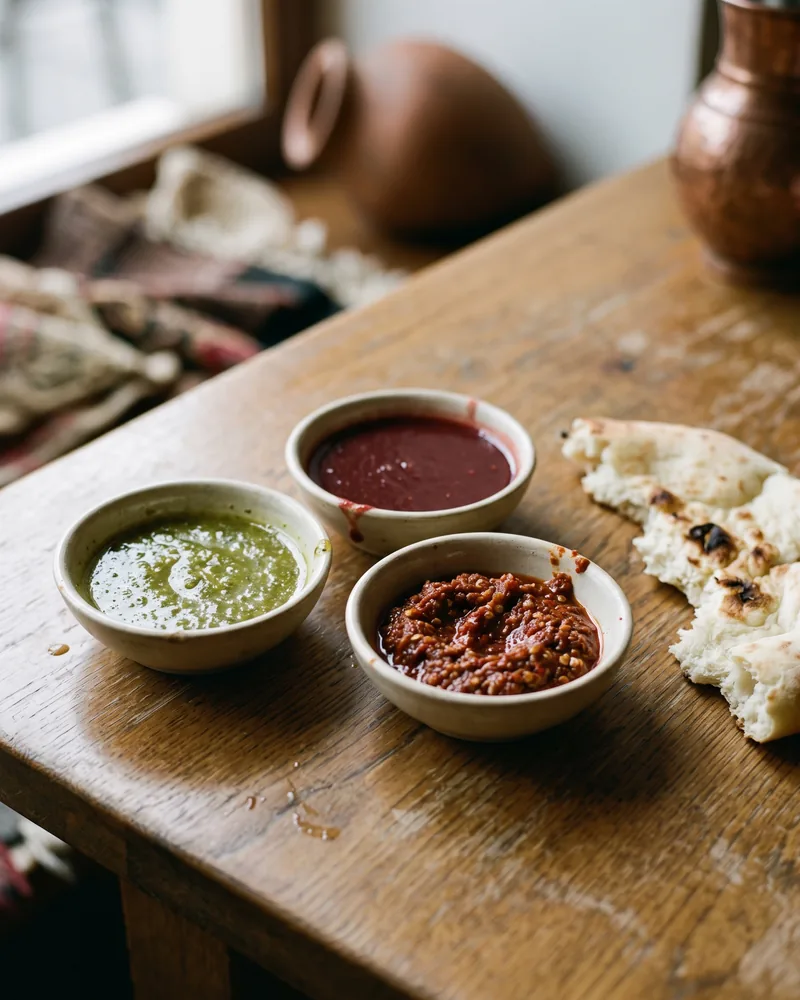
Ajika is where the heat lives: a paste of red pepper, garlic, fenugreek and coriander from western Georgia, with a green version made from fresh herbs instead of the pepper. Svan salt, salt ground with coriander, fenugreek, marigold, red pepper and garlic, goes on salads, cheese and meat, and khmeli suneli, a dried blend built on coriander seed, seasons the stews.
Is Georgian food spicy?
Mostly not. The chilli comes from ajika and from the cooking of Samegrelo in the west, so chashushuli, kharcho, Megrelian dishes and anything with ajika on it can bite, while khinkali, khachapuri, pkhali and mtsvadi carry no real heat. Usakhelouri's Instagram, for one, sells its fried chicken in ajika on the strength of its spicy kick, so if chilli isn't your thing, ask for the ajika on the side.
Georgian sweets: churchkhela, pelamushi and gozinaki
Georgian sweets are mostly walnuts and grapes. The candle-shaped strings hanging in shop doorways are churchkhela: walnuts threaded on a string and dipped again and again in grape juice thickened with flour, and the name is a protected Georgian geographical indication.
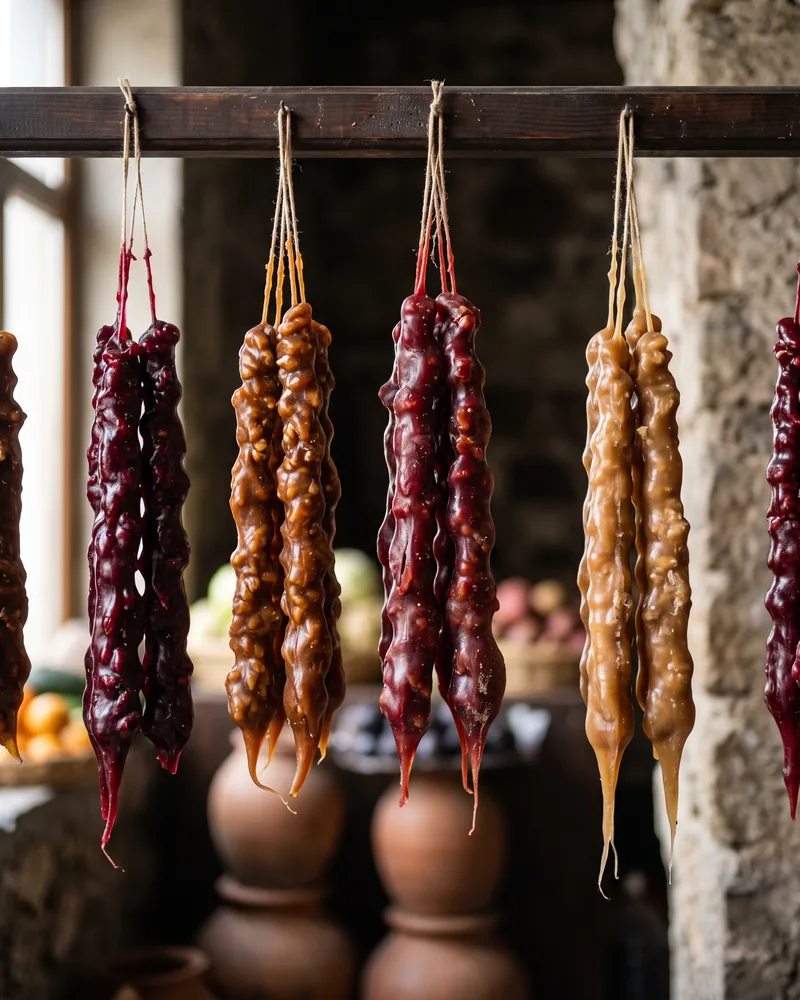
Pelamushi is the same thickened grape juice set as a pudding with corn meal, and gozinaki is walnuts set in boiled honey and cut into diamonds, which the tourism board calls very much a synonym for New Year. These 3 are the backbone of Georgian desserts, and churchkhela and pelamushi are made in autumn, when the grapes are pressed and the walnuts come in.
Churchkhela also keeps for a long time, which the tourism board says is why Georgian warriors carried it on campaign, and it's the obvious food souvenir for the flight home. Check the ingredients on factory-made strings, since the traditional recipe is only nuts, grape juice and flour.
What to drink with Georgian food
Wine, first. Georgia's way of making it in qvevri, egg-shaped clay vessels buried in the ground, has been on UNESCO's intangible heritage list since 2013, and Georgian wine deserves an evening of its own.
Beer is the classic order with khinkali, and the tourism board's reason is that brewing was easier than winemaking in the mountains where khinkali come from. Georgian beer is mostly lager at around 5%, and it costs 3 to 5 GEL at a local bar.
The toasts end in chacha, a grape-pomace brandy bottled at 40% or more. For the sober end of the table, tarragon lemonade, kompot and the rest of the traditional Georgian drinks fill the gaps between toasts. Kompot, cold stewed fruit served in a jug, turns up 19 times in Vakhtanguri's review topics, second only to its chebureki.
When to eat what: Georgian food through the year
A handful of Georgian dishes belong to a season or a moment, and ordering them at the right time is the easiest way to eat like a local. Most of the timings below come from Georgia's tourism board.
| Dish | When | Why |
|---|---|---|
| Chakapuli | Spring | Lamb or veal with tarragon and green plums, a springtime favourite |
| Satsivi | New Year | Chicken or turkey in walnut sauce, called a ritual New Year's dish |
| Gozinaki | New Year | Walnuts set in honey, very much a synonym for New Year |
| Tushetian kotori | New Year | A paper-thin pie filled with aged curds rather than cheese |
| Gurian khachapuri | Christmas, 7 January | A crescent pie filled with cheese and boiled egg |
| Pkhali, lobio, ajapsandali | Fast days and Lent | No meat or dairy, so the walnut and vegetable dishes take over |
| Khashi | Early morning | Served at the start of the day, especially if you're hungover |
| Chikhirtma | The day after | Chicken and egg soup, the tourism board's cure after chacha |
| Churchkhela, pelamushi | Autumn | Made when the grapes are pressed and the walnuts come in |
Autumn is the sweet season. Tbilisoba, the city festival held in October, fills pop-up stalls with churchkhela, pelamushi, tklapi (dried fruit leather) and cheese. If you're in town that month, it's the easiest way to try all of them in one afternoon.
How to order a Georgian meal
Order for the table, not for yourself. Dishes arrive as each one is ready rather than in courses, and sharing every plate is the norm, one of the restaurant customs worth knowing before you sit down.
Portions are big, and reviewers keep saying so: Chokhi Veraze's Google topics count large portions 181 times, and one reviewer at Dariko Georgian Restaurant warns you not to order too much if you want to finish. Order in rounds and add more once the first plates are empty.
The full version of all this is a supra, a feast led by a tamada, the toastmaster who sets the order of the toasts and keeps the wine moving. Georgia listed supra culture as national intangible heritage in 2017 and raised it to national significance in 2020.
What dinner costs depends more on the room than the dish. Google's price bands put the typical Georgian restaurant on our lists at 20 to 60 GEL a head, a counter lunch at Family Kitchen Tar Tun runs 10 to 20 GEL, and restaurant prices in Tbilisi pass 100 GEL a head only at the top tables. Book ahead where the listing asks you to: Hide and Bina N37 both mark reservations as required on Google.
Where to eat Georgian food in Tbilisi
For a first Georgian dinner, start with the Georgian restaurants we've ranked: 15 kitchens that cook most of this page, from big dining rooms to small family places. Then match the place to the night.
- A first night in town: Ethnographer Restaurant or Georgian House, where folk dancing and live music come with dinner (dancers come up 98 and 112 times in their review topics). It suits a first night and doesn't suit a quiet one.
- A cheap lunch: Family Kitchen Tar Tun, a home-cooking counter where one reviewer notes you pick your portions and pay by weight.
- Khinkali at any hour: Cafe Daphna Meidan, where one reviewer notes you can order by the piece and mix the fillings, and its kitchen runs until 5 AM on Friday and Saturday nights.
- After midnight: Dariko Georgian Restaurant, #1 on our late-night food list, keeps its kitchen open until 1:30 AM every night, and Adjarian khachapuri is one of the dishes its reviewers name most.
- Wine with dinner: Bina N37, a reservation-only dining room on the 8th floor of an apartment block with 43 qvevri on its roof, and Google's top price band of 100 GEL and up.
If you'd rather make it than order it, a cooking class is the fastest way into the cuisine. One on our list is built around the dough, and its reviewers mention khinkali making 12 times.
Frequently asked questions
What is traditional Georgian food?
Traditional Georgian food is bread, cheese, walnuts, fresh herbs and grilled or stewed meat, served as shared plates. The 2 dishes everyone names are khachapuri, cheese-filled bread, and khinkali, meat dumplings eaten by hand. Around them sit walnut starters like pkhali, clay-pot dishes like ojakhuri, pork mtsvadi from the grill and sauces made from sour plums.
Which Georgian dishes should I try first?
Try khachapuri, khinkali, pkhali, badrijani nigvzit and pork mtsvadi first, since those 5 cover the bread, the dumplings, the walnut starters and the grill. On a second night add a clay-pot dish such as ojakhuri or chashushuli, a bowl of kharcho and lobio with cornbread. Finish with churchkhela, and in spring order chakapuli wherever you see it.
Is Georgian food spicy?
Mostly no: Georgian food is herby, garlicky and sour far more often than it's hot. The chilli comes from ajika, a red pepper paste from western Georgia, and from dishes like chashushuli, kharcho and some Megrelian cooking. Khinkali, khachapuri, pkhali and mtsvadi carry no real heat, and you can always ask for the ajika on the side.
Is Georgian food good for vegetarians?
Yes, better than most visitors expect. The Orthodox fasts keep meat and dairy off the table for weeks at a time, so there's a whole meat-free repertoire: pkhali, badrijani, lobio, ajapsandali, mchadi and mushroom or potato khinkali. Vegans need to watch for the cheese in khachapuri and in some khinkali fillings.
What sauces does Georgian food use?
The 2 you'll meet most are tkemali, a sour sauce of red, yellow or green cherry plums, and ajika, a hot red pepper paste with a green herb version. Satsebela comes with kababi, walnut sauces carry satsivi and badrijani, and Svan salt, salt ground with spices and garlic, goes on salads, cheese and meat.
What's the difference between khachapuri and khinkali?
Khachapuri is bread and khinkali is a dumpling. Khachapuri is cheese baked into dough, either as a closed round (Imeruli, Megruli) or as an open boat with egg and butter (Adjaruli). Khinkali are boiled dumplings of spiced meat and broth, sold by the piece at about 2 to 3 GEL, eaten by hand, with the knot left on the plate.
What do you drink with Georgian food?
Georgian wine with most of it, beer with khinkali and chacha for the last toasts. Georgia's qvevri method, making wine in clay vessels buried in the ground, has been on UNESCO's intangible heritage list since 2013. Without alcohol, order tarragon lemonade or kompot, a cold drink of stewed fruit that comes in a jug.
How much does a Georgian meal cost in Tbilisi?
Expect 20 to 60 GEL a head at a typical sit-down Georgian restaurant, going by Google's price bands for the Georgian restaurants on our lists. Khinkali cost about 2 to 3 GEL a piece, a bakery khachapuri can be 3 GEL, and a counter lunch runs 10 to 20 GEL. Fine dining is where a dinner passes 100 GEL a head.