Shotis Puri: Georgia's Tone Bread and Where to Buy It Hot
The long, pointed loaf on every Georgian table: how it's baked, what it costs and when it's hot

Shotis puri is the long, pointed loaf on every Georgian table, baked against the inside wall of a clay oven called a tone and sold hot through bakery windows all over Tbilisi. It's also the cheapest good thing you'll eat here. Below: how it's made, where and when to buy it, what it costs and how Georgians eat it.
Quick summary
- Shotis puri, or just shoti, is Georgia's everyday white loaf: long, pointed at both ends, thicker along 1 side and baked on the inside wall of a tone, a clay oven dug into the ground.
- A large shoti cost 1.30 GEL at Tone, a bakery on Amaghleba Street, by one reviewer's count in 2025, and other reviewers paid 1.30 GEL in 2024 and 1.20 GEL in 2022.
- Buy it hot and before the evening, when a bakery can run out: at Tone, fresh loaves come out from around 9 AM.
- Georgians tear it rather than slice it and eat it at all 3 meals: with cheese at breakfast, dunked in sauces at dinner and torn into khashi the morning after.
- It isn't lavash, a thin flatbread, and the 3rd bread you'll meet most is mchadi, a flat cornbread from western Georgia.
What shotis puri is
Puri means bread, and shoti is the one on every table. Georgia's tourism board describes it as long and crescent-shaped, thick on one side and thin on the other and pointed at both ends, and traces it to Kakheti, the wine region east of Tbilisi. The Kakhetian loaf gets compared to a sword so often that it's also called khmala, from khmali, the Georgian word for one.
Its other name is dedis puri, mother's bread. The same page describes the baker kneading the dough in a flat wooden bowl, a gobe, while praying for the whole family, and reckons both that name and megobari, the Georgian word for friend, likely come from the practice.
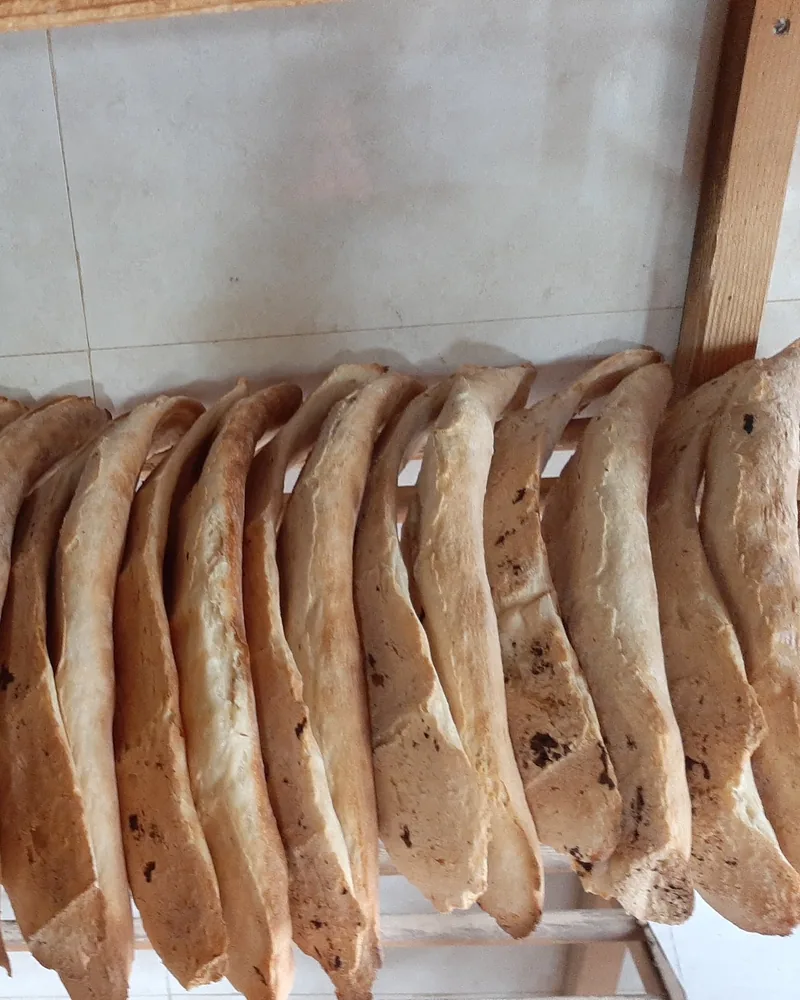
You'll also hear tonis puri, which just means bread from the tone: shoti is the pointed loaf, and tonis puri is whatever came off that clay wall. Bread carries weight here beyond the table, too: in December 2025, UNESCO put Georgian wheat culture on its list of the intangible heritage of humanity, citing the tradition of baking and sharing ritual bread.
How the tone oven bakes it
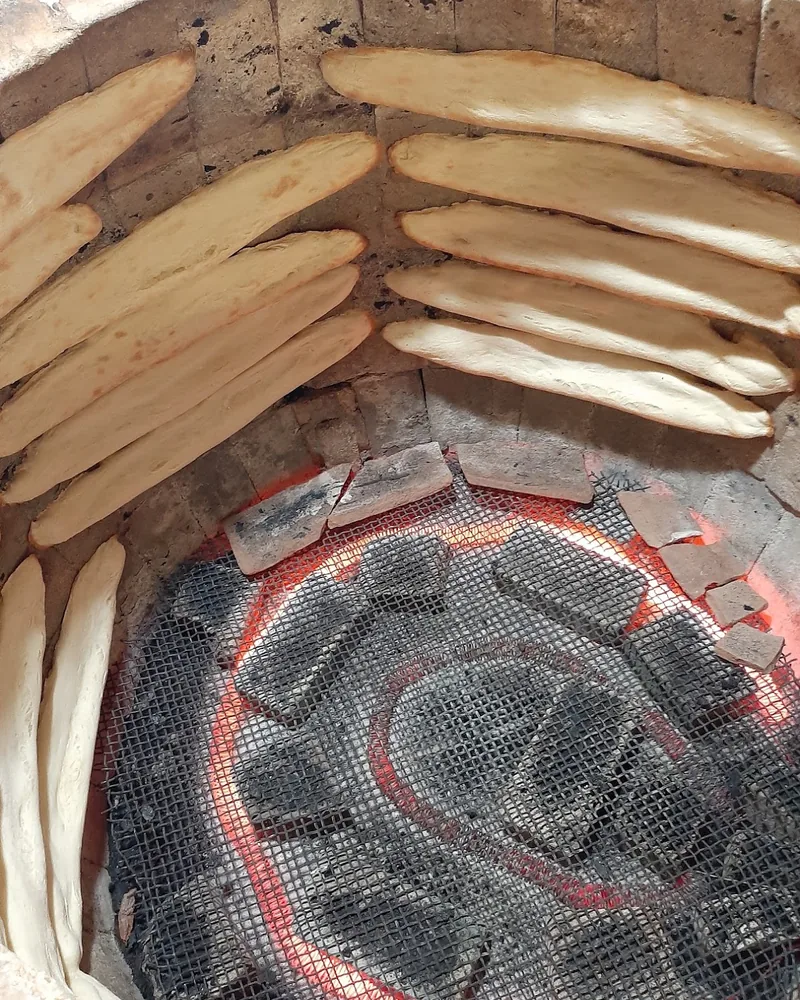
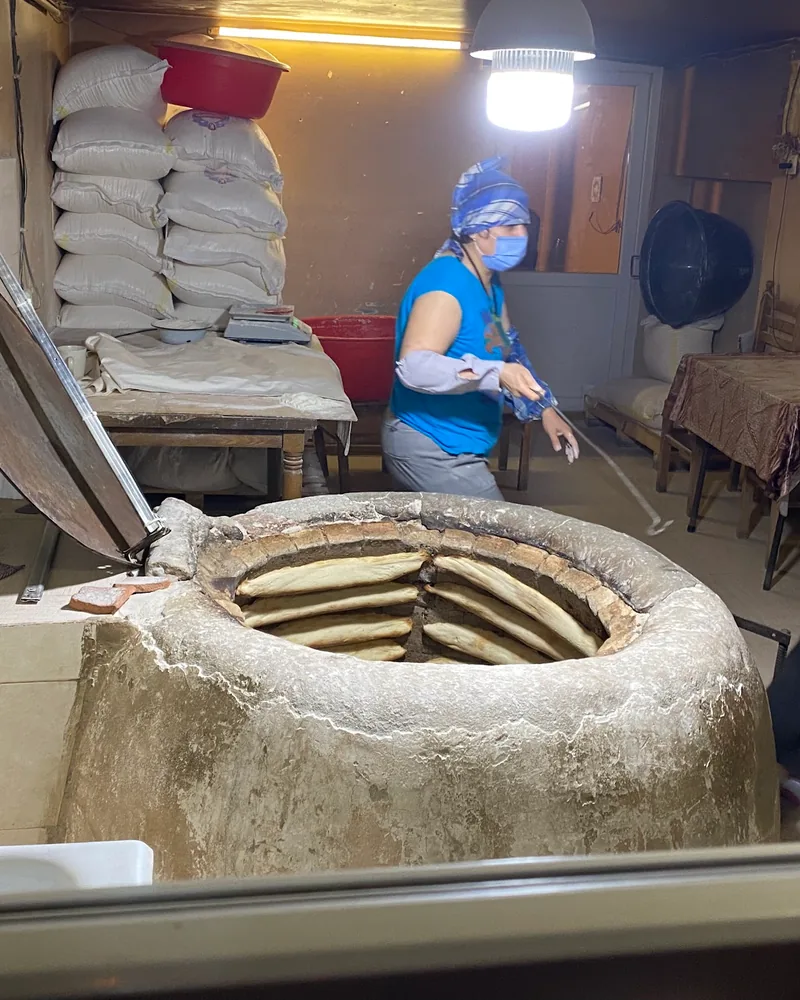
A tone (2 syllables, to-ne, and a relative of the word tandoor) is a terracotta cylinder with no base, dug into the ground and heated from below. Traditionally it's fired with twigs and vine branches, and the tourism board credits the vine with the bread's special flavour, though some modern tones run on gas.
The dough is made the day before: a starter goes in to make it rise, then it's kneaded with salt water for a long time. On the day, the baker stretches each piece into a long sword shape and flicks it onto the hot inner wall, one after another, in layers, where it sticks and bakes against the clay.
Where to buy shoti in Tbilisi, and when it's hot
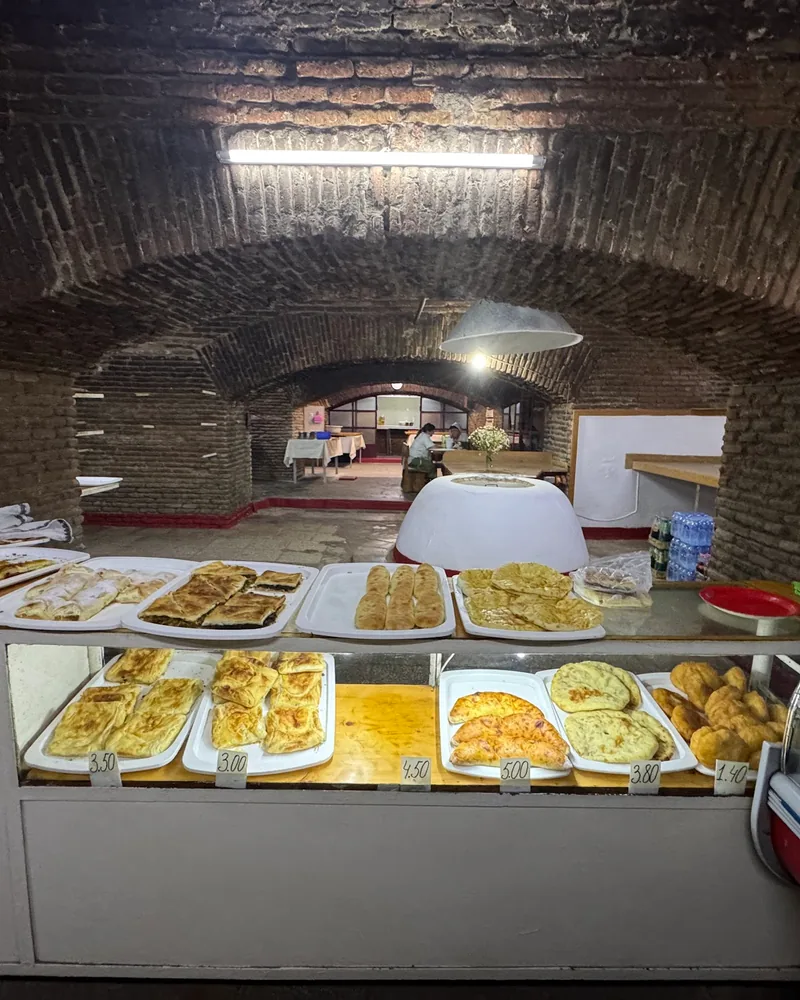
You buy shoti at a tone bakery, and the one on your street won't look like the bakeries people queue at for croissants. It's a window or a counter with the oven in view behind whoever's selling, and it bakes the same loaf from morning to night.
Tone on Amaghleba Street is the model, and its reviews are almost all about the bread. Bread there was 1.20 GEL in 2022 and 1.30 GEL in 2024, and a large shoti was still 1.30 GEL in 2025, by 3 reviewers' counts, and one reviewer credits the women running it with timing the batches so well that you always get it hot out of the oven.
How Georgians eat shoti
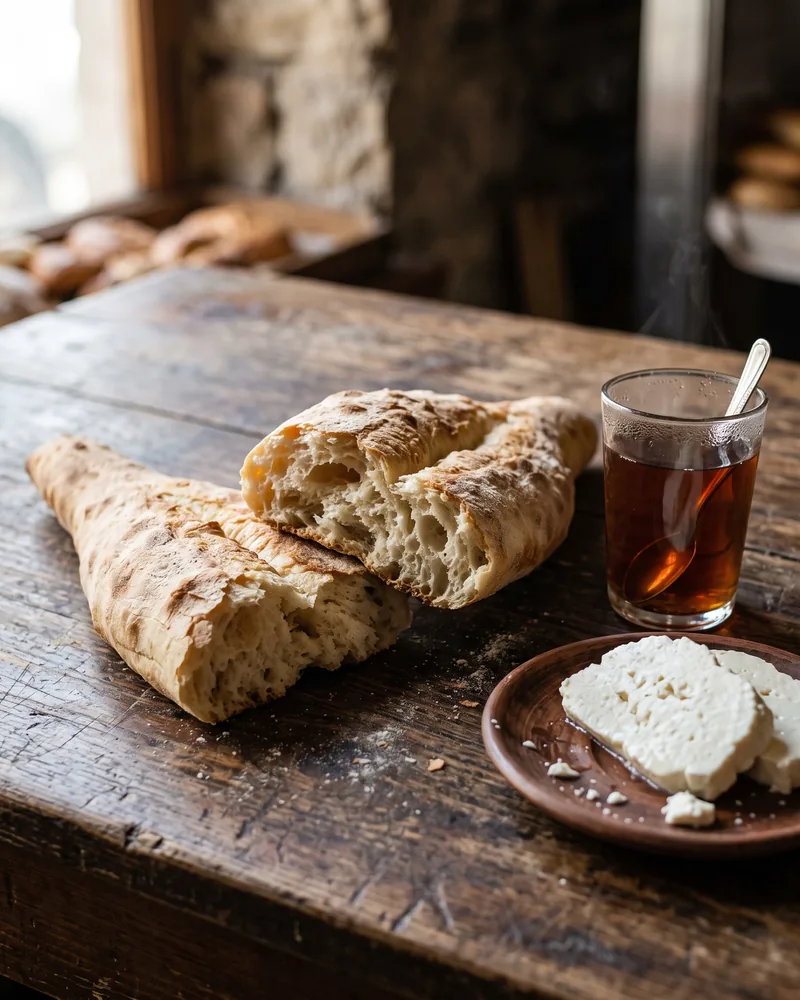
In the past, the tourism board says, shoti was never cut with a knife, only torn by hand, and tearing is still the habit at the table. Once torn, it's a sponge, a scoop and a wrapper, which is why it sits beside every other dish in Georgian food.
- At breakfast: a torn loaf, a plate of Georgian cheese and a glass of tea is the plain truth of a Georgian breakfast.
- With anything in a sauce: shkmeruli, chakapuli, lobio, or the tomato juice at the bottom of a salad bowl. Tear, dunk, repeat.
- The morning after: it gets torn into a bowl of khashi, the tripe broth Georgians eat early in the day with crushed garlic.
- On the street: it's a wrapper too, which is how it gets into Tbilisi street food, where some shawarma counters roll the meat in hot shoti instead of lavash.
- At a feast: bread is on a supra table before the first toast is raised.
In a restaurant, bread is a line on the menu like anything else, so order it with the first round rather than waiting for it to turn up. By the time the shkmeruli arrives, you'll want it on the table already.
Shoti vs lavash, mchadi and the other Georgian breads
| Bread | What it is | Where you'll meet it |
|---|---|---|
| Shoti | A thick, leavened white loaf, pointed at both ends, baked on a tone wall | Every table and every bakery window |
| Lavash | A thin, flat sheet of bread | Round shawarma and grilled meat |
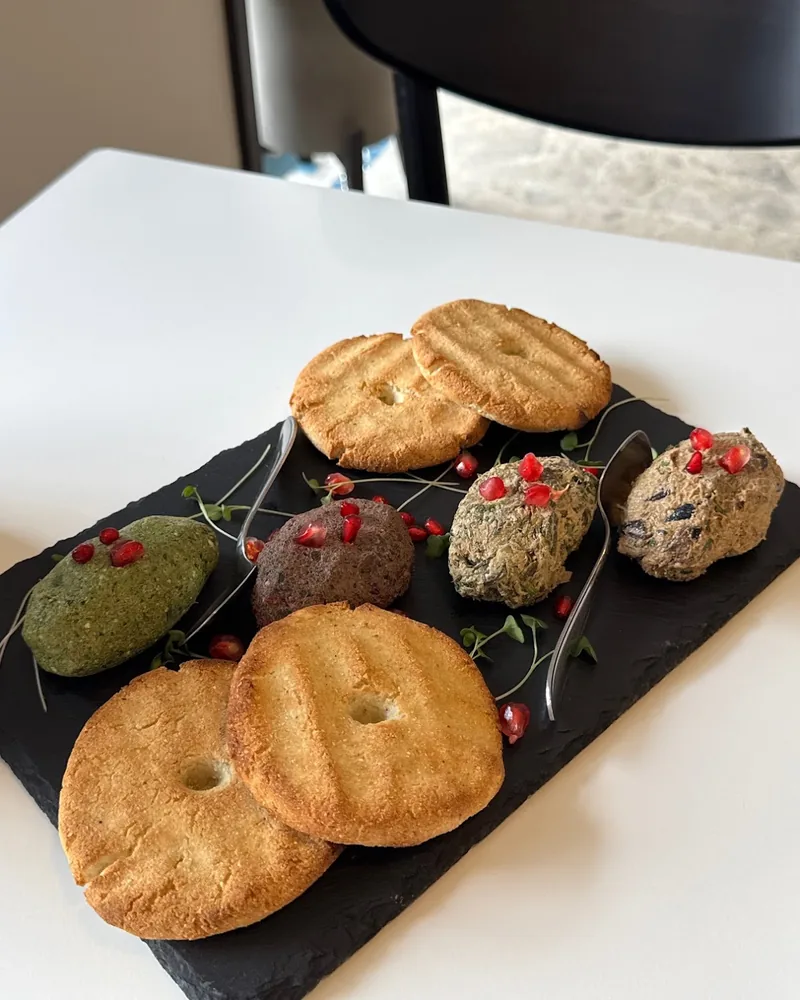
| Mchadi | A flat cornbread from western Georgia | Beside lobio, pkhali and cheese |
| Khachapuri | Bread dough baked round cheese | A dish in its own right, not a side |
| Nazuki | A sweet, leavened festival bread with raisins, cinnamon, cloves and nutmeg | Roadside ovens in Surami, west of Tbilisi |
Mchadi belongs to the meat-free side of the menu: it comes with lobio and pkhali, the bean and walnut end of vegetarian Georgian food. At Bistro Conili by the sulphur baths, corn bread gets 5 review mentions.
Bake cheese into the dough and you've got khachapuri, which is a meal rather than a side: the types of khachapuri run from the round Imeretian to the Adjarian boat with an egg yolk in the middle. Nazuki is the sweet one, and the tourism board says the best is baked in a tone. Late in the 20th century, families set up small tone ovens along the road through Surami, and that stretch became known as Nazukebi.
Frequently asked questions
What is shotis puri?
Shotis puri is Georgia's everyday white bread: a long loaf, pointed at both ends and thicker along 1 side, baked on the inside wall of a tone, a clay oven dug into the ground. Puri means bread, so most people just say shoti. It comes from Kakheti and turns up at every Georgian meal.
Is shoti the same as tonis puri?
Nearly. Tonis puri means bread from the tone, so it covers anything baked on that clay wall, while shoti is the specific long, pointed loaf. At a Tbilisi tone bakery the 2 names land on the same bread: reviewers of Tone on Amaghleba Street use both tone bread and shoti for its loaf.
Why is shoti called mother's bread?
Georgia's tourism board says the name dedis puri, mother's bread, likely comes from an old practice: the baker kneaded the dough in a flat wooden bowl called a gobe while praying for the whole family. It says megobari, the Georgian word for friend, likely comes from the same bowl, which is a lot of meaning for 1 loaf.
How much does shoti cost in Tbilisi?
About 1.30 GEL for a large loaf at a neighbourhood tone bakery. At Tone on Amaghleba Street, reviewers paid 1.20 GEL in 2022 and 1.30 GEL in 2024 and 2025. In a restaurant, bread is a menu item priced by the kitchen, so expect to pay more than at the window, where 3 loaves come to under 4 GEL.
Is shoti the same as lavash?
No. Lavash is a thin, flat sheet of bread, while shoti is a thick, leavened loaf with a crust and a soft middle. You'll meet lavash round shawarma and grilled meat and shoti on every table, though some Tbilisi shawarma counters, Berlin Shaurma among them, wrap their doner in hot shoti as well.